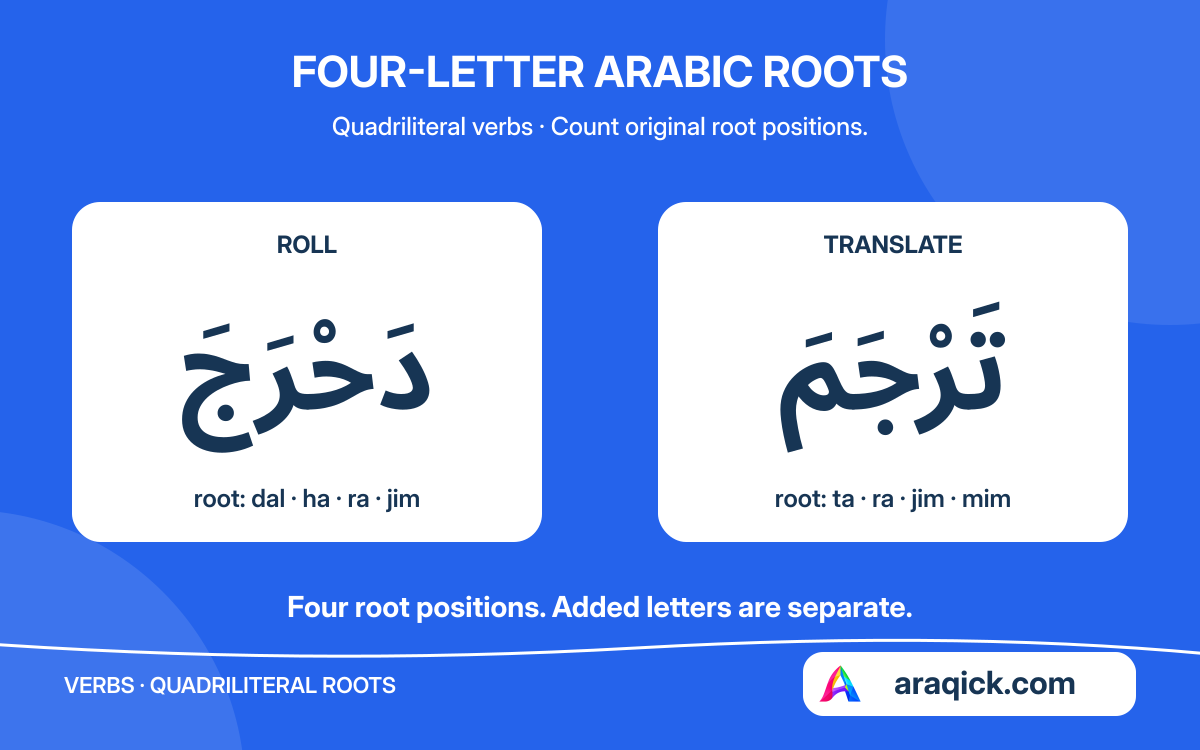
Many Arabic verbs have three root letters, but quadriliteral verbs have four. Tarjama, he translated, is one useful example. The important number is the number of root positions, not the number of written letters in every conjugated form. A long-looking verb can still have a three-letter root.
01Find four original root positions
دَحْرَجَ الْعَامِلُ الْبُرْمِيلَ
dahraja alamilu alburmila
The worker rolled the barrel.
Dahraja has the root د ح ر ج. Its basic pattern is فَعْلَلَ, with four positions. The worker is the subject, and the barrel is the direct object of this transitive verb.
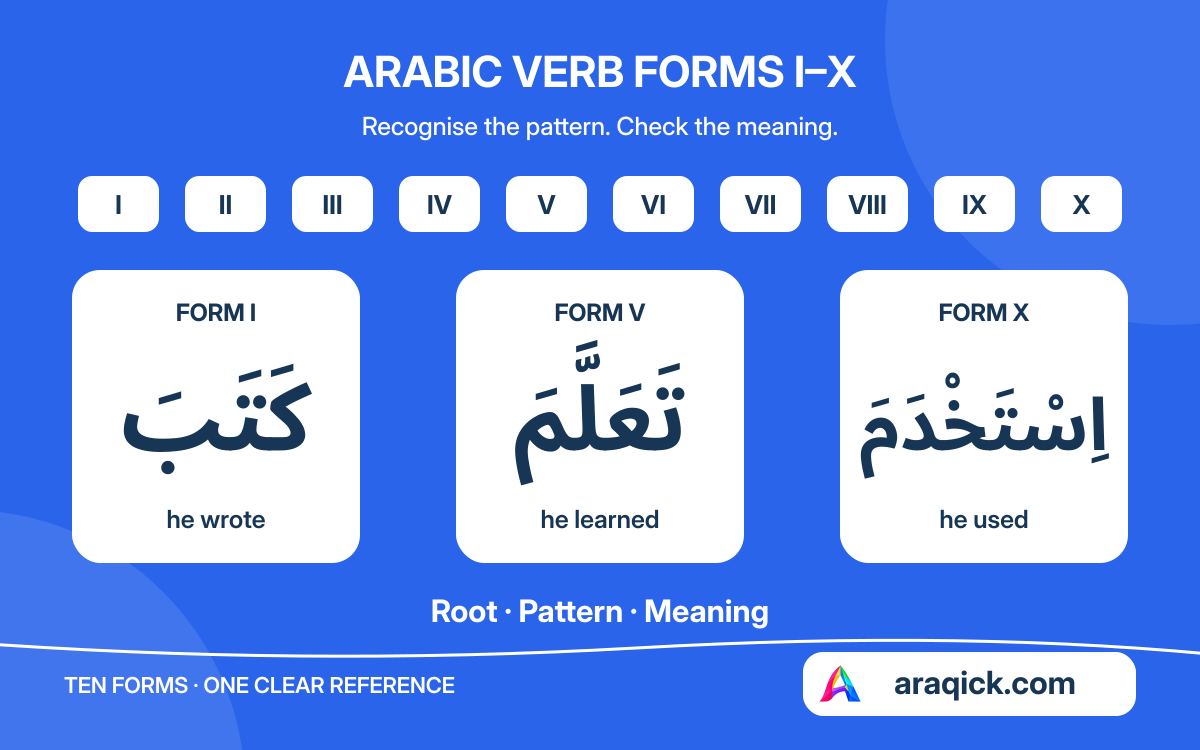
The repeated lam in the pattern is a placeholder for another root position. It does not mean that every quadriliteral verb must repeat an actual lam. Compare the three-position patterns in the Forms I–X overview.
02Keep the initial ta in tarjama
تَرْجَمْتُ جُمْلَةً قَصِيرَةً
tarjamtu jumlatan qasiratan
I translated a short sentence.
Tarjamtu comes from tarjama, with root ت ر ج م. The initial ta is a root letter; the final tu is the subject ending for I. These two occurrences of ta do different jobs.
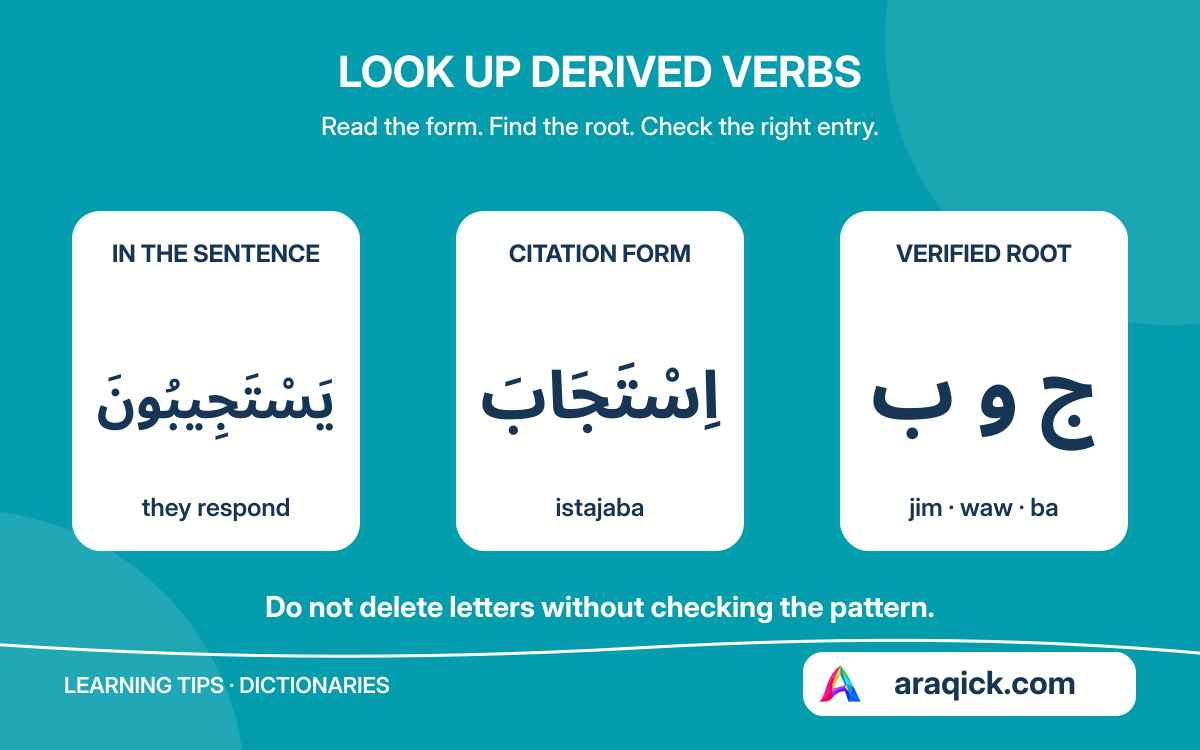
Do not remove the beginning of every verb starting with ta. Recognize the verb family first, then separate person endings from root letters. The derived-verb lookup guide makes this distinction practical.
03Learn the present and command together
أُتَرْجِمُ الْعُنْوَانَ
utarjimu alunwana
I translate the title.
The regular present model is yufalilu: يُتَرْجِمُ means he translates. The person prefix has dammah, and the vowel before the last root consonant is kasrah. I translate uses the prefix u, written with hamzah.
To one man, say تَرْجِمِ الْعُنْوَانَ, translate the title. The underlying command is تَرْجِمْ; a linking kasrah joins it to the following definite noun in connected reading. No helping alif is added at the beginning.
04Recognize an added letter on a four-letter root
تَدَحْرَجَتِ الْكُرَةُ
tadahrajati alkuratu
The ball rolled.
Tadahraja adds ta to the four-root-letter base dahraja. The ball is now the thing undergoing the rolling motion. The feminine ending matches kurah, and its linking vowel connects it to alkuratu.
The root still has four letters even though the derived verb has more. Basic quadriliteral فَعْلَلَ and derived تَفَعْلَلَ belong to their own family; do not force them into a three-root-letter pattern just because the word starts with ta.
05Count root positions, not different alphabet letters
زَلْزَلَ — دَرَّسَ
zalzala — darrasa
He shook — He taught
Zalzala has four root positions, ز ل ز ل, even though it uses only two different alphabet letters. Darrasa, by contrast, is Form II from the three-letter root د ر س. Its doubled middle consonant belongs to the derived pattern.
Learn a verified root with its verb. Common quadriliteral action nouns include تَرْجَمَةٌ, translation, and دَحْرَجَةٌ, rolling. The Arabic charts show exact forms; plain reading aids simplify sounds and vowel length.
What to remember
- Quadriliteral verbs have four root positions.
- An initial ta can be original, as in tarjama, or added, as in tadahraja.
- Learn the root, present form and masdar together.
Your reference shelf
Open a guide whenever you need it.
Useful quadriliteral verb familiesCompare the common basic pattern across three verbs
| Past | Present — he | Command — one man | Action noun |
|---|---|---|---|
| دَحْرَجَ | يُدَحْرِجُ | دَحْرِجْ | دَحْرَجَةٌ |
| تَرْجَمَ | يُتَرْجِمُ | تَرْجِمْ | تَرْجَمَةٌ |
| زَلْزَلَ | يُزَلْزِلُ | زَلْزِلْ | زَلْزَلَةٌ |
These basic action nouns follow the common falalah pattern; this is not a complete inventory of every quadriliteral form.
Root size versus added lettersThe visible word length does not settle the classification
| Verb | Root | Classification |
|---|---|---|
| كَتَبَ | ك ت ب | Basic three-letter root |
| دَرَّسَ | د ر س | Three-letter root, Form II |
| اِسْتَغْفَرَ | غ ف ر | Three-letter root, Form X |
| تَرْجَمَ | ت ر ج م | Basic four-letter root |
| تَدَحْرَجَ | د ح ر ج | Four-letter root with added ta |
| زَلْزَلَ | ز ل ز ل | Four root positions with repetition |
Sources & further learning
References for the language explanations and learning guidance.