Laqad commonly introduces an emphatic past statement. English may express its force with indeed, certainly or did, depending on the sentence. Understanding its two parts helps you avoid two common mistakes: translating it as already every time and confusing it with a negative particle.
01Split the word into lam and qad
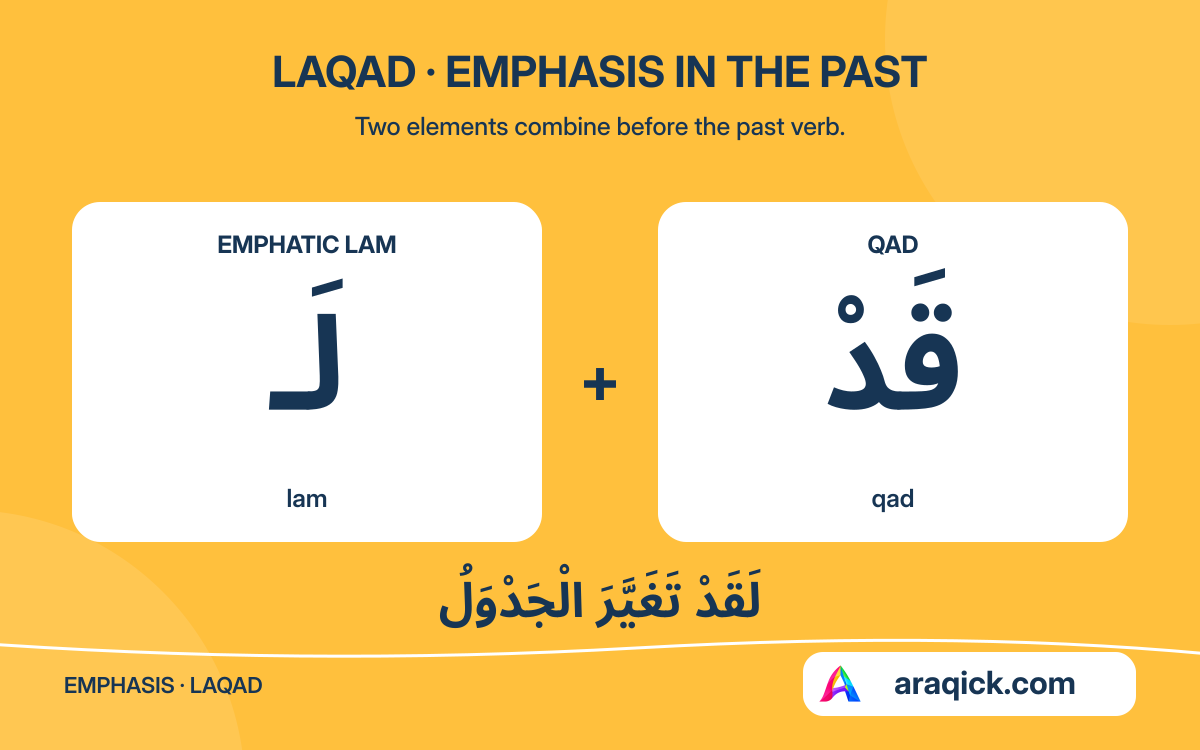
لَقَدْ تَغَيَّرَ الْجَدْوَلُ
laqad taghayyara aljadwalu
The schedule has indeed changed.
Laqad contains the emphatic lam followed by qad. They are written together, while the following past verb is a separate word. Taghayyara reports the change; laqad strengthens the assertion that it happened.
The structure does not by itself mean that the change happened earlier than expected. Already may fit some contexts, but indeed or an emphatic English did may convey the intended force more accurately.
02Let the verb identify the person
لَقَدْ رَاجَعْتُ الْحِسَابَ
laqad rajatu alhisaba
I did check the calculation.
The ending tu on rajatu identifies I as the person who checked. Laqad stays the same whether the following verb refers to I, we, he or a group.
For we, use لَقَدْ رَاجَعْنَا الْحِسَابَ. Keep the verb’s normal past-person endings rather than trying to make laqad agree with the subject. Review past-tense endings if the suffixes are unfamiliar.
03Recognize its place in an oath response
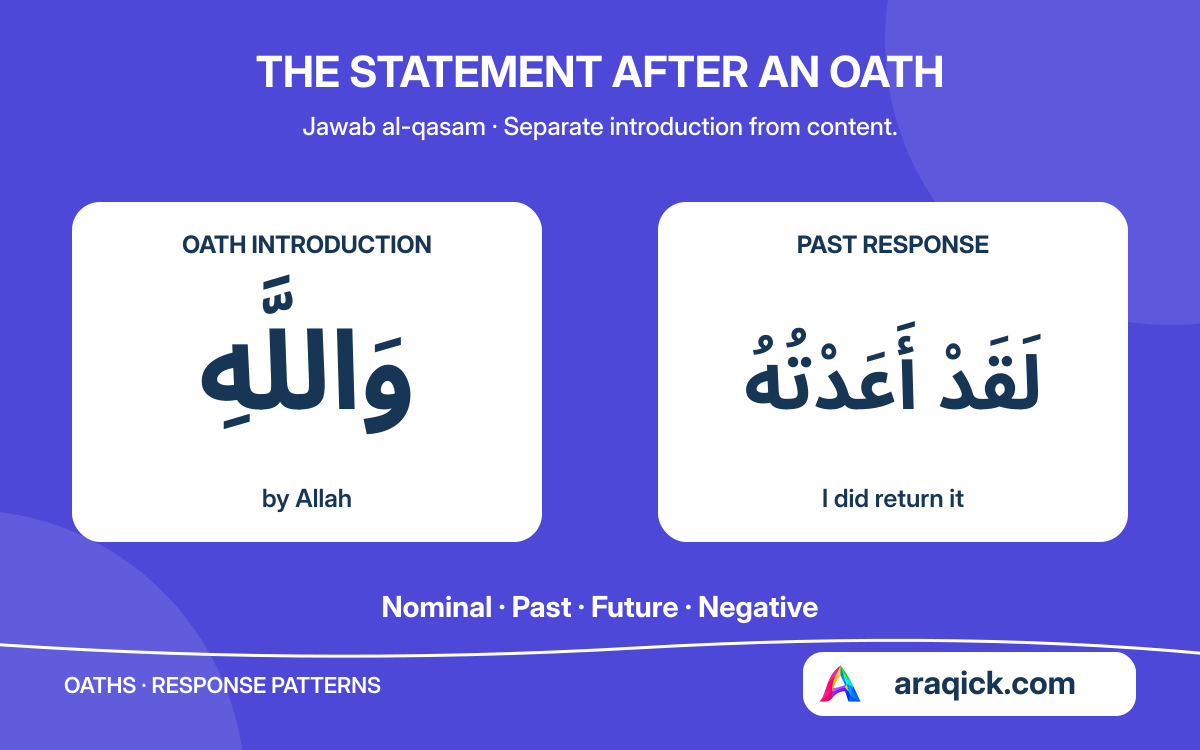
وَاللَّهِ لَقَدْ أَرْسَلْتُ الرِّسَالَةَ
wallahi laqad arsaltu arrisalata
By Allah, I did send the message.
Wallahi is the oath introduction, and laqad arsaltu arrisalata is its affirmative past response. In this setting, lam is the lam of the oath response.
Laqad is also common without an audible oath phrase. Traditional analysis often understands an omitted oath behind that emphatic lam. This does not mean that you must translate every standalone laqad as I swear. Translate the actual sentence and its context.
04Compare qad with a present-form verb
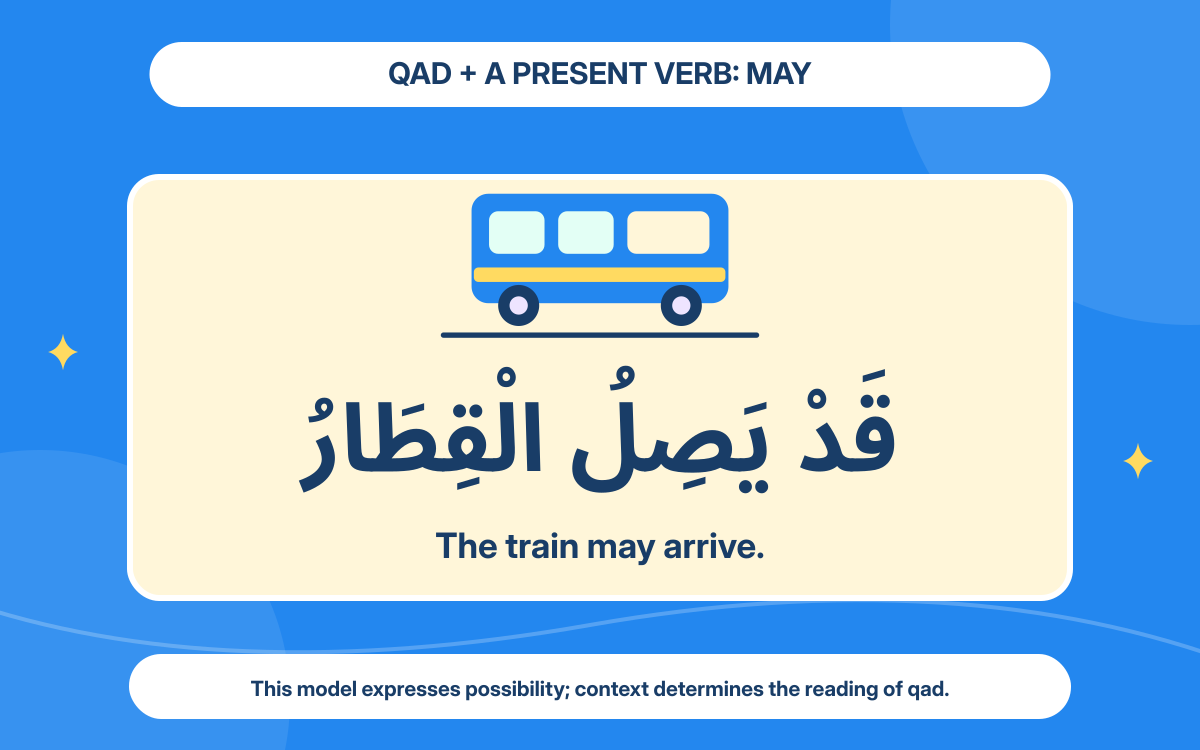
قَدْ يَتَغَيَّرُ الْجَدْوَلُ
qad yataghayyaru aljadwalu
The schedule may change.
Here qad precedes a present-form verb, and the example expresses a possibility. That differs from لَقَدْ تَغَيَّرَ الْجَدْوَلُ, which asserts an actual completed change.
Qad with a present-form verb does not always mean may: frequency and emphasis also occur in context. The qad with imperfect verbs guide explains those readings. For this lesson, first identify whether the verb is past or present-form.
05Keep laqad apart from lam and lan
لَمْ يَتَغَيَّرِ الْجَدْوَلُ
lam yataghayyari aljadwalu
The schedule did not change.
Negative lam takes a jussive present-form verb to negate a past event. In this connected phrase, a linking kasrah appears before the definite noun; the underlying final jussive sukun has not become an indicative ending.
Laqad, lam and lan are different tools: an emphatic past assertion, a past negative and a future negative. Laqad does not make its following past verb subjunctive or jussive. Plain reading aids simplify sounds; use the Arabic forms and the comparison chart to keep them distinct.
What to remember
- Laqad combines emphatic lam and qad before a past verb.
- Its English force depends on context; already is not automatic.
- The verb keeps its person endings, and laqad is distinct from negative lam and lan.
Your reference shelf
Open a guide whenever you need it.
Laqad with different past subjectsThe particle stays fixed while the verb ending changes
| Subject | Arabic | Meaning |
|---|---|---|
| He | لَقَدْ رَاجَعَ | He did check |
| I | لَقَدْ رَاجَعْتُ | I did check |
| We | لَقَدْ رَاجَعْنَا | We did check |
| They — male or mixed group | لَقَدْ رَاجَعُوا | They did check |
Compare assertion, possibility and negationRead the particle together with the verb form
| Example | Meaning here | Pattern |
|---|---|---|
| لَقَدْ تَغَيَّرَ الْجَدْوَلُ | The schedule has indeed changed | Laqad + past |
| قَدْ يَتَغَيَّرُ الْجَدْوَلُ | The schedule may change | Qad + present-form possibility |
| لَمْ يَتَغَيَّرِ الْجَدْوَلُ | The schedule did not change | Lam + jussive; linking vowel here |
| لَنْ يَتَغَيَّرَ الْجَدْوَلُ | The schedule will not change | Lan + subjunctive |
The linking kasrah after the lam-negated verb avoids adjacent vowel-less consonants in connected reading.
Sources & further learning
References for the language explanations and learning guidance.