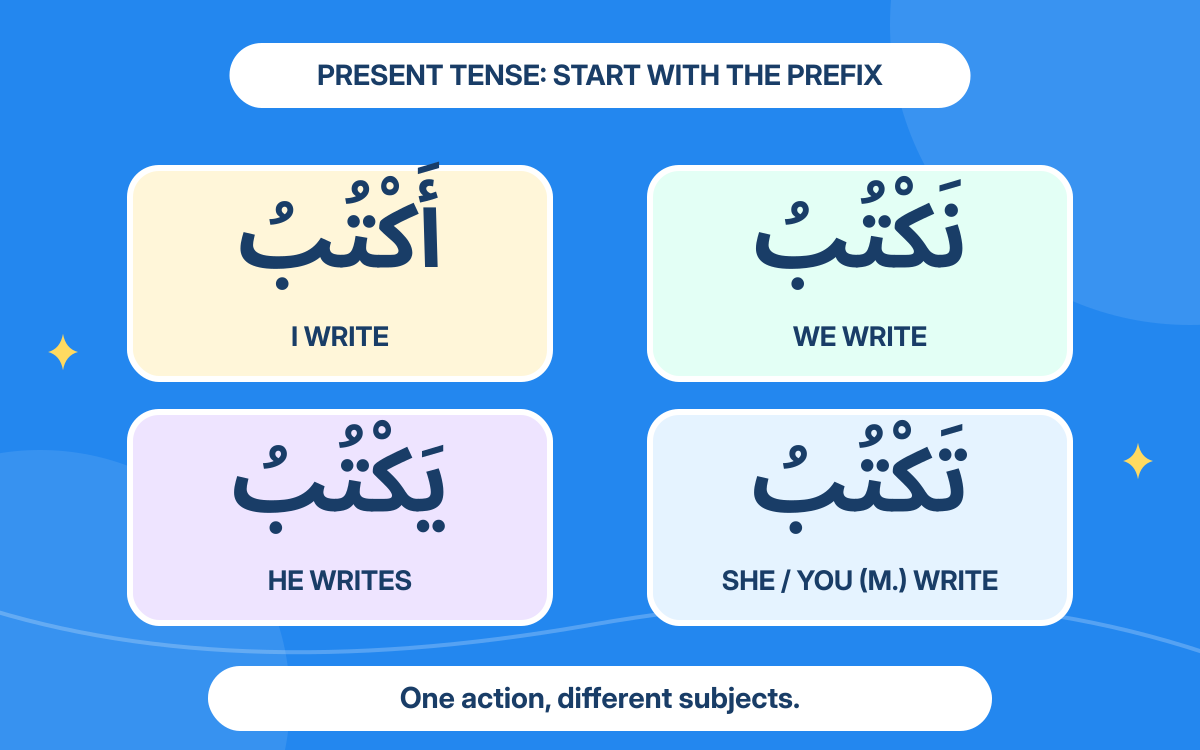
You are waiting for a train, but its arrival is uncertain. Arabic can put qad before an imperfect verb to express possibility. Learn this useful reading while remembering that the particle has other meanings in other contexts.
01Say that an arrival is possible
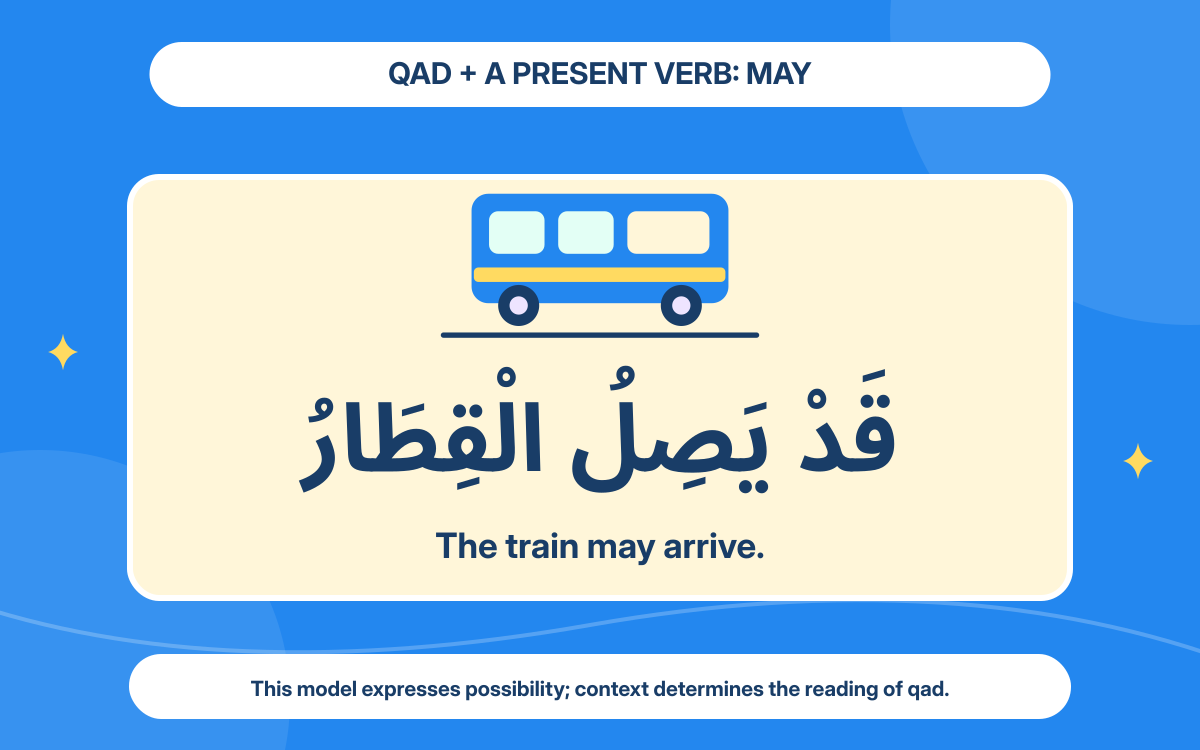
Imagine an uncertain train arrival. In this situation, qad before the imperfect yasilu lets you present the event as a possibility. English “may” or “might” fits this reading; you are not promising that it will happen.
قَدْ يَصِلُ الْقِطَارُ
qad yasilu lqitaru
The train may arrive.
Yasilu means “arrives” or “will arrive,” according to time context. Qad is a separate written word before the verb, not an attached prefix. Here “may” concerns whether the event occurs, not permission.
02Keep the ordinary verb ending
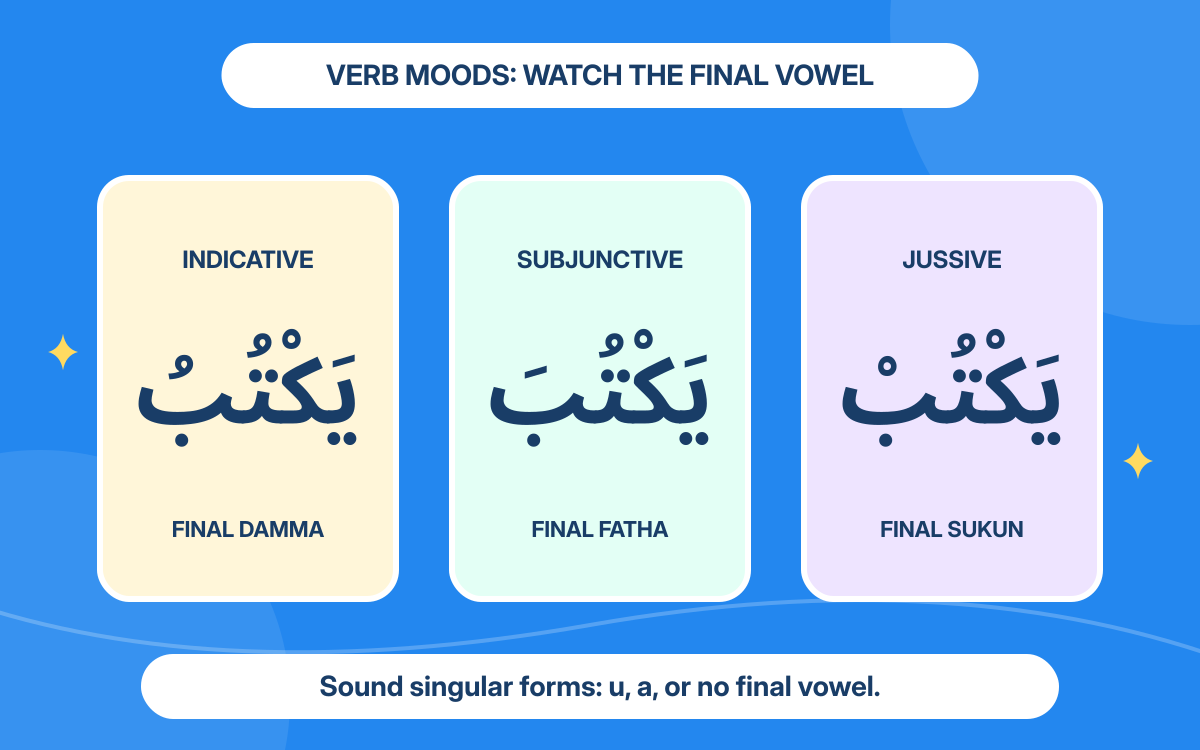
In our simple model, yasilu is an imperfect verb in the indicative mood, ending in u. Adding qad does not make it subjunctive or jussive. Keep the form you started with.
يَصِلُ الْقِطَارُ
yasilu lqitaru
The train arrives.
قَدْ يَصِلُ الْقِطَارُ
qad yasilu lqitaru
The train may arrive: an uncertain possibility.
Alqitaru names the doer and is nominative. Its noun ending and the verb’s mood are separate matters. This article uses these singular forms; different imperfect patterns have different mood signs.
03Use the same pattern for I
You have not decided what to drink. Ashrabu means “I drink”; its initial a identifies the speaker. Add the separate qad to present drinking tea as a possibility.
قَدْ أَشْرَبُ الشَّايَ
qad ashrabu shshaya
I may drink the tea.
Ashrabu keeps its indicative u. The tea is the direct object, with the regular accusative ending a. Qad does not turn I into he or change who performs the action. The uncertainty belongs to the event.
04Notice the form after qad
Now imagine the arrival has been confirmed. Wasala is a past form meaning “arrived.” With this past verb, qad can confirm a completed event, rather than give our possibility reading.
قَدْ وَصَلَ الْقِطَارُ
qad wasala lqitaru
The train has indeed arrived.
قَدْ يَصِلُ الْقِطَارُ
qad yasilu lqitaru
The train may arrive: we are uncertain.
The key contrast here is wasala versus yasilu. Qad does not make the two verb forms interchangeable. Read the following verb and the situation together.
05Keep may tied to this context
Qad plus an imperfect is not a universal formula for English “may.” Other contexts can give readings connected with frequency or confirmation. The particle alone does not determine the whole message.
قَدْ يَصِلُ الْقِطَارُ
qad yasilu lqitaru
The train may arrive: a possible event in our waiting situation.
For this lesson, consistently use uncertainty contexts for the imperfect models and a confirmed event for the past comparison. Start with qad, identify the verb form and its doer, then choose the meaning that fits the situation.
What to remember
- In an uncertainty context, qad with an imperfect can mean may or might.
- Qad alone leaves the ordinary indicative form unchanged: qad yasilu.
- Read the verb and context together: qad with a past form or another context can have a different reading.
Your reference shelf
Open a guide whenever you need it.
Read the particle with its verb and situationCompare possibility and completed-arrival models without treating may as qad’s only meaning
| Context | Arabic model | Reading |
|---|---|---|
| Uncertain arrival | قَدْ يَصِلُ الْقِطَارُ qad yasilu lqitaru | The train may arrive. |
| Confirmed completed arrival | قَدْ وَصَلَ الْقِطَارُ qad wasala lqitaru | The train has indeed arrived. |
Traditional descriptions discuss possibility or expectation, infrequency or frequency, and confirmation among the readings of qad. Their interpretation depends on the sentence and surrounding discourse. A statement about an occasional habit differs from our uncertain one-time event.
The imperfect is الْفِعْلُ الْمُضَارِعُ (alfilu lmudariu). In yasilu and ashrabu, the ordinary indicative mood has a final u. This is a verb-mood ending, while the u of alqitaru is a noun-case ending. Do not confuse the two.
Our examples deliberately avoid other mood-changing particles. Later constructions may put an imperfect in a different mood, but qad alone is not what causes that change. The main practice retains the small models already taught.
Sources & further learning
References for the language explanations and learning guidance.