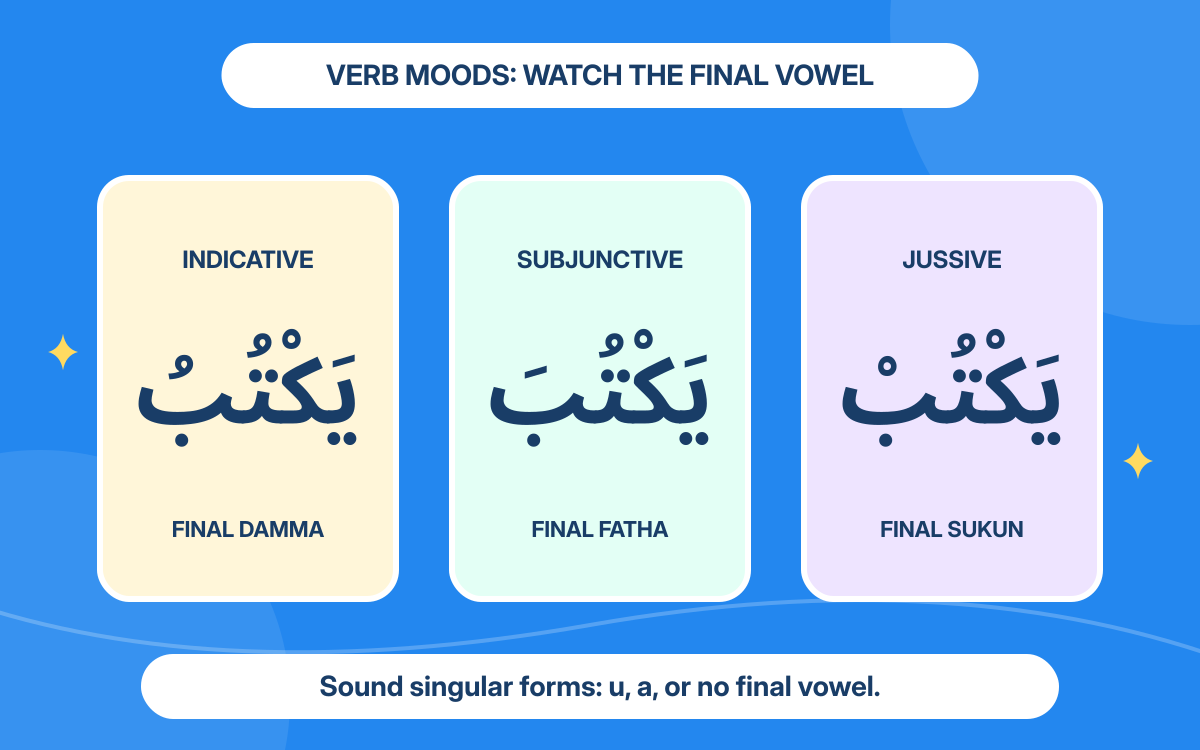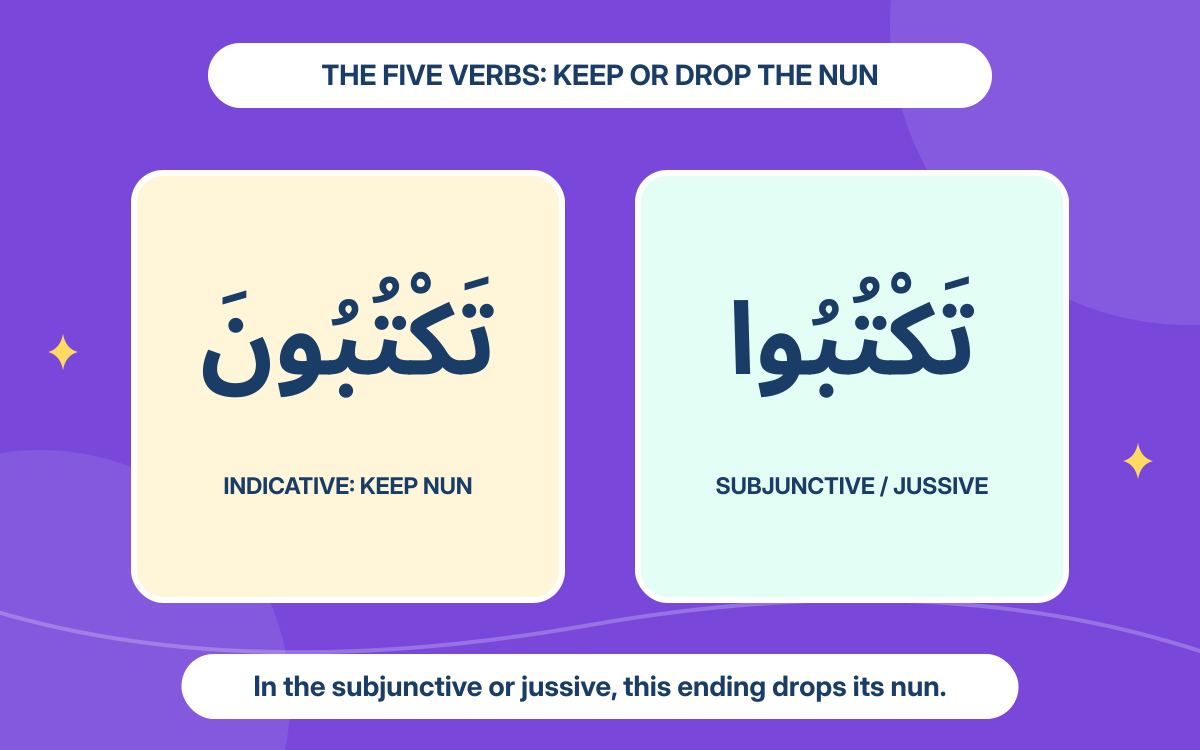
The five verbs are five imperfect form patterns, not five particular vocabulary words. Their final nun marks the indicative. Remove that nun for the subjunctive or jussive, while keeping the letter that identifies the doer.
01Count five patterns
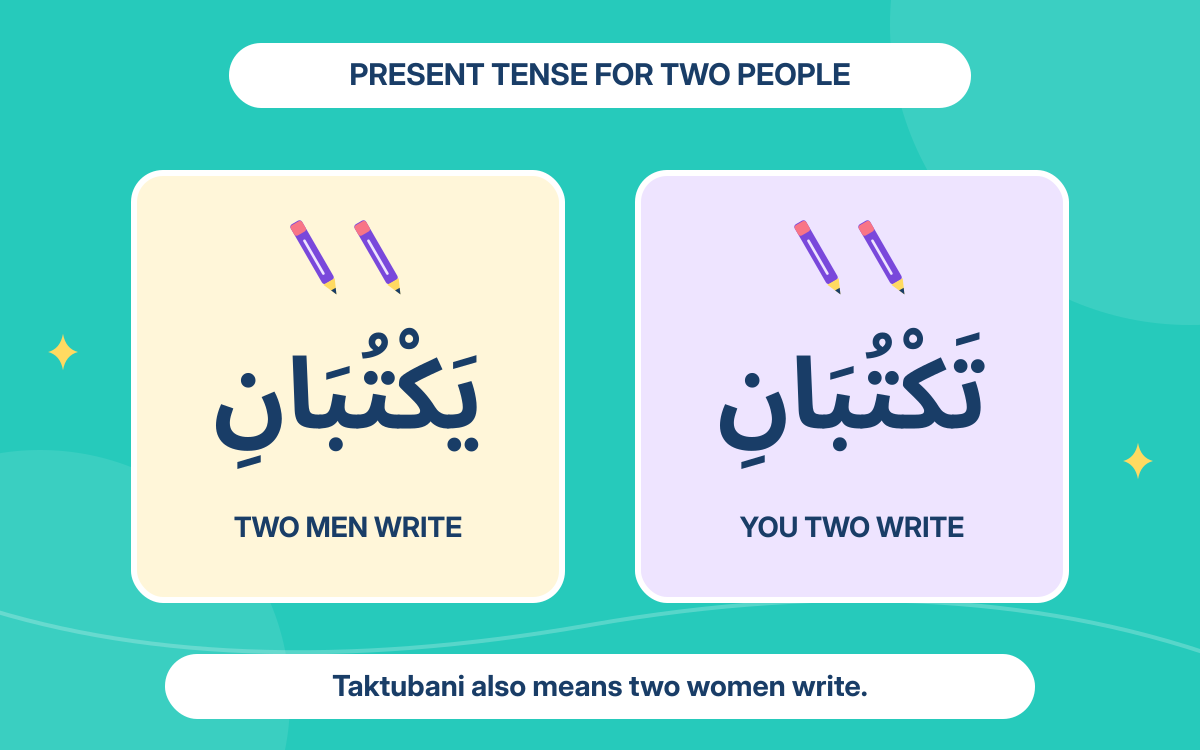
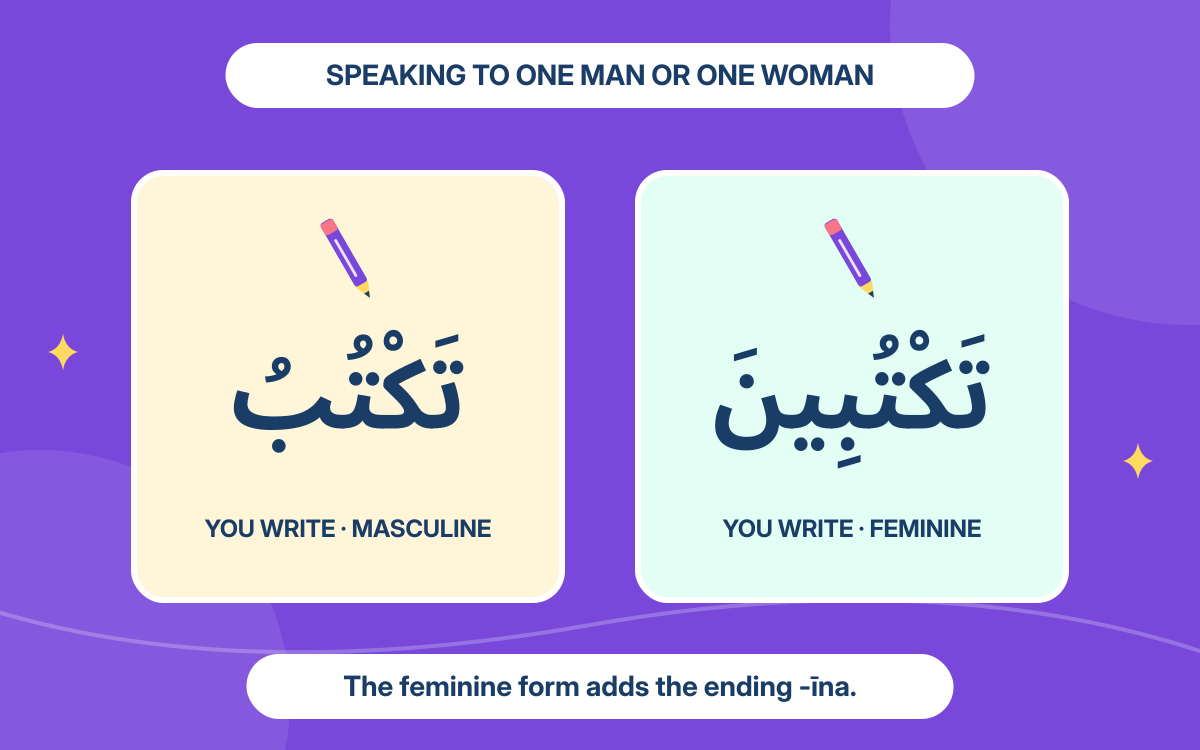
The five standard shapes are يَفْعَلَانِ، تَفْعَلَانِ، يَفْعَلُونَ، تَفْعَلُونَ، تَفْعَلِينَ. They have dual alif, group waw or the ya for one female listener.
أَنْتُمَا تَكْتُبَانِ
antuma taktubani
You two write.
Taktubani addresses two males, two females or a mixed pair and also describes two females with huma. Several doers share the same shape; the conventional name still counts five shapes.
02Keep nun in the indicative
In ordinary indicative statements, final nun stays. The group waw identifies the doer; the nun marks the indicative.
أَنْتُمْ تَكْتُبُونَ
antum taktubuna
You write. — to a male or mixed group
The same principle applies to taktubani and taktubina. Do not replace this nun with the single-person dammah ending.
03Remove nun in two moods
Both the subjunctive and jussive remove nun from these five patterns. A nunless form alone does not distinguish those two moods; the construction does. Prohibitive la gives a jussive example.
لَا تَكْتُبِي
la taktubi
Do not write. — to one woman
Taktubina becomes taktubi: remove nun, keep the female listener’s ya. For two listeners, taktubani becomes taktuba. The next guide on prohibitions expands this use.
04Keep the group spelling
After nun disappears, the group form ends in waw. When that group waw ends the word, write a silent distinguishing alif after it. It adds no sound.
لَا تَكْتُبُوا
la taktubu
Do not write. — to a male or mixed group
Compare taktubuna with taktubu. Write تَكْتُبُوا, not تَكْتُبُو. Do not add this extra silent alif after the female listener’s ya in taktubi. The alif in dual taktuba is itself the pronounced dual ending.
05Keep the female group’s subject nun
The female plural forms yaktubna and taktubna are outside the five verbs. Their nun is a subject pronoun, not a removable mood marker. It remains after prohibitive la.
لَا تَكْتُبْنَ
la taktubna
Do not write. — to a female group
This verb has a fixed form with sukun before the subject nun; in this prohibition it occupies a jussive position. Removing nun would remove the female group subject.
What to remember
- The five verbs are five imperfect shapes with dual alif, group waw or the female listener’s ya.
- Keep their nun in the indicative; remove it in the subjunctive and jussive.
- The female plural subject nun in yaktubna or taktubna remains; it is outside the five verbs.
Your reference shelf
Open a guide whenever you need it.
See nun retention and deletion togetherThe same nunless shape can be subjunctive or jussive
| Indicative | Subjunctive or jussive form | Doer |
|---|---|---|
| يَكْتُبَانِ | يَكْتُبَا | They two — masculine |
| تَكْتُبَانِ | تَكْتُبَا | You two, either gender; they two — feminine |
| يَكْتُبُونَ | يَكْتُبُوا | They — male or mixed group |
| تَكْتُبُونَ | تَكْتُبُوا | You — male or mixed group |
| تَكْتُبِينَ | تَكْتُبِي | You — one female |
The second column lists grammatical forms, not complete statements. A suitable construction determines whether a form is subjunctive or jussive. The worked prohibitions use jussive second-person forms. Female group يَكْتُبْنَ / تَكْتُبْنَ belongs to a different fixed-form pattern; its subject nun stays.
The silent alif after a word-final group waw is a spelling letter, not another subject pronoun. It is absent when an object suffix follows the waw. Our simple Latin reading aids do not mark every sound or vowel length: taktubu here represents the group’s long u, whereas singular taktubu has short final u. Read the Arabic ending to distinguish them.
Sources & further learning
References for the language explanations and learning guidance.