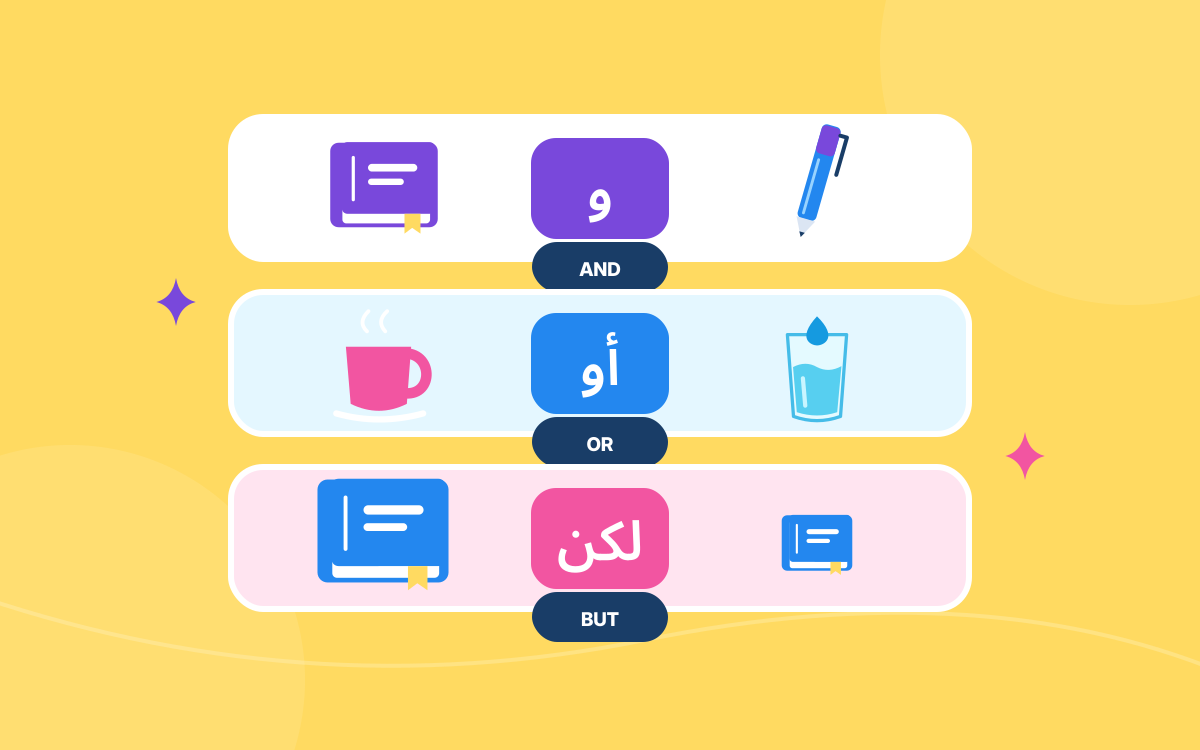
Your connector guide introduced lakin for but. Now compare it with lakinna, a sister of inna. Both express contrast, but the doubled n changes the grammar of the following noun. Learn the two sentence patterns rather than swapping their spellings.
01Add a contrasting fact
Lakinna, لَكِنَّ, introduces a contrast or qualification. Its doubled nun has shaddah. It belongs to the inna family.
الْكِتَابُ مُفِيدٌ وَلَكِنَّ الدَّرْسَ طَوِيلٌ
alkitabu mufidun wa lakinna ddarsa tawilun
The book is useful, but the lesson is long.
Wa attaches to lakinna in Arabic writing: وَلَكِنَّ. Both lakinna and light lakin have a long first vowel, although their normal spelling has no ordinary alif there. Our plain reading aids simplify vowel length while retaining the displayed endings.
02Change the noun, keep the predicate
Lakinna makes its noun accusative. Its simple predicate stays nominative, just as with inna.
الْغُرْفَةُ صَغِيرَةٌ وَلَكِنَّ الْبَابَ وَاسِعٌ
alghurfatu saghiratun wa lakinna lbaba wasiun
The room is small, but the door is wide.
Albaba has final a as the noun of lakinna. Wasiun has un as its predicate. The first clause keeps its own noun and predicate endings; lakinna governs its own clause.
03Attach he or she to lakinna
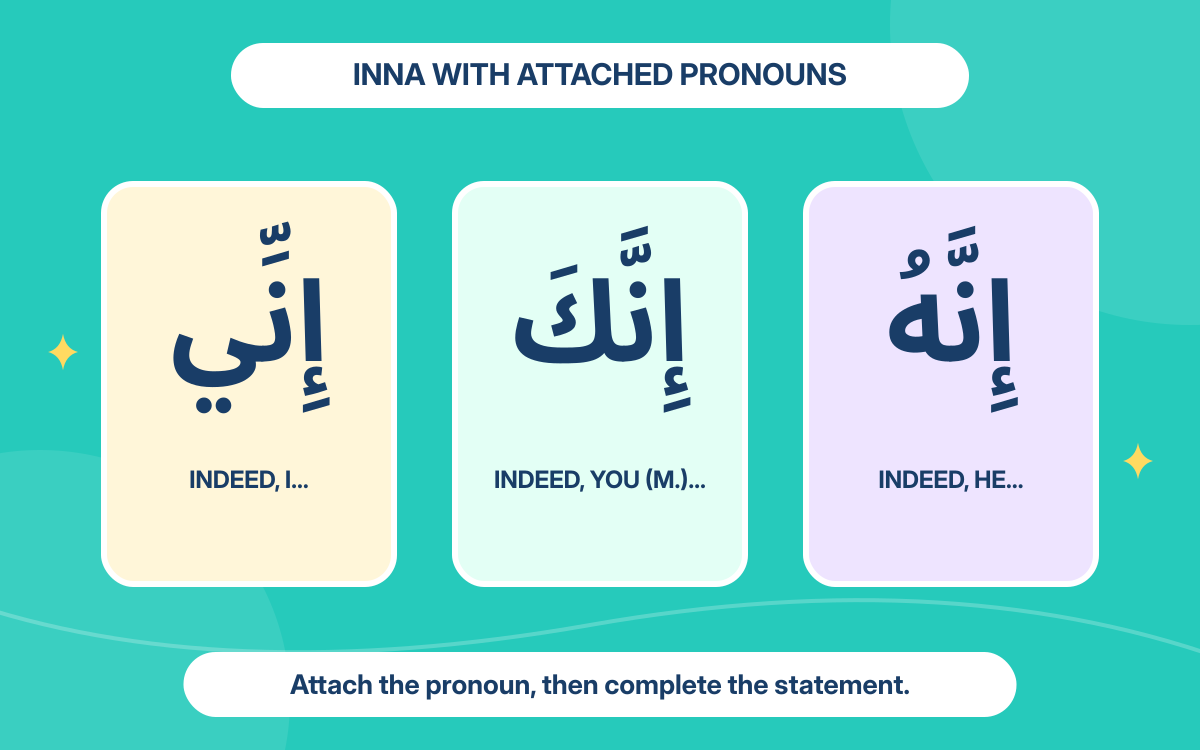
If the contrasting statement refers back to a known noun, use lakinnahu for but he or it, or lakinnaha for but she or it. Choose grammatical gender.
الْكِتَابُ مُفِيدٌ وَلَكِنَّهُ طَوِيلٌ
alkitabu mufidun wa lakinnahu tawilun
The book is useful, but it is long.
الْقِصَّةُ مُفِيدَةٌ وَلَكِنَّهَا طَوِيلَةٌ
alqissatu mufidatun wa lakinnaha tawilatun
The story is useful, but it is long.
The attached pronoun fills lakinna’s accusative noun position. The predicate remains nominative and agrees with the book or story.
04Recognise the light form
Light lakin, لَكِنْ, has no doubled nun. In the pattern below it introduces a complete clause without imposing lakinna’s noun-case rule.
أَقْرَأُ لَكِنْ أَخِي يَكْتُبُ
aqrau lakin akhi yaktubu
I read, but my brother writes.
Akhi, my brother, starts its own clause. Yaktubu supplies the information about him. Light lakin can introduce a verb clause too, as in the earlier I read, but I do not write example. Do not replace it with lakinna directly before a bare verb.
05Keep the contrast about one thing
When both statements describe one room, attach ha to lakinna rather than repeating the room noun. Keep the feminine predicate.
الْغُرْفَةُ صَغِيرَةٌ وَلَكِنَّهَا جَمِيلَةٌ
alghurfatu saghiratun wa lakinnaha jamilatun
The room is small, but it is beautiful.
The first fact remains true. But it is beautiful adds a contrasting description. Ha refers to the feminine room; jamilatun is the nominative predicate. This is the governing lakinna pattern with an attached pronoun.
What to remember
- Lakinna has doubled nun and governs an accusative noun or an attached pronoun, with a nominative simple predicate.
- Lakinnahu and lakinnaha mean but he or it and but she or it; choose the pronoun for its referent.
- Light lakin can introduce a complete contrasting clause without lakinna’s noun-case rule.
Your reference shelf
Open a guide whenever you need it.
Compare the two but patternsReview case, attached pronouns and light lakin
| Pattern | Arabic | Reading |
|---|---|---|
| Lakinna with a noun | وَلَكِنَّ الْبَابَ وَاسِعٌ | wa lakinna lbaba wasiun |
| Lakinna with he / she / we | لَكِنَّهُ / لَكِنَّهَا / لَكِنَّنَا | lakinnahu / lakinnaha / lakinnana |
| Light lakin with a clause | لَكِنْ أَخِي يَكْتُبُ | lakin akhi yaktubu |
Light lakin has another use under specific conditions: after negation it can coordinate individual nouns, without wa. For example, لَا أُرِيدُ شَايًا لَكِنْ مَاءً la uridu shayan lakin maan means I do not want tea but water. Water follows tea in accusative case through coordination; it is not the noun of governing lakinna. So light lakin is not restricted to linking complete clauses in all Arabic usage. This guide’s main practice focuses on complete-clause contrasts.
Sources & further learning
References for the language explanations and learning guidance.