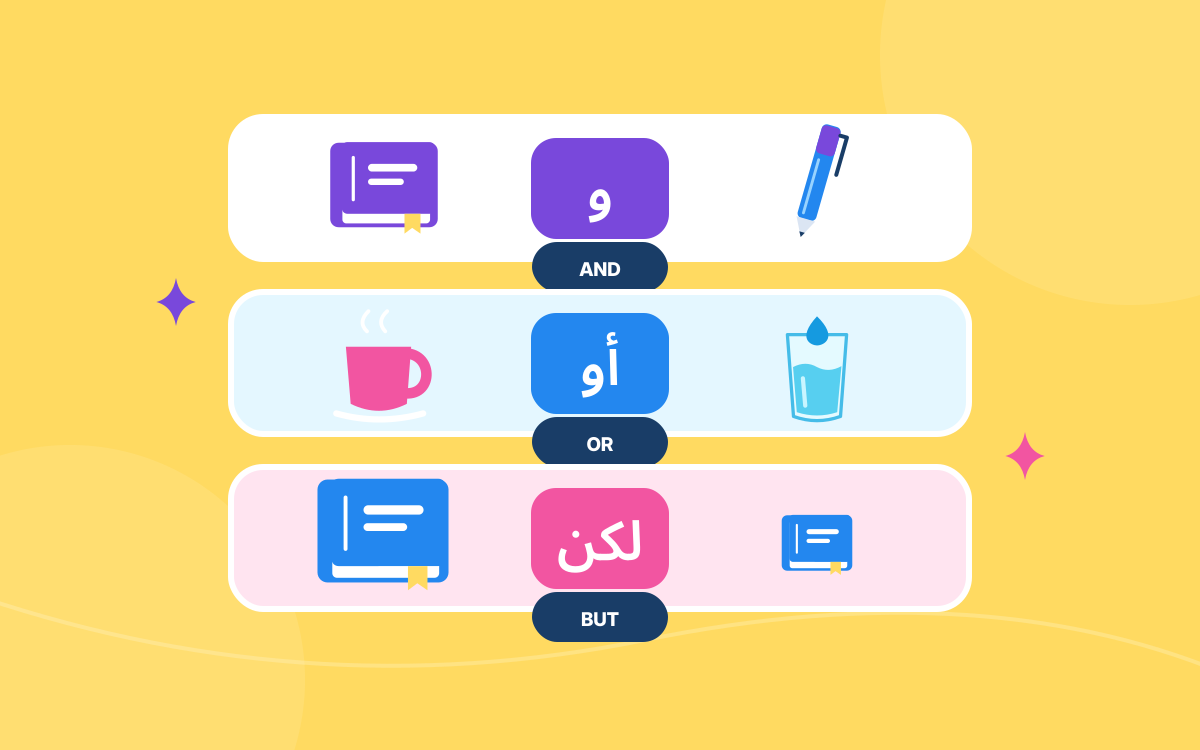
Three short words help you connect ideas in Arabic: wa means and, aw means or, and lakin means but. Start with two objects, then connect two short statements. The examples use Modern Standard Arabic and keep each connector’s job visible.
01Add another item with wa
wa
And
kitab wa qalam
A book and a pen
Kitab means book; qalam means pen. Wa includes both items. In Arabic writing, attach وَ to the following word: وَقَلَم. Leave a space before it, not after it.
Our plain transliteration keeps wa separate so you can spot the connector easily.
02Offer an alternative with aw
aw
Or
shay aw qahwa
Tea or coffee
Shay means tea, and qahwa means coffee. Aw presents alternatives rather than adding both together. Unlike wa, it is written as a separate word.
أُرِيدُ شَايًا أَوْ قَهْوَةً
uridu shayan aw qahwatan
I want tea or coffee.
Uridu means I want. The noun endings shown here belong to this full sentence. The request leaves a choice between the drinks. It does not ask for both.
03Contrast two ideas with lakin
lakin
But
aqrau
I read
أَكْتُبُ aktubu means I write. Put لَا la before it for I do not write. Now connect the ideas:
أَقْرَأُ لَكِنْ لَا أَكْتُبُ
aqrau lakin la aktubu
I read, but I do not write.
Lakin highlights the difference between reading and not writing. In this example, a complete verb clause follows it. Keep the whole pattern together when making a similar sentence.
A second contrast uses kabir, big, and saghir, small:
هَذَا كِتَاب كَبِير لَكِنْ ذَلِكَ كِتَاب صَغِير
hadha kitab kabir lakin dhalika kitab saghir
This is a big book, but that is a small book.
Here lakin connects two complete statements about different books.
04Join two positive actions
أَقْرَأُ وَأَكْتُبُ
aqrau wa aktubu
I read and I write.
Here both actions are positive, so wa adds the second action. The Arabic spelling joins wa directly to aktubu. Compare the meanings:
- Aqrau wa aktubu: both reading and writing.
- Aqrau lakin la aktubu: reading, with a contrast about writing.
- Changing the connector and adding la changes the message.
Wa alone does not tell you which action happens first. Use it to include both actions without making a promise about their order.
05Choose the meaning before the word
wa
Include both
aw
Present alternatives
lakin
Highlight a contrast
Start with the relationship you want to express. Do you mean a book and a pen, or a book or a pen? The nouns can stay the same while the connector changes.
كِتَاب أَوْ قَلَم
kitab aw qalam
A book or a pen
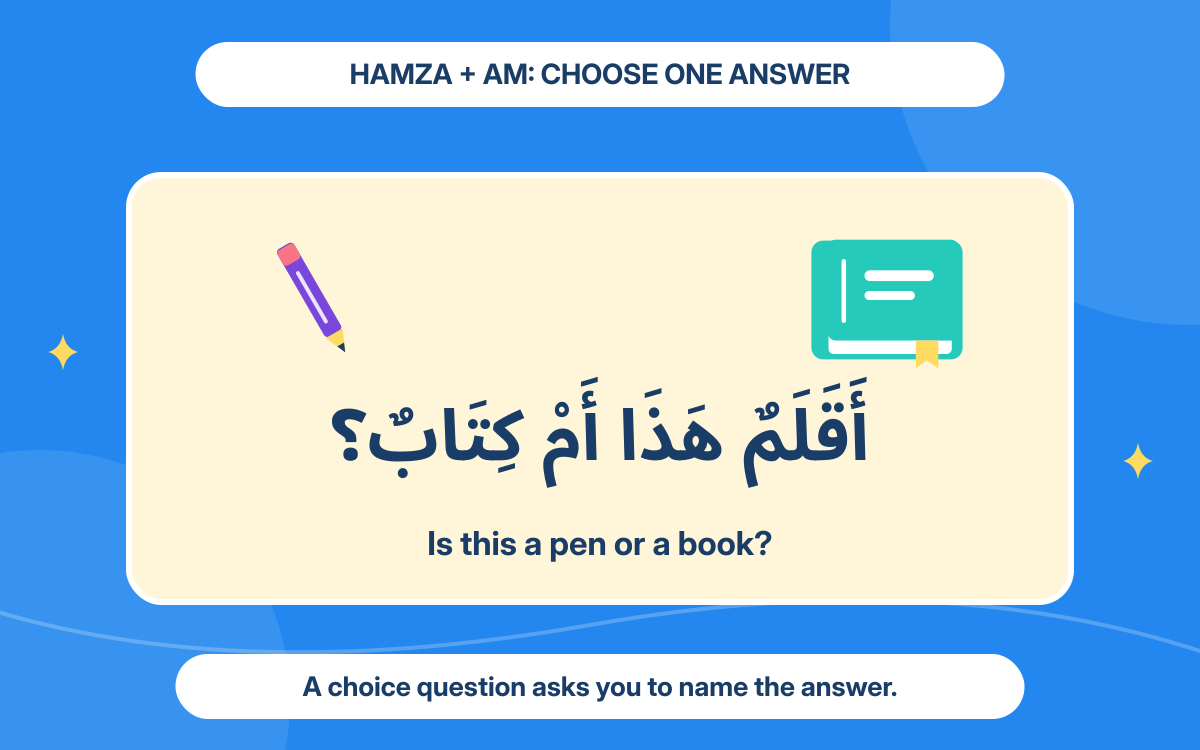
The aw examples here are phrases and statements. Formal questions that ask someone to choose between named alternatives often use another word, أَمْ am. Keep those questions for a separate pattern.
For now, practise one clear relationship at a time.
What to remember
- Wa adds another item or idea and attaches to the following Arabic word.
- Aw presents alternatives in the phrases and statements practised here.
- Lakin introduces the contrast in aqrau lakin la aktubu: I read, but I do not write.
Your reference shelf
Open a guide whenever you need it.
Three connectors at a glanceReview spelling and the sentence patterns
| Connector | Job | Example |
|---|---|---|
| وَ wa | Addition | كِتَاب وَقَلَم A book and a pen |
| أَوْ aw | Alternative | كِتَاب أَوْ قَلَم A book or a pen |
| لَكِنْ lakin | Contrast | أَقْرَأُ لَكِنْ لَا أَكْتُبُ I read, but I do not write. |
You may also encounter لَكِنَّ lakinna, with a doubled n. It has its own grammar and governs a following noun or attached pronoun. It is not a spelling variant to swap into our verb pattern. Our example uses لَكِنْ, without that doubling.
Sources & further learning
References for the language explanations and learning guidance.