“I hope the lesson is easy” expresses a hopeful expectation. “If only the holiday were long” expresses a wish. Arabic uses laalla and layta for these different attitudes. Both share the inna-family noun and predicate construction, but their meanings are not interchangeable.
01Express a hopeful expectation
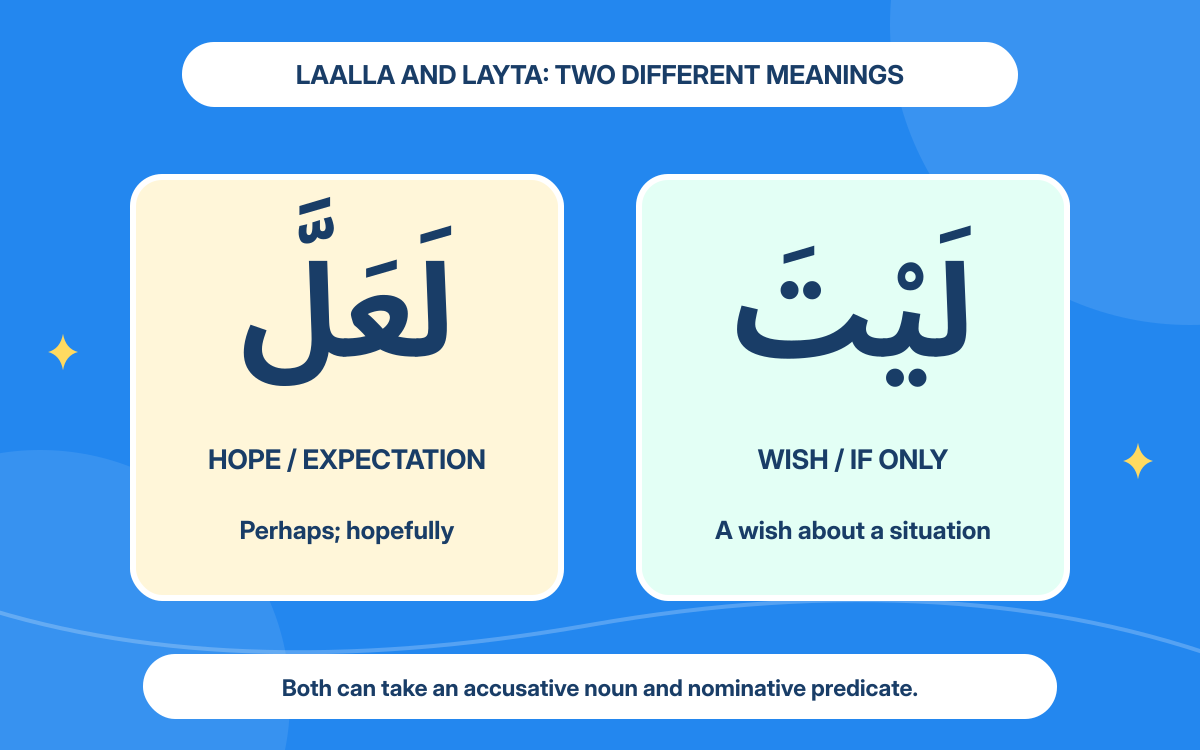
Laalla, لَعَلَّ, can express hope or expectation: perhaps, hopefully, or I hope that.
لَعَلَّ الدَّرْسَ سَهْلٌ
laalla ddarsa sahlun
I hope the lesson is easy.
The speaker hopes for an easy lesson rather than asserting its ease as a certainty. The noun is accusative, addarsa; the simple predicate is nominative, sahlun.
02Express a wish with if only
Layta, لَيْتَ, expresses wishing. Imagine a holiday that feels too short.
لَيْتَ الْعُطْلَةَ طَوِيلَةٌ
layta lutlata tawilatun
If only the holiday were long.
This expresses the desired situation, rather than a hopeful prediction about it. Layta governs accusative alutlata and nominative tawilatun. A wish can concern something difficult, unreal, or attainable; do not define layta as exclusively impossible.
03Attach the person directly
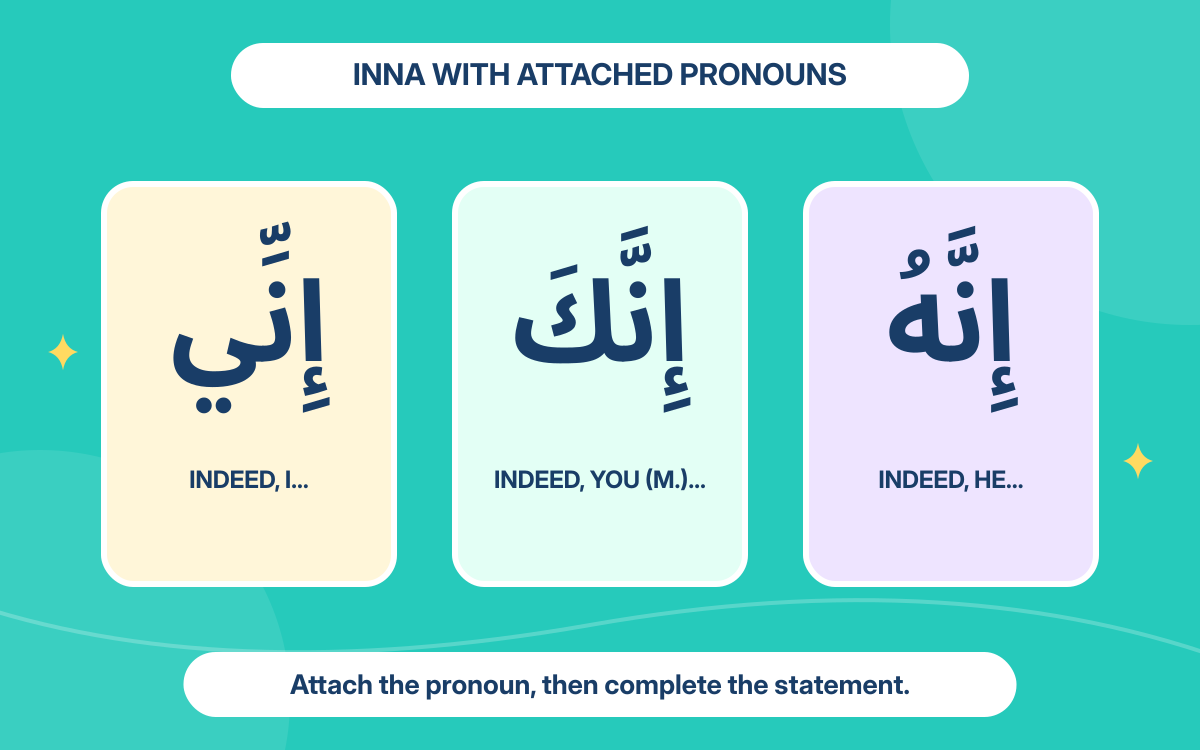
The familiar phrase below attaches masculine singular you to laalla.
لَعَلَّكَ بِخَيْرٍ
laallaka bikhayrin
I hope you are well. — one man
The fixed pronoun ka occupies the accusative noun position. Bikhayrin is the predicate phrase; khayrin is genitive after bi. It does not take a nominative ending just because the phrase is the predicate.
لَيْتَنِي حَاضِرٌ
laytani hadirun
If only I were present. — a male speaker
Laytani means if only I. The extra n comes before the I suffix. A female speaker uses the predicate حَاضِرَةٌ, hadiratun.
04Let context reveal hope or concern
Laalla is not limited to pleasant hopes. It can express concern about an unwelcome possibility.
لَعَلَّ الْقِطَارَ مُتَأَخِّرٌ
laalla lqitara mutaakhkhirun
I am afraid the train may be late.
Here lateness is the possibility causing concern. The speaker’s attitude comes from the context. The same governing construction remains: an accusative noun and a nominative simple predicate.
05Keep meaning and construction together
To express hope about fine weather, begin with laalla, then its noun, then the simple predicate.
لَعَلَّ الْجَوَّ جَمِيلٌ
laalla ljawwa jamilun
I hope the weather is fine.
Aljawwa is accusative; jamilun is nominative. Layta would turn this into a wish. Choose the particle for the intended attitude, then preserve the case pattern.
What to remember
- Laalla expresses hope or expectation and can express concern when the possible outcome is unwelcome.
- Layta expresses a wish, often translated as if only; it is not restricted to impossible wishes.
- Both govern an accusative noun or fixed attached pronoun, while a simple noun or adjective predicate stays nominative.
Your reference shelf
Open a guide whenever you need it.
Review hope, wishes and pronounsCompare the meanings without treating case as a translation rule
| Meaning | Arabic | Reading |
|---|---|---|
| Hope about a lesson | لَعَلَّ الدَّرْسَ سَهْلٌ | laalla ddarsa sahlun |
| Wish about a holiday | لَيْتَ الْعُطْلَةَ طَوِيلَةٌ | layta lutlata tawilatun |
| You, one man / one woman | لَعَلَّكَ / لَعَلَّكِ | laallaka / laallaki |
| If only I | لَيْتَنِي | laytani |
Hope and wishing can concern the same situation, but the particle changes how the speaker presents it. There is no mechanical rule that all possible events require laalla and all impossible events require layta. In لَعَلَّكَ بِخَيْرٍ, the whole prepositional phrase serves as predicate; the noun inside it retains its genitive case. A fixed pronoun has an accusative grammatical position without a newly added fathah.
Sources & further learning
References for the language explanations and learning guidance.