A large, impressive house can look like a palace. Arabic can introduce that comparison with kaanna: as if or as though. It shares the noun and predicate construction of inna, while adding its own meaning of resemblance or appearance.
01Introduce a comparison
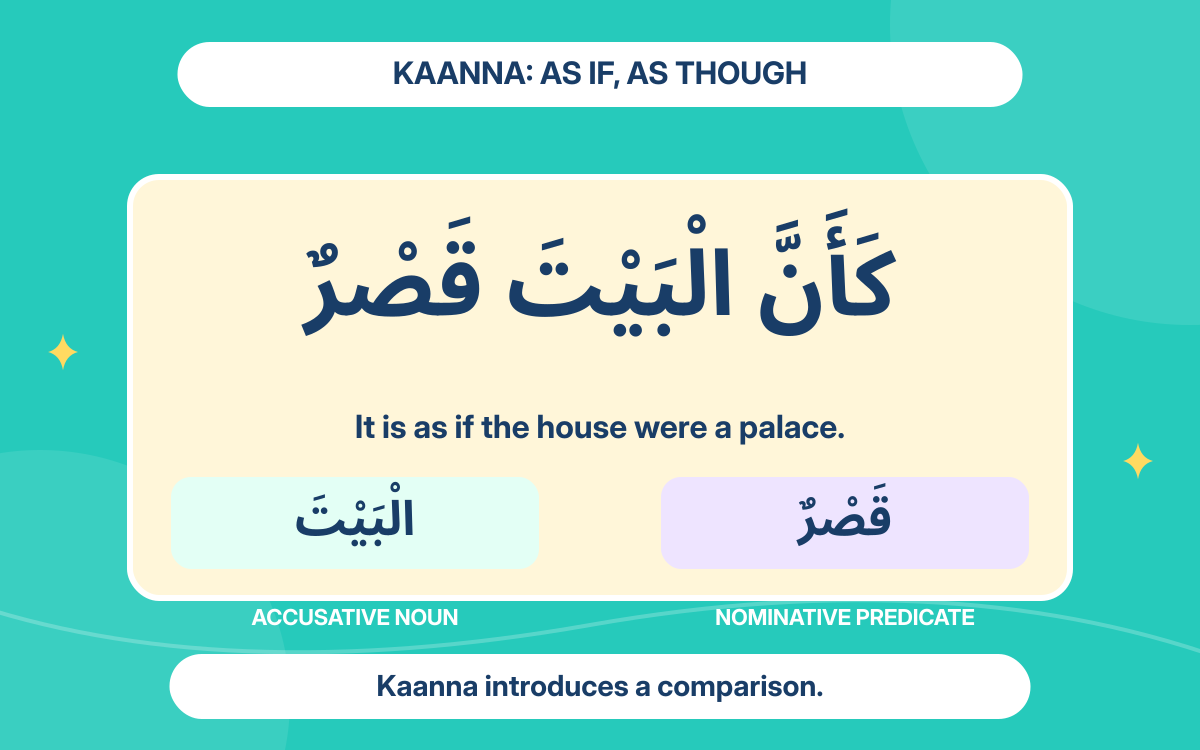
Kaanna, كَأَنَّ, presents something as resembling something else. The doubled nun belongs to the particle.
كَأَنَّ الْبَيْتَ قَصْرٌ
kaanna lbayta qasrun
The house is like a palace. — as if it were a palace
This is a comparison. It need not mean that the house is literally a palace. Depending on the context, English may use like, as if, or as though.
02Use the inna-family case pattern
Kaanna governs an accusative noun. Its simple noun or adjective predicate stays nominative.
كَأَنَّ الْقَمَرَ مِصْبَاحٌ
kaanna lqamara misbahun
The moon is like a lamp.
Alqamara, the moon, is the noun of kaanna and ends in a. Misbahun, a lamp, is its predicate and ends in un. The comparison does not make both nouns accusative.
03Attach he or she
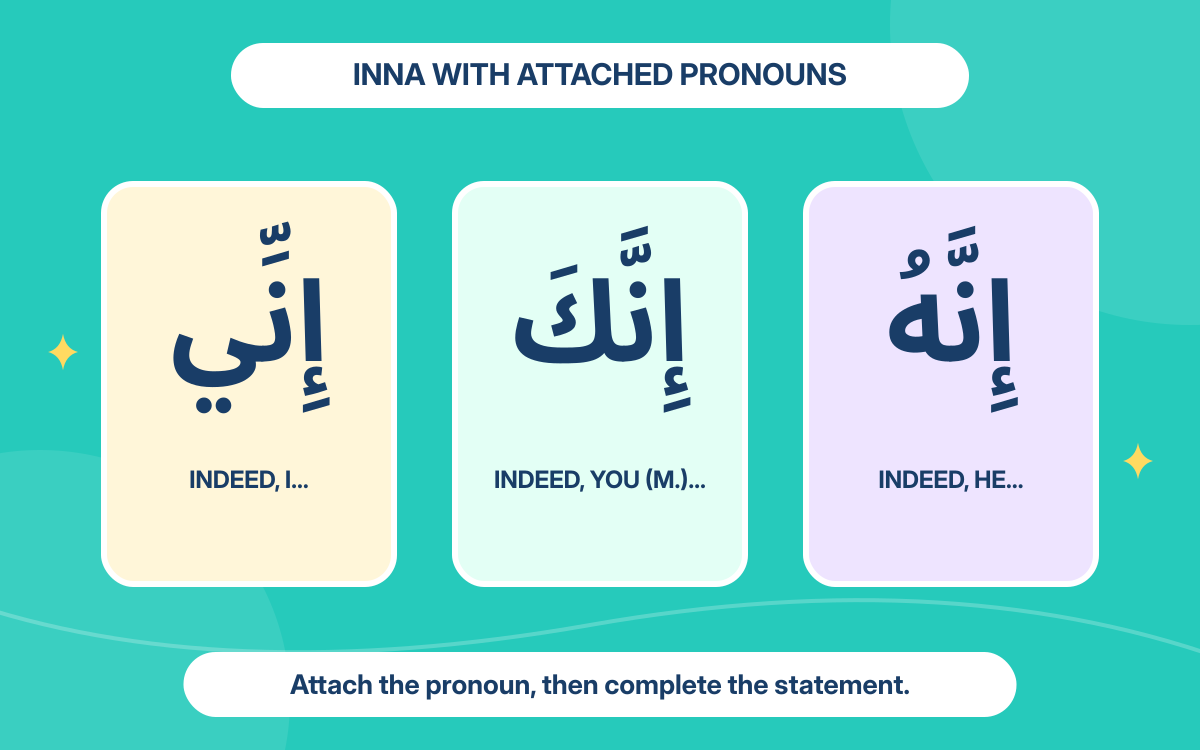
Use kaannahu for he or a masculine singular referent, and kaannaha for she or a feminine singular referent.
كَأَنَّهَا أُخْتُكَ
kaannaha ukhtuka
She looks like your sister. — addressing one man
كَأَنَّهُ أَخُوكَ
kaannahu akhuka
He looks like your brother. — addressing one man
The attached pronoun occupies kaanna’s accusative noun position without gaining a new case ending. The predicate keeps its own nominative form.
04Read an appearance without asserting a fact
Kaanna can also present how a situation seems to the speaker.
كَأَنَّهُ مُدَرِّسٌ
kaannahu mudarrisun
It looks as though he is a teacher.
This wording presents an impression. It does not by itself establish his profession as a confirmed fact. Inna would emphasise a statement instead; lianna would introduce a reason. Choose the meaning the context needs.
05Put the three parts together
Build the comparison in this order: kaanna, the noun being described, then the comparison predicate.
كَأَنَّ الْبَيْتَ قَصْرٌ
kaanna lbayta qasrun
The house is like a palace.
Keep the definite house noun accusative and the indefinite palace predicate nominative. Our plain reading aids show connected pronunciation: after kaanna, the joining vowel of al drops, giving lbayta. They simplify vowel length while retaining the displayed endings.
What to remember
- Kaanna introduces a comparison or appearance, naturally translated as like, as if or as though.
- Its noun is accusative; a simple noun or adjective predicate remains nominative.
- Kaannahu and kaannaha fill the noun position with an attached pronoun for he or it and she or it.
Your reference shelf
Open a guide whenever you need it.
Review comparison and attached pronounsCompare noun endings and three pronoun forms
| Construction | Arabic | Reading |
|---|---|---|
| Noun and predicate | كَأَنَّ الْبَيْتَ قَصْرٌ | kaanna lbayta qasrun |
| He / she | كَأَنَّهُ / كَأَنَّهَا | kaannahu / kaannaha |
| You, one man / one woman | كَأَنَّكَ / كَأَنَّكِ | kaannaka / kaannaki |
The possessive k in ukhtuka, your sister, belongs to the predicate noun; it is separate from ha attached to kaanna. The sister predicate is nominative أُخْتُكَ. Brother has the special nominative form أَخُوكَ in this construction. A predicate can also be a phrase or clause; this guide practises simple noun predicates so that their nominative endings can be seen.
Sources & further learning
References for the language explanations and learning guidance.