English asks “How many books?” with a plural noun. In the basic Arabic question with kam, the noun naming what you are counting is singular. This small change makes questions about books, pens and bags easier to build. Then the rest of the question tells us who has them or where they are.
01Ask how many with a singular noun
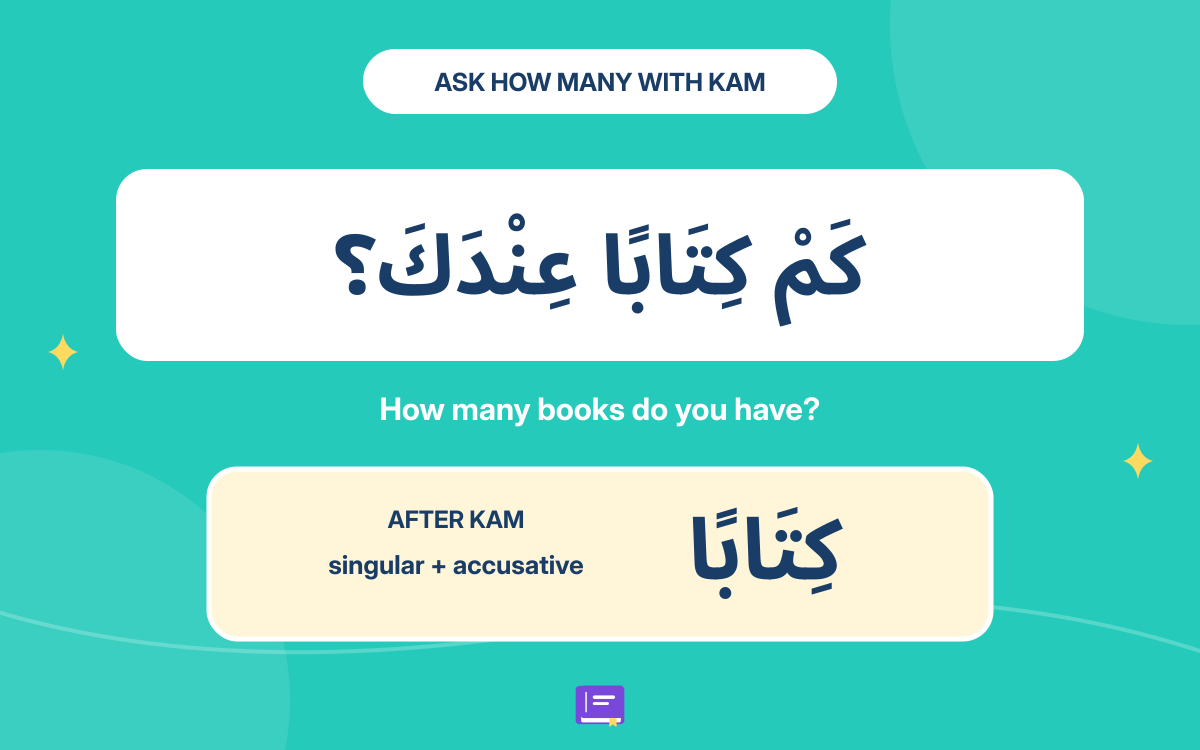
كَمْ كِتَابًا عِنْدَكَ؟
kam kitaban indaka
How many books do you have?
Kam means “how many.” Kitaban is singular, indefinite and accusative. It tells us what is being counted; grammarians call this specifying noun tamyiz. The English translation is plural, but the Arabic noun remains singular in this pattern.
02Keep the specifying noun accusative
كَمْ قَلَمًا عِنْدَكَ؟
kam qalaman indaka
How many pens do you have?
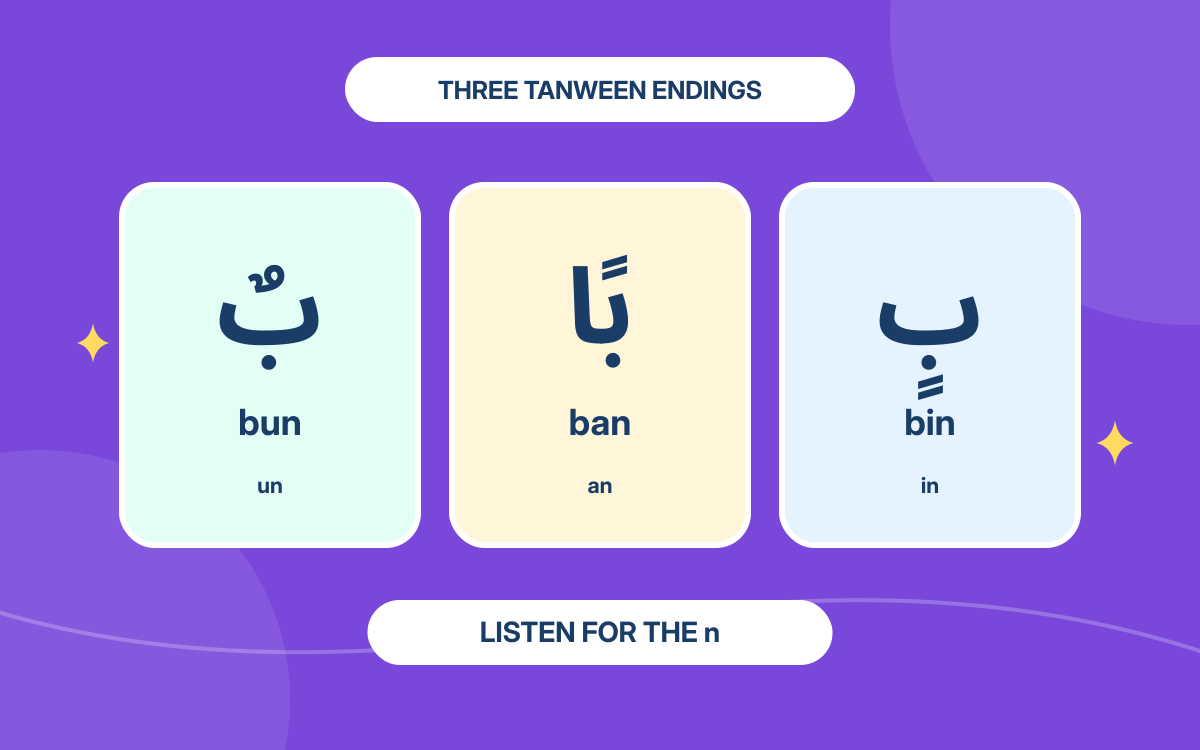
One pen is قَلَمٌ. After interrogative kam in our basic pattern, use قَلَمًا. The ending an shows accusative tanween on this regular noun. Do not replace it with the nominative form qalamun or turn the noun into the plural aqlam.
Indaka addresses one male. To address one female, say عِنْدَكِ (indaki). That change belongs to the listener’s pronoun; it does not change the case of qalaman.
03Notice which words need a supporting alif
قَلَمًا
qalaman
A pen, in the accusative
حَقِيبَةً
haqibatan
A bag, in the accusative
Qalaman has a supporting alif after its final consonant. Haqibatan ends in taa marbuta, ة, so no extra alif is added. The t is pronounced in the full ending atan.
This is a spelling check, not a rule that only masculine nouns can take a supporting alif. Other endings have their own spelling rules. These two common forms give you a reliable starting pair.
04Ask about a place too
كَمْ قَلَمًا فِي الْحَقِيبَةِ؟
kam qalaman fi lhaqibati
How many pens are in the bag?
The counted noun is still qalaman. The location phrase comes after it: fi lhaqibati, “in the bag.” The preposition fi makes the bag genitive; it does not reach backwards and change the specifying noun.
If the bag is already clear from the conversation, you can ask كَمْ قَلَمًا فِيهَا؟ (kam qalaman fiha), “How many pens are in it?” The ending ha refers to the feminine bag, not to the pens.
05Let the answer use its own number pattern
عِنْدِي ثَلَاثَةُ أَقْلَامٍ
indi thalathatu aqlamin
I have three pens
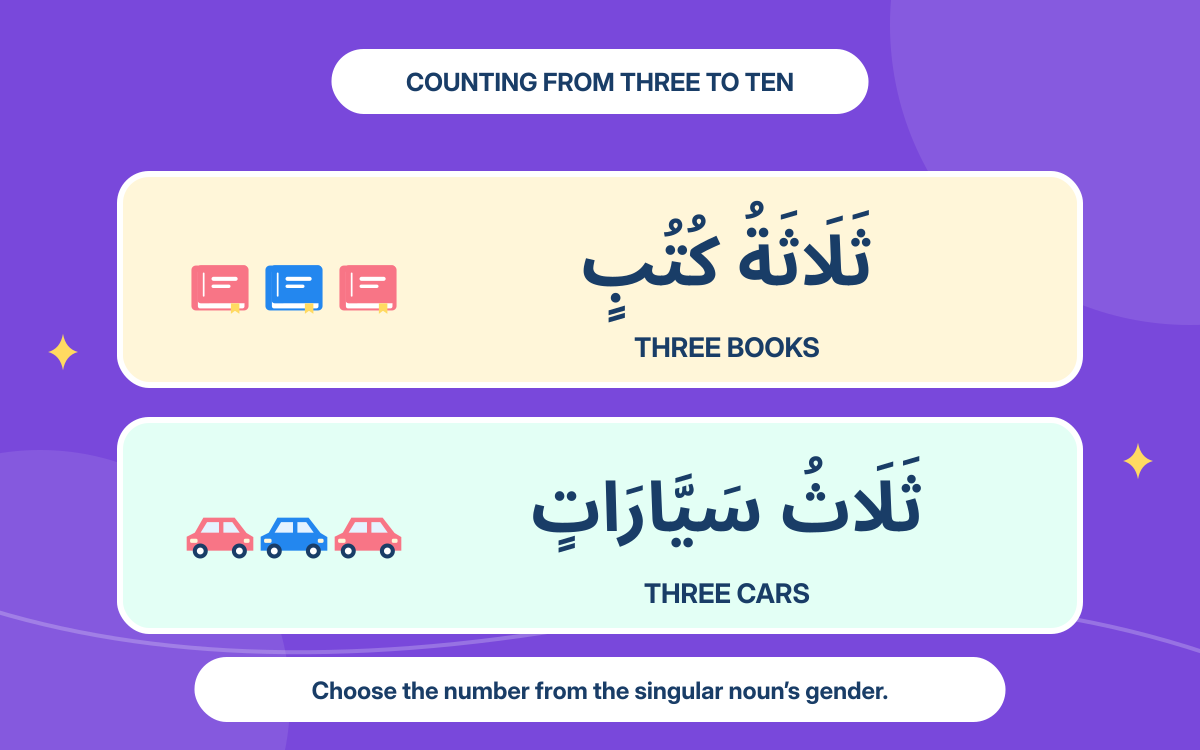
The question uses singular accusative qalaman. An answer with three uses a different construction: the number comes first, followed by the plural genitive aqlamin. Do not copy the question’s noun ending into every answer.
Before asking, check four pieces: kam, what you are counting, its singular accusative form, and the possession or location phrase. Our examples show full formal endings. Other uses of kam exist, including statements of abundance; those are outside this introductory questioning pattern.
What to remember
- After interrogative kam in the basic pattern, use a singular indefinite accusative specifying noun.
- Qalaman takes a supporting alif; haqibatan ends in ة and does not add one.
- A question and its numbered answer can require different noun forms.
Your reference shelf
Open a guide whenever you need it.
Build the question in three partsReview the noun form and keep spelling separate from gender
| Part | Example | Job |
|---|---|---|
| Question word | كَمْ | Ask how many |
| Specifying noun | قَلَمًا | Name the item being counted |
| Possession or location | عِنْدَكَ / فِي الْحَقِيبَةِ | Say who has the items or where they are |
The specifying noun is تَمْيِيزٌ (tamyiz). This guide practises the direct interrogative pattern without a preposition before kam. Other constructions can change its analysis or the following noun’s case.
A supporting alif is not an extra vowel after the connected an ending in qalaman. At a stop, the usual reading of قَلَمًا ends with a long a instead. A final ة has a different pause reading. The main examples retain formal endings so the grammar is visible.
Count noun questions such as “How many pens?” are the focus here. Questions about prices and uncountable quantities can use different structures.
Sources & further learning
References for the language explanations and learning guidance.