A house can resemble a palace without being one. Arabic expresses that resemblance with the attached preposition ka, meaning like. Keep its following noun genitive, and read ka together with the noun’s definite article. This is a different construction from kaanna, as if.
01Attach ka for resemblance
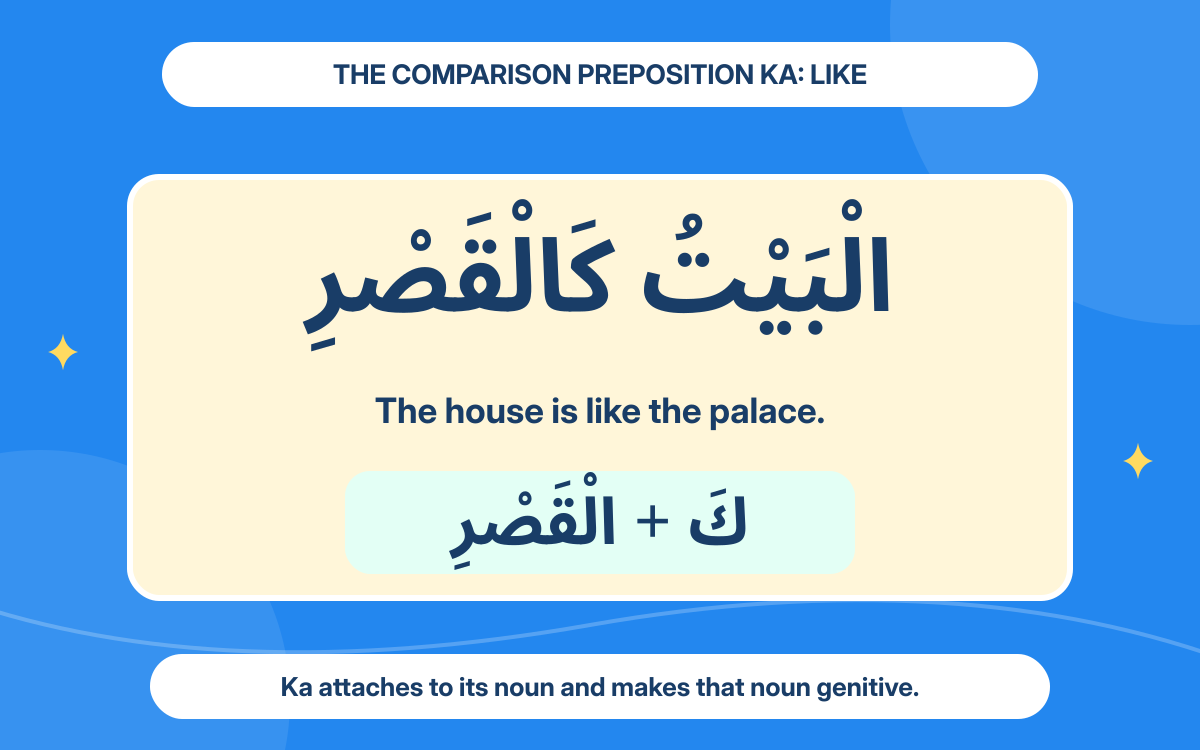
كَ means like in these comparisons. Write it onto the following noun, with no separating space.
الْبَيْتُ كَالْقَصْرِ
albaytu kalqasri
The house is like the palace.
The house may resemble the palace in appearance or size. This sentence compares them; it does not establish that they are the same building. Ka and الْقَصْرِ form one written word: كَالْقَصْرِ.
02Give the comparison noun genitive case
Ka is a preposition, so the noun it governs is genitive. Our regular definite nouns show this with final kasrah, i.
الْقَمَرُ كَالْمِصْبَاحِ
alqamaru kalmisbahi
The moon is like the lamp.
Almisbahi is genitive after ka. Alqamaru remains the nominative subject, ending in u. Likewise, in the house example, albaytu is nominative and alqasri is genitive. Ka governs the comparison noun; it does not change every noun in the sentence.
03Join the article when reading
The article’s alif stays in the spelling, but its starting vowel drops after ka. With q in kalqasri, the article’s l remains audible. With a sun letter, l joins that letter’s doubled sound.
الْمِصْبَاحُ كَالشَّمْسِ
almisbahu kashshamsi
The lamp is like the sun.
Sh is a sun letter: say kashshamsi, with doubled sh and final genitive i. Keep both alif and lam in the Arabic spelling. Our plain reading aids show connected pronunciation and full case endings while simplifying vowel length.
04Name the feature being compared
An adjective can identify the shared feature before the ka phrase. Sariun means fast.
هُوَ سَرِيعٌ كَالسَّيَّارَةِ
huwa sariun kassayyarati
He is fast like the car.
The comparison concerns speed. Sariun is the nominative adjective predicate; assayyarati is genitive after ka. Say kassayyarati: the article’s l joins the sun letter s, and the taa marbuta is pronounced t before its case ending.
05Keep ka and kaanna constructions distinct
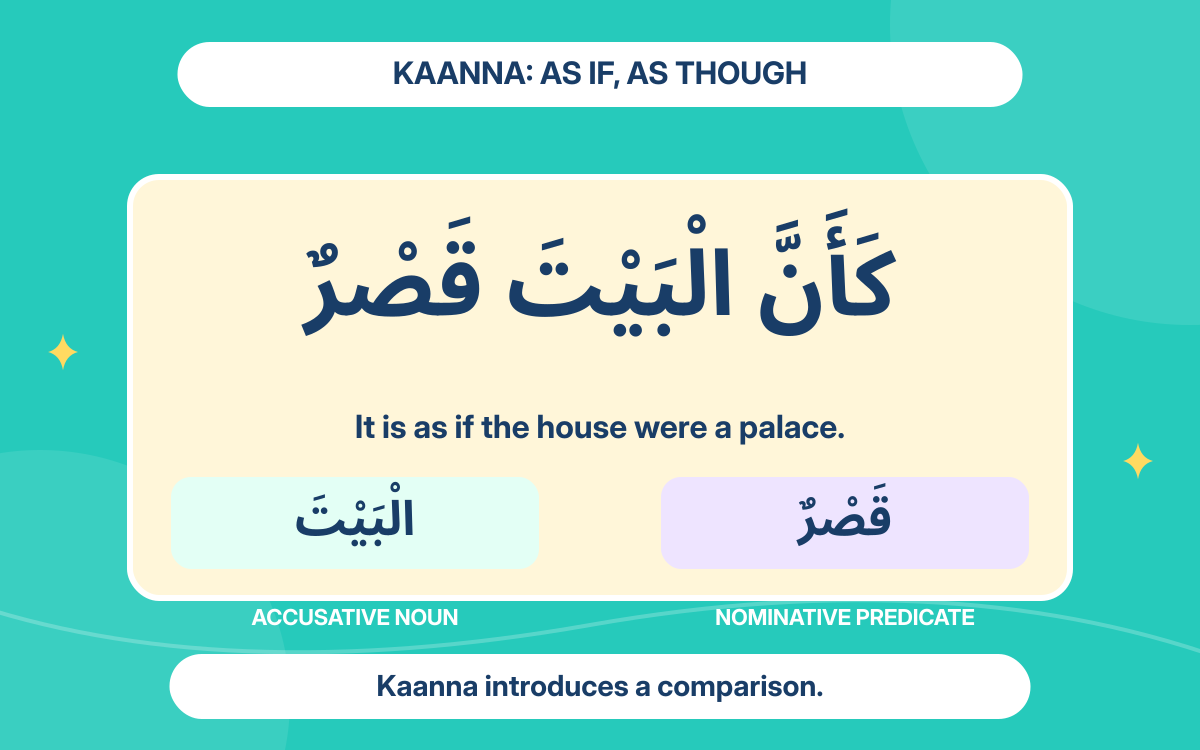
Ka attaches to the comparison noun. Kaanna is a separate governing particle: its noun is accusative, and its simple noun predicate is nominative.
الْبَيْتُ كَالْقَصْرِ
albaytu kalqasri
The house is like the palace.
كَأَنَّ الْبَيْتَ قَصْرٌ
kaanna lbayta qasrun
The house is like a palace. — as if it were a palace
The meanings can overlap, but the structures differ. With ka, the house stays nominative and the palace is genitive. With kaanna, the house becomes accusative and the palace predicate is nominative.
What to remember
- Attach comparison ka to its following noun, including the definite article.
- Ka governs a genitive noun; the nominative subject keeps its own role.
- Connected article pronunciation and the kaanna case pattern are separate things to check.
Your reference shelf
Open a guide whenever you need it.
Review resemblance, endings and connected articlesKeep ka spelling, genitive case and kaanna apart
| Arabic | Reading aid | Meaning |
|---|---|---|
| كَالْقَصْرِ | kalqasri | Like the palace |
| كَالْمِصْبَاحِ | kalmisbahi | Like the lamp |
| كَالشَّمْسِ | kashshamsi | Like the sun |
| كَالسَّيَّارَةِ | kassayyarati | Like the car |
The l stays audible before q and m, but assimilates to sh and s. The Arabic article retains its written alif and lam in each row.
Genitive is a grammatical case, not a promise that every noun type ends in i. An ordinary indefinite noun can end in in, while diptotes, duals and certain plurals use other forms. Today’s regular definite examples keep the kasrah visible.
كَأَنَّ is the different particle kaanna. Read its accusative noun and nominative simple predicate using its own construction. The shared idea of resemblance does not make the endings interchangeable.
Sources & further learning
References for the language explanations and learning guidance.