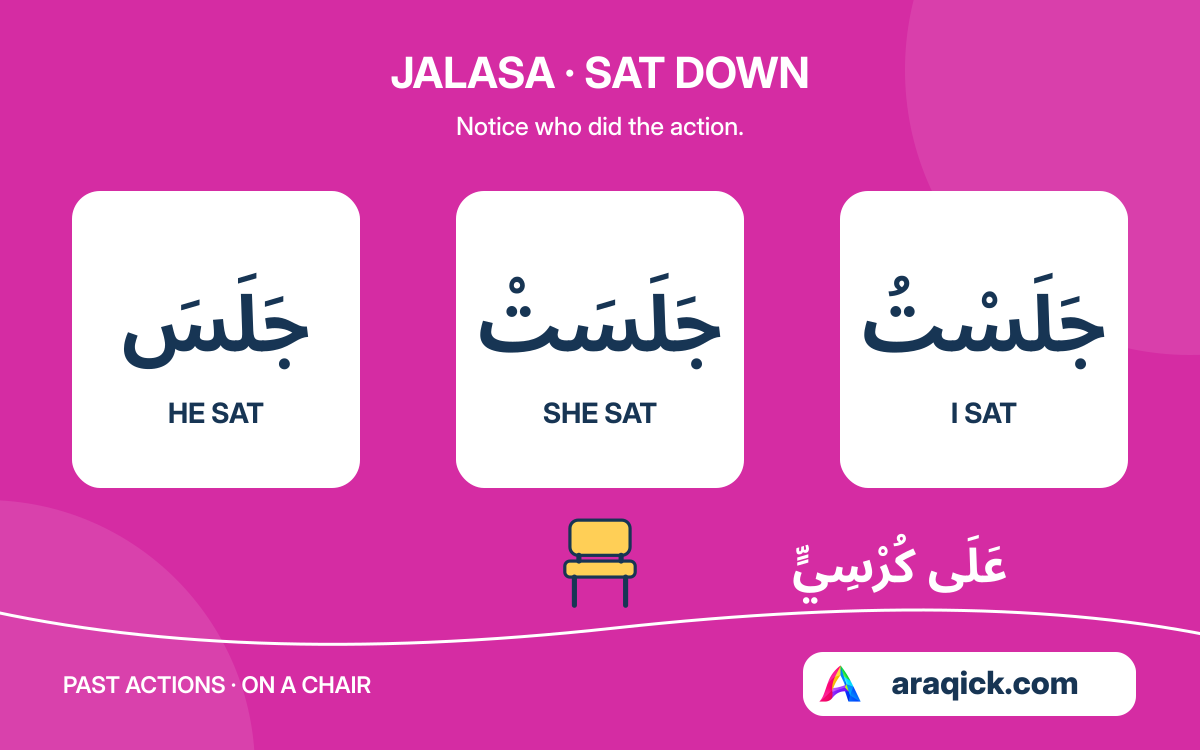
Jalasa, جَلَسَ, means “he sat” or “he sat down.” It is a useful regular past verb for describing a completed action. Jalastu means I sat, while jalasna means we sat. Add a place phrase to explain where someone sat.
01Recognise the action
جَلَسَ حَامِدٌ
jalasa hamidun
Hamid sat down.
Jalasa names the action; Hamidun names the person doing it. The sentence already makes sense without a direct object. The root letters are ج ل س.
Sat and sat down can both translate this verb, depending on the situation. Our examples describe a completed past action rather than telling someone to sit.
02Say who sat
| Arabic | Reading aid | Meaning |
|---|---|---|
| جَلَسْتُ | jalastu | I sat |
| جَلَسْتَ | jalasta | You sat, one male |
| جَلَسْتِ | jalasti | You sat, one female |
| جَلَسْنَا | jalasna | We sat |
Read the final vowel carefully. Tu identifies the speaker; ta and ti identify one listener. The form for I works for either a male or female speaker.
You can say jalastu without ana because the verb ending already gives I. Add the separate pronoun when you need emphasis or clarification.
03Keep she sat separate from I sat
جَلَسَتْ — جَلَسْتُ
jalasat — jalastu
She sat — I sat
Jalasat has a vowel after s and then a final vowelless t. Jalastu has sukun on s and a tu ending. The Arabic marks show that these are different shapes, not interchangeable endings.
جَلَسَتْ مَرْيَمُ
jalasat maryamu
Maryam sat down.
In this example the final t marks feminine agreement and Maryam is the named subject. Do not read it as the you ending ta or ti.
04Say where someone sat
جَلَسْتُ عَلَى كُرْسِيٍّ
jalastu ala kursiyyin
I sat on a chair.
جَلَسْنَا فِي حَدِيقَةٍ
jalasna fi hadiqatin
We sat in a garden.
Ala means on; fi means in. Both introduce a place phrase. Kursiyyin and hadiqatin are genitive after their prepositions.
The chair is part of the location phrase, not a direct object of jalasa. Keep the preposition when building this sentence.
05Describe one small event
جَلَسَ حَامِدٌ عَلَى كُرْسِيٍّ
jalasa hamidun ala kursiyyin
Hamid sat on a chair.
Find the action first, then the person, then the place. You can change the person while keeping the setting: جَلَسْتُ عَلَى كُرْسِيٍّ means I sat on a chair.
The present form يَجْلِسُ (yajlisu) means he sits or he is sitting. Learn this pair together: jalasa and yajlisu. The middle vowel changes from a to i.
Use the reference chart for other past subjects. For the sentence roles, continue with verb, doer and object; for the changing vowel, see past–present verb pairs.
What to remember
- Jalasa means he sat or sat down.
- Jalastu means I sat; jalasat means she sat.
- Use a preposition to add where someone sat.
Your reference shelf
Open a guide whenever you need it.
Complete past-tense chartReview the fourteen traditional person positions
| Person | Pronoun | Past form |
|---|---|---|
| He | هُوَ | جَلَسَ |
| They, two males or a mixed pair | هُمَا | جَلَسَا |
| They, male or mixed group | هُمْ | جَلَسُوا |
| She | هِيَ | جَلَسَتْ |
| They, two females | هُمَا | جَلَسَتَا |
| They, female group | هُنَّ | جَلَسْنَ |
| You, one male | أَنْتَ | جَلَسْتَ |
| You, two males or a mixed pair | أَنْتُمَا | جَلَسْتُمَا |
| You, male or mixed group | أَنْتُمْ | جَلَسْتُمْ |
| You, one female | أَنْتِ | جَلَسْتِ |
| You, two females | أَنْتُمَا | جَلَسْتُمَا |
| You, female group | أَنْتُنَّ | جَلَسْتُنَّ |
| I | أَنَا | جَلَسْتُ |
| We | نَحْنُ | جَلَسْنَا |
The two antuma positions use the same form. جَلَسْنَ for a female group has short final a; جَلَسْنَا for we has long final a.
Sources & further learning
References for the language explanations and learning guidance.