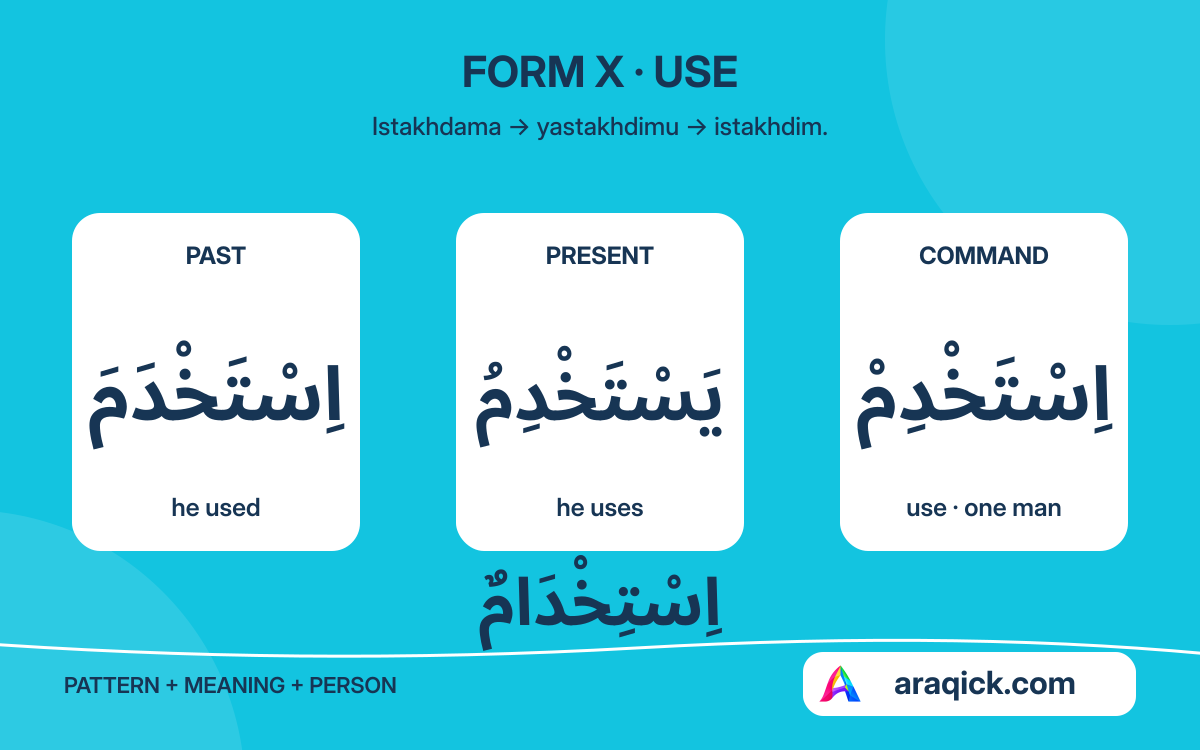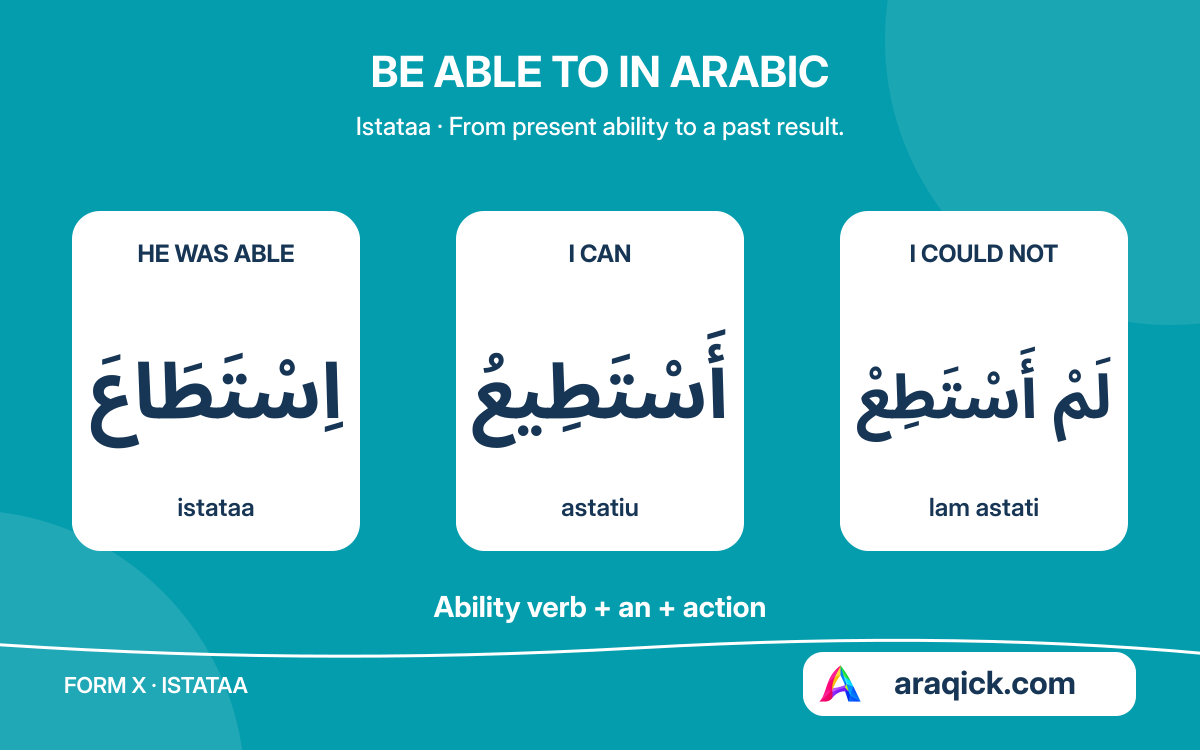
Istataa means he was able to. Its present is yastatiu, and its root is ط و ع. This Form X verb has a weak middle radical, so some endings shorten its long stem vowel. The guide extends basic I can sentences into past ability, plural subjects and negative forms.
01Report a task you managed to do
اِسْتَطَعْتُ أَنْ أَفْتَحَ النَّافِذَةَ
istatatu an aftaha annafidhata
I was able to open the window.
Istatatu is the past I form. It has a short a before the final root consonant ayn, unlike the long a of istataa. The following phrase an aftaha names the action I was able to perform.
The verb after an is subjunctive: aftaha ends in fathah. Both verbs have I as their subject here. Start with the short I can guide if the two-verb structure is new to you.
02Compare long and short past stems
اِسْتَطَاعَ — اِسْتَطَعْتُ — اِسْتَطَعْنَا
istataa — istatatu — istatana
He was able — I was able — We were able
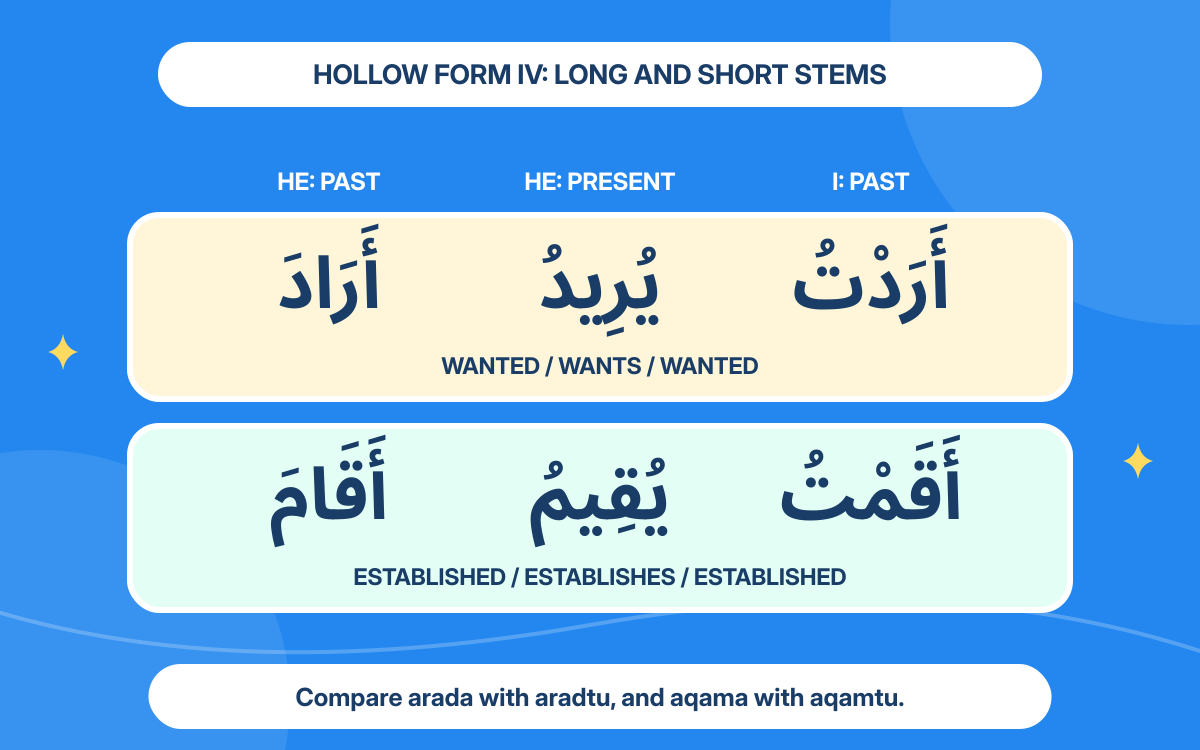
The dictionary past form keeps long a, but the I and we forms shorten it before their consonant-starting suffixes. Do not attach tu to an unchanged istataa.
They were able for a male or mixed group is اِسْتَطَاعُوا, with long a. A female group uses اِسْتَطَعْنَ, with short a. Learn these contrasts from the chart instead of assuming that every plural behaves alike.
03Change who can perform the action
تَسْتَطِيعُ أَنْ تَحْمِلَ الْحَقِيبَةَ
tastatiu an tahmila alhaqibata
She can carry the bag.
Tastatiu can mean she can or you can to one man; context identifies the subject. This example refers to she. I can is أَسْتَطِيعُ, and we can is نَسْتَطِيعُ.
The ordinary present has long i in these forms. The feminine plural shortens it, as in يَسْتَطِعْنَ for they can. These are active ability statements, not commands or requests for permission.
04Let an govern the second verb
نَسْتَطِيعُ أَنْ نُشَارِكَ
nastatiu an nusharika
We can participate.
An comes between the ability verb and the action. Nastatiu remains indicative here; nusharika becomes subjunctive after an. The rule applies to the second verb, not automatically to both verbs in the sentence.
The second verb in this example is from sharaka, another verb for participating. Keep its own person prefix and conjugation. Compare an with a following verb and the Form X overview.
05Separate could not from will not be able
لَمْ نَسْتَطِعْ أَنْ نُسَافِرَ أَمْسِ
lam nastati an nusafira amsi
We could not travel yesterday.
Lam makes nastati jussive: the long i shortens and the final ayn takes sukun. The travel verb is still subjunctive after an. Each particle controls its own following verb.
For I will not be able, use لَنْ أَسْتَطِيعَ: lan changes the final vowel to a but retains long i. The noun اِسْتِطَاعَةٌ means ability. The reading aids simplify ayn and vowel length, so use the Arabic chart for exact forms.
What to remember
- Istataa has a long past stem, but istatatu and istatana shorten it.
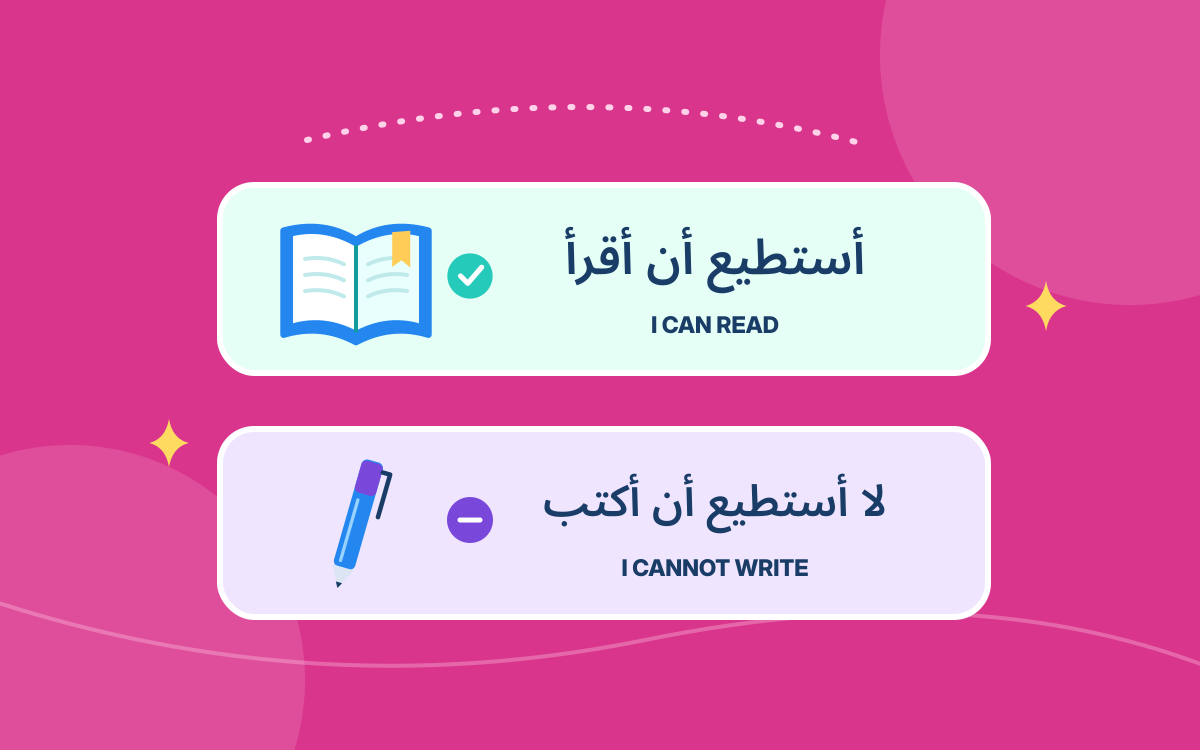
- An governs the following action verb, as in astatiu an aftaha.
- Lam astati shortens the stem; lan astatia retains long i.
Your reference shelf
Open a guide whenever you need it.
Be able: past and presentComplete person forms; the present column is indicative
| Person | Past | Present |
|---|---|---|
| He | اِسْتَطَاعَ | يَسْتَطِيعُ |
| They: two men | اِسْتَطَاعَا | يَسْتَطِيعَانِ |
| They: male or mixed group | اِسْتَطَاعُوا | يَسْتَطِيعُونَ |
| She | اِسْتَطَاعَتْ | تَسْتَطِيعُ |
| They: two women | اِسْتَطَاعَتَا | تَسْتَطِيعَانِ |
| They: female group | اِسْتَطَعْنَ | يَسْتَطِعْنَ |
| You: one man | اِسْتَطَعْتَ | تَسْتَطِيعُ |
| You: two people | اِسْتَطَعْتُمَا | تَسْتَطِيعَانِ |
| You: male or mixed group | اِسْتَطَعْتُمْ | تَسْتَطِيعُونَ |
| You: one woman | اِسْتَطَعْتِ | تَسْتَطِيعِينَ |
| You: female group | اِسْتَطَعْتُنَّ | تَسْتَطِعْنَ |
| I | اِسْتَطَعْتُ | أَسْتَطِيعُ |
| We | اِسْتَطَعْنَا | نَسْتَطِيعُ |
The dual you form serves two listeners of either gender. The present column gives ordinary indicative forms; mood particles can change the endings. The long stem vowel shortens before selected endings, including the past I form and feminine-plural present forms.
Ability frames and negative formsKeep the ability verb separate from the action after an
| Use | Arabic frame | What changes |
|---|---|---|
| I can | أَسْتَطِيعُ أَنْ أَفْتَحَ | Indicative ability verb; subjunctive action after an |
| I was able | اِسْتَطَعْتُ أَنْ أَفْتَحَ | Past I stem has short a |
| I cannot | لَا أَسْتَطِيعُ أَنْ أَفْتَحَ | Ordinary negative la leaves the first verb indicative |
| I could not | لَمْ أَسْتَطِعْ أَنْ أَفْتَحَ | Lam: jussive first verb, shortened stem vowel |
| I will not be able | لَنْ أَسْتَطِيعَ أَنْ أَفْتَحَ | Lan: subjunctive first verb, long i remains |
| Action noun | اِسْتِطَاعَةٌ | ability; capacity |
These frames use the same subject for the ability and the action. Each particle governs its own following verb. No command form is needed for these everyday ability statements.
Sources & further learning
References for the language explanations and learning guidance.