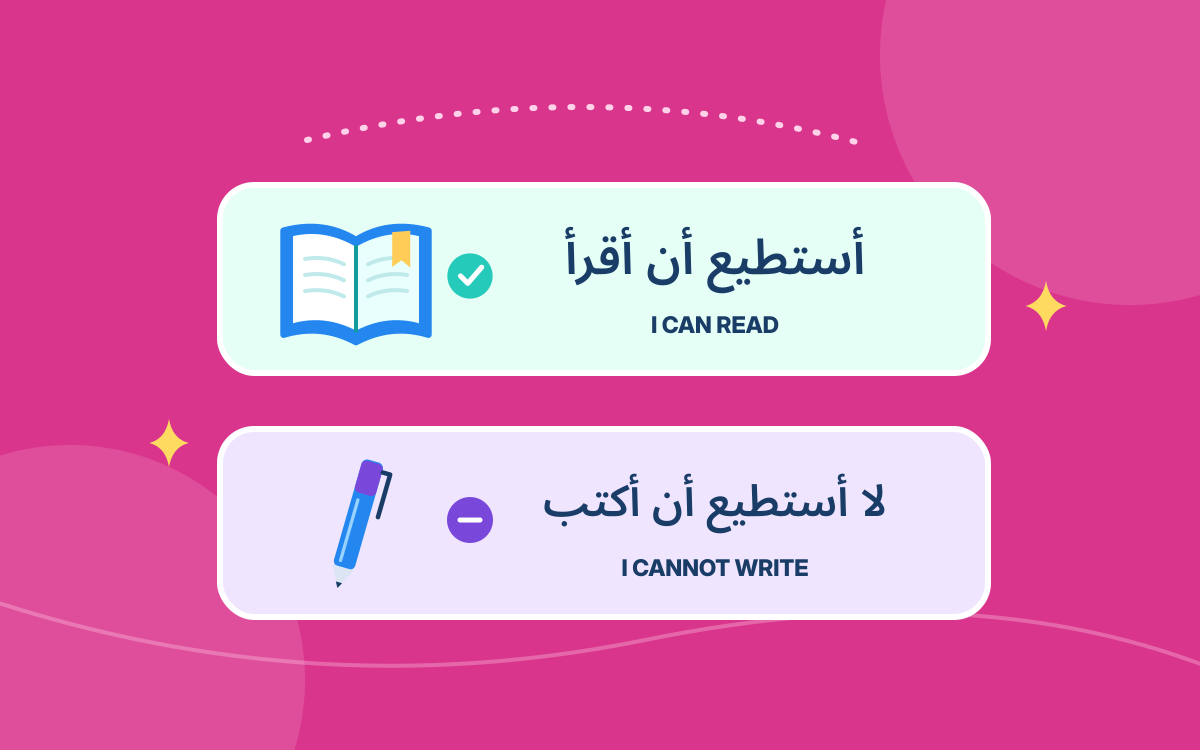
To say I can do something in Modern Standard Arabic, use astatiu an followed by the matching action. Astatiu an aqraa means I can read. Put la before astatiu for I cannot. Start with reading and writing, then build one specific statement about writing your name.
01Start with I can read
astatiu an aqraa
I can read.
The first word says I am able. أَنْ an connects it to the action, and أَقْرَأَ supplies read in the form needed here.
Learn the three words as a useful sentence. This expresses your ability to read; it does not say that you are reading at this moment.
02Change the action to writing
astatiu an aktuba
I can write.
Keep astatiu an and change only the action. Compare أَكْتُبُ aktubu, I write, with أَنْ أَكْتُبَ an aktuba in the ability sentence.
After an, this verb ends with a rather than u. This is its subjunctive form. The displayed Arabic vowels show the difference; you can learn the full model before studying the wider grammar.
03Put la before I can
لَا أَسْتَطِيعُ أَنْ أَكْتُبَ
la astatiu an aktuba
I cannot write.
- لَا la makes the ability statement negative.
- Keep أَنْ and the action after astatiu.
- In this model, aktuba keeps its final a.
You can use the same idea for reading: لَا أَسْتَطِيعُ أَنْ أَقْرَأَ la astatiu an aqraa means I cannot read. Choose the action you actually mean; being able to read and being able to write are different skills.
04Make the ability specific
أَسْتَطِيعُ أَنْ أَكْتُبَ اِسْمِي
astatiu an aktuba ismi
I can write my name.
اِسْمِي ismi means my name. Put it after the writing verb to say exactly what you can write. This is a smaller, more specific claim than saying I can write without further detail.
Use the pattern with a real learning milestone. If you can write your name in Arabic, say the sentence and try it on paper. If you need a model to copy, use one and keep practising until you can do it independently.
05Keep the speaker and meaning clear
astatiu an aqraa
Ability: I can read.
la astatiu an aqraa
Lack of ability: I cannot read.
A man or a woman uses the same first-person forms when speaking about themself. The verbs already identify I, so a separate أَنَا ana is optional.
These examples describe ability. They do not mean I want to read, and they are not requests for permission. Before choosing a sentence, decide whether you mean that you can do the action or that you cannot. Keep the action form taught after an in either case.
What to remember
- Use astatiu an with the taught action form to say I can.
- Place la before astatiu for I cannot, keeping an and the action.
- These first-person models work for male and female speakers.
Your reference shelf
Open a guide whenever you need it.
Keep the ability sentences togetherOpen reading, writing and writing my name models
| Meaning | Arabic | Plain reading aid |
|---|---|---|
| I can read | أَسْتَطِيعُ أَنْ أَقْرَأَ | astatiu an aqraa |
| I can write | أَسْتَطِيعُ أَنْ أَكْتُبَ | astatiu an aktuba |
| I cannot read | لَا أَسْتَطِيعُ أَنْ أَقْرَأَ | la astatiu an aqraa |
| I cannot write | لَا أَسْتَطِيعُ أَنْ أَكْتُبَ | la astatiu an aktuba |
| I can write my name | أَسْتَطِيعُ أَنْ أَكْتُبَ اِسْمِي | astatiu an aktuba ismi |
This lesson uses an followed by a verb. Arabic also permits a verbal noun after astatiu. The plain reading aids simplify Arabic sounds; the final a is retained in aqraa and aktuba here to show the forms used after an.
Sources & further learning
References for the language explanations and learning guidance.