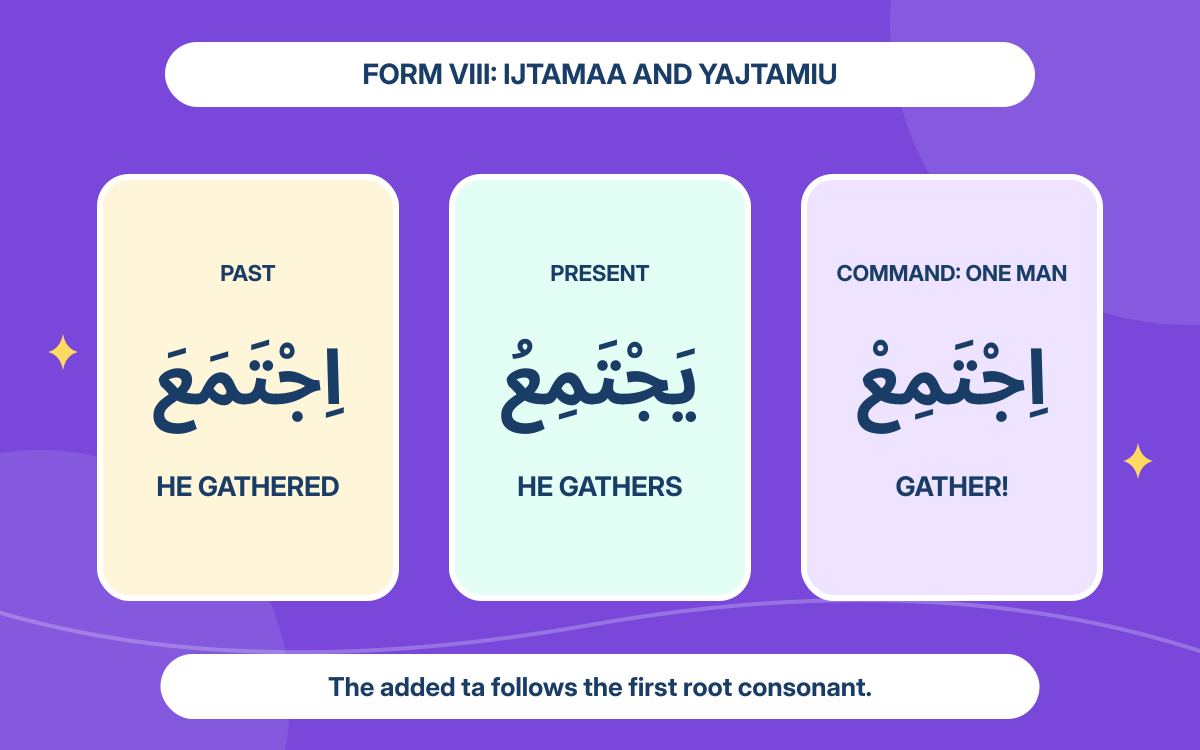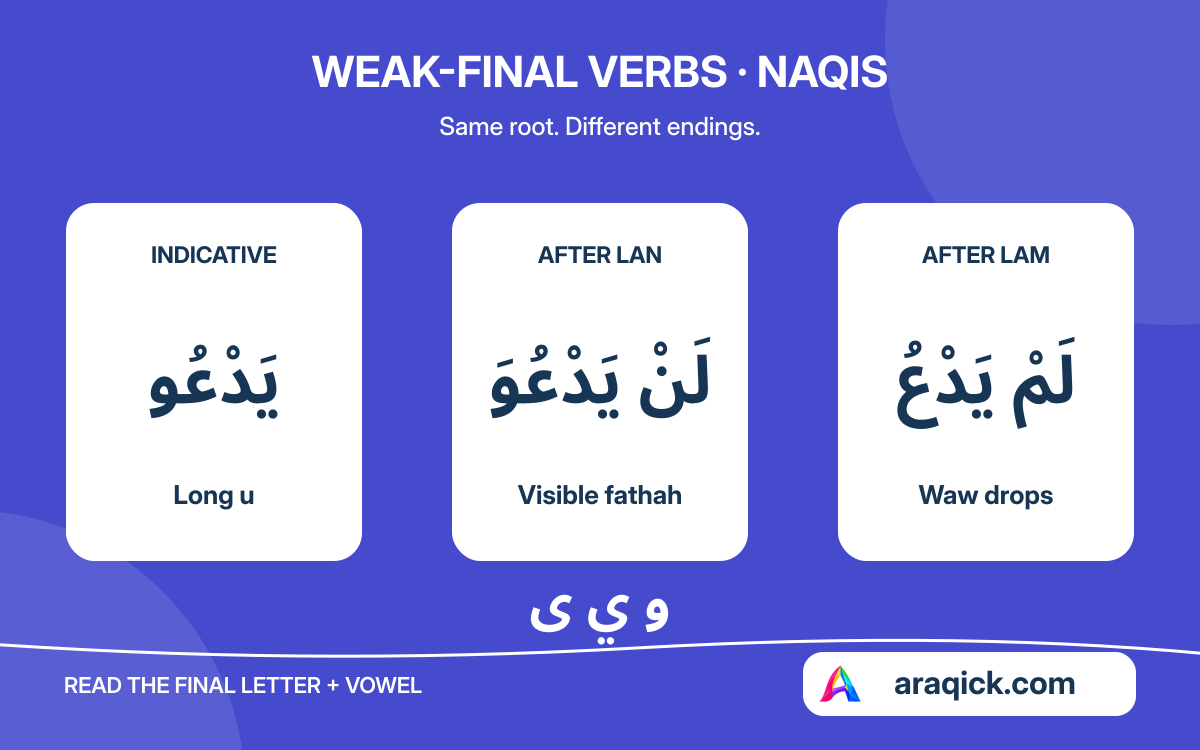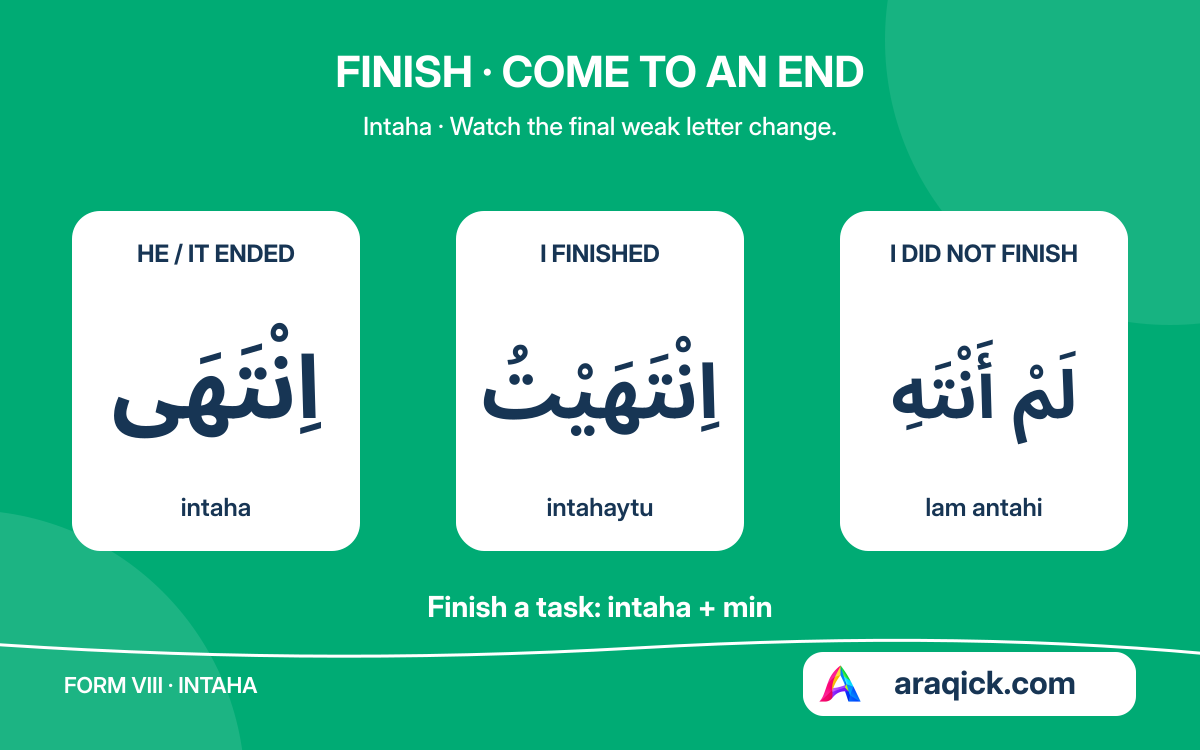
Intaha means he or it finished, ended or came to an end. This Form VIII verb has the root ن ه ي and a weak final radical. Its endings change noticeably: intaha becomes intahaytu for I finished, while yantahi means he or it finishes.
01Let the event be the subject
اِنْتَهَى الدَّرْسُ قَبْلَ الظُّهْرِ
intaha addarsu qabla azzuhri
The lesson ended before noon.
Addarsu is the subject: the lesson itself ended. There is no direct object in this sentence. The English translation can use ended or finished without changing that Arabic relationship.
The feminine past is اِنْتَهَتْ before a pause. You may see a linking kasrah in اِنْتَهَتِ الْمُحَاضَرَةُ when the lecture follows immediately; that extra linking vowel does not change the feminine subject.
02Use min when you finish a task
اِنْتَهَيْتُ مِنَ التَّمْرِينِ
intahaytu mina attamrini
I finished the exercise.
Intahaytu is I finished. The ending reveals y before tu instead of keeping the final alif maqsurah of intaha. Min attamrini identifies the task you are done with.
Do not simply place an accusative exercise after intahaytu in this model. The separate Form IV verb أَنْهَى can mean to bring something to an end and takes a direct object. Keep the two sentence frames distinct.
03Describe when something ends
يَنْتَهِي الْعَمَلُ فِي السَّاعَةِ الثَّالِثَةِ
yantahi alamalu fi assaati aththalithati
Work ends at three o’clock.
The ordinary indicative yantahi keeps its final ya. Its nominative vowel is not visibly pronounced after that long i. For I finish use أَنْتَهِي; for we finish use نَنْتَهِي.
A male or mixed group uses يَنْتَهُونَ. Notice that the same final ya is not retained in every person form. Use the complete chart rather than adding each ending to an unchanged yantahi.
04Drop the weak letter after lam
لَمْ أَنْتَهِ مِنَ التَّقْرِيرِ
lam antahi mina attaqriri
I did not finish the report.
Lam makes the imperfect jussive. In this singular form the final ya disappears, leaving a short kasrah under h. Compare indicative أَنْتَهِي with jussive أَنْتَهِ.
The plain reading aid may look very similar, so read the Arabic spelling carefully. This is a final-weak pattern, not the final sukun used with a sound verb such as wait. Review defective verbs and lam negatives.
05Finish with a practical instruction
اِنْتَهِ مِنَ الْعَمَلِ قَبْلَ الْمَسَاءِ
intahi mina alamali qabla almasai
Finish the work before evening. — to one man
The command to one man is intahi, written without a final ya. One woman hears اِنْتَهِي, with ya; a male or mixed group hears اِنْتَهُوا. Match the ending to the listener.
The action noun اِنْتِهَاءٌ means ending or completion. Connect it to the derived action-noun patterns. Use the charts as references while keeping each practice sentence focused on one change.
What to remember
- Intaha can describe an event coming to an end.
- Intahaytu min names the task I finished.
- The final ya drops in lam antahi and the command intahi to one man.
Your reference shelf
Open a guide whenever you need it.
Finish: past and presentComplete person forms; the present column is indicative
| Person | Past | Present |
|---|---|---|
| He | اِنْتَهَى | يَنْتَهِي |
| They: two men | اِنْتَهَيَا | يَنْتَهِيَانِ |
| They: male or mixed group | اِنْتَهَوْا | يَنْتَهُونَ |
| She | اِنْتَهَتْ | تَنْتَهِي |
| They: two women | اِنْتَهَتَا | تَنْتَهِيَانِ |
| They: female group | اِنْتَهَيْنَ | يَنْتَهِينَ |
| You: one man | اِنْتَهَيْتَ | تَنْتَهِي |
| You: two people | اِنْتَهَيْتُمَا | تَنْتَهِيَانِ |
| You: male or mixed group | اِنْتَهَيْتُمْ | تَنْتَهُونَ |
| You: one woman | اِنْتَهَيْتِ | تَنْتَهِينَ |
| You: female group | اِنْتَهَيْتُنَّ | تَنْتَهِينَ |
| I | اِنْتَهَيْتُ | أَنْتَهِي |
| We | اِنْتَهَيْنَا | نَنْتَهِي |
The dual you form serves two listeners of either gender. The present column gives ordinary indicative forms; mood particles can change the endings. The you feminine singular and you feminine plural indicative forms look alike here. Their nun has a different grammatical role: the singular indicative nun drops in the subjunctive or jussive, while the feminine-plural subject nun remains.
Finish: commands and word familyChoose the listener, then distinguish verbs from nouns
| Use | Arabic | Meaning |
|---|---|---|
| One man | اِنْتَهِ | Command: finish |
| One woman | اِنْتَهِي | Command: finish |
| Two people | اِنْتَهِيَا | Command: finish |
| Male or mixed group | اِنْتَهُوا | Command: finish |
| Female group | اِنْتَهِينَ | Command: finish |
| Action noun | اِنْتِهَاءٌ | ending; completion |
| Related Form IV verb | أَنْهَى | he brought something to an end |
The dual command serves two listeners of either gender. A final alif after group waw is silent. Noun endings shown here are nominative; their case can change in a sentence.
Sources & further learning
References for the language explanations and learning guidance.