“I am only a student” limits a claim about your role. Innama expresses this kind of restriction. Learn its meaning in a clear context, then see why its noun endings differ from those after inna.
01Limit a claim with only
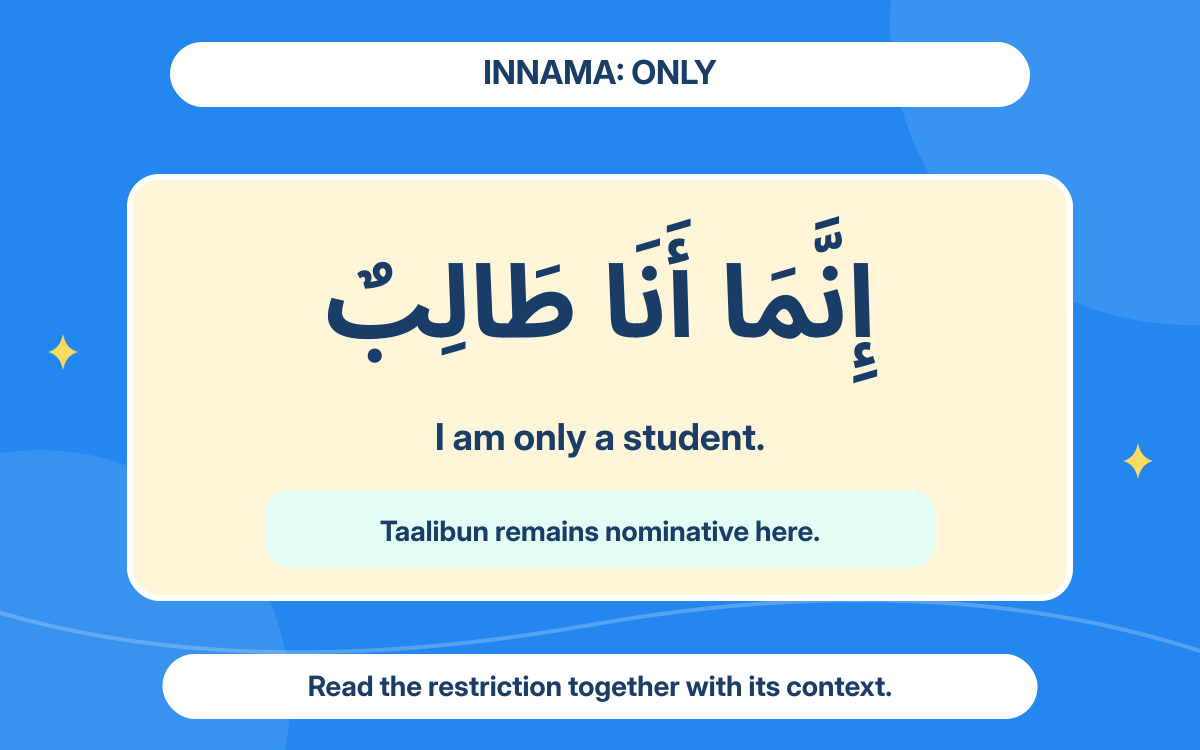
Innama, إِنَّمَا, expresses restriction. Imagine someone assumes you are the teacher. You clarify your role:
إِنَّمَا أَنَا طَالِبٌ
innama ana talibun
I am only a student. — a male speaker
Here only contrasts student with teacher. Ana means I; talibun means a student. Innama does not simply negate the sentence: it affirms the student role while excluding the alternative under discussion.
02Keep the nominal subject nominative
Compare emphasis with restriction:
إِنَّ حَامِدًا طَالِبٌ
inna hamidan talibun
Indeed, Hamid is a student.
إِنَّمَا حَامِدٌ طَالِبٌ
innama hamidun talibun
Hamid is only a student. — rather than the teacher
Inna alone governs an accusative noun: hamidan. In restrictive innama, the attached ma prevents that governing effect; it is called ma alkaffah. Hamidun is an ordinary nominative subject, and talibun is its nominative predicate. The attached ma is not a separate negative word here.
03Put innama before a verbal sentence
Innama can also precede a verb. Someone thinks you are writing the lesson; you explain that you are writing a letter instead:
إِنَّمَا أَكْتُبُ رِسَالَةً
innama aktubu risalatan
I am only writing a letter. — rather than the lesson
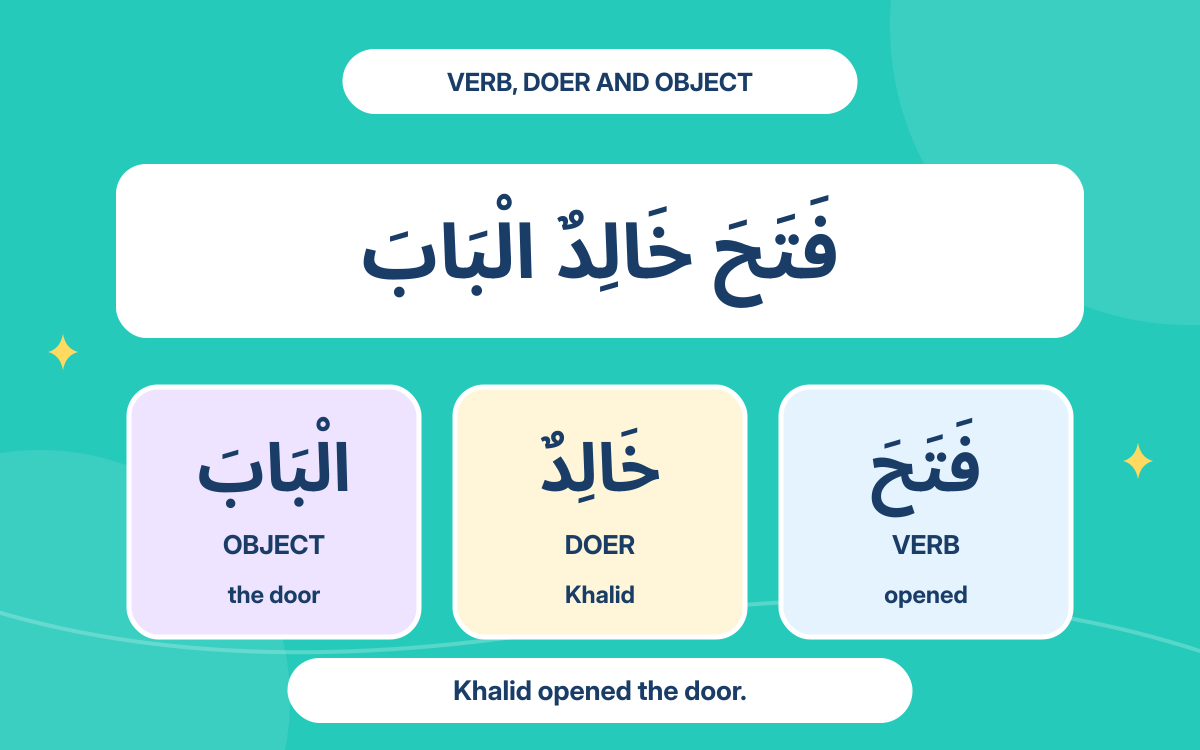
Aktubu means I write or I am writing. It keeps its ordinary indicative u ending. Risalatan, a letter, is the accusative direct object of writing. Innama does not make every following word nominative; each word keeps its normal grammatical role.
04Recognise a plural nominative subject
Suppose the people present are students, with no teachers among them:
إِنَّمَا الْحَاضِرُونَ طُلَّابٌ
innama lhadiruna tullabun
Those present are only students.
Alhadiruna means those present. It is a sound masculine plural in the nominative, with the una ending. Tullabun is the predicate, students. Context and word order reveal what is being restricted; do not translate innama mechanically as only the immediately following word.
05Keep the intended contrast clear
To repeat the student-role clarification, use innama, then ana, then the student predicate:
إِنَّمَا أَنَا طَالِبٌ
innama ana talibun
I am only a student. — rather than the teacher
The restriction concerns the role being discussed. It does not deny every other fact about the speaker. Choose the intended contrast, then keep the nominal or verbal sentence after innama grammatically intact.
What to remember
- Innama expresses restriction; interpret only with the sentence and the alternative being discussed.
- In restrictive innama, ma stops inna governing: an ordinary nominal subject remains nominative.
- Innama can precede a verbal sentence too; the verb, subject and object retain their normal grammatical roles.
Your reference shelf
Open a guide whenever you need it.
Review emphasis and restrictionCompare the constructions before choosing a translation
إِنَّ حَامِدًا طَالِبٌ — inna hamidan talibun — Indeed, Hamid is a student.
إِنَّمَا حَامِدٌ طَالِبٌ — innama hamidun talibun — Hamid is only a student, in the stated role contrast.
Inna alone reinforces a nominal statement and governs its noun. Restrictive innama contains ma alkaffah, which prevents that governing effect and permits either a nominal or a verbal sentence after it. In other constructions, ma can be a relative word meaning what; that is a different analysis and is outside these examples. The restriction’s focus depends on the sentence and context, so an English only may need a different position in translation. Our plain Latin reading aids keep the formal endings but simplify vowel length and some sounds.
Sources & further learning
References for the language explanations and learning guidance.