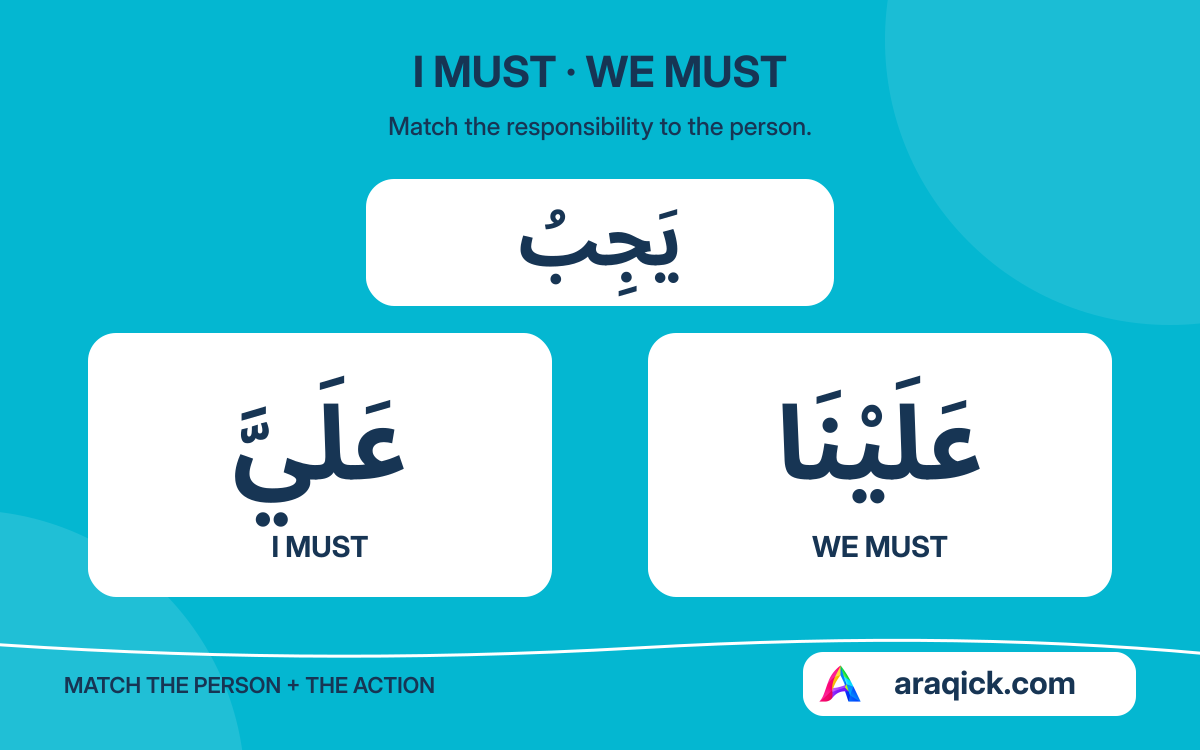
When something is necessary, a useful formal Arabic pattern is yajibu alayya an: I must or I have to. Change the pronoun after ala to say who has the obligation, then match the action verb to that person. This gives you a practical pattern for study tasks and everyday responsibilities.
01Give yourself a task
يَجِبُ عَلَيَّ أَنْ أَدْرُسَ الْيَوْمَ
yajibu alayya an adrusa alyawma
I must study today.
Yajibu expresses necessity. Alayya identifies me as the person responsible, and an adrusa names the action: to study. Alyawma means today.
I must and I have to are both natural translations here. The sentence describes an obligation; it does not tell us whether the speaker enjoys studying.
02Keep the action after an
يَجِبُ عَلَيَّ أَنْ أَكْتُبَ الْعُنْوَانَ
yajibu alayya an aktuba alunwana
I have to write the address.
The action verb follows an in the subjunctive. Aktubu, I write, becomes aktuba. The initial a keeps I as the writer, and alunwana is the address being written.
Treat alayya an aktuba as a useful sequence: who has the duty, then what that person must do. Yajibu itself stays at the beginning of these models.
03Include yourself in a group
يَجِبُ عَلَيْنَا أَنْ نَكْتُبَ الْعُنْوَانَ
yajibu alayna an naktuba alunwana
We must write the address.
Change alayya to alayna for responsibility shared by a group including the speaker. Change the action from aktuba to naktuba as well. The group can be male, female or mixed.
Yajibu remains the same in this impersonal construction. Do not change it to a we form just because alayna means upon us. The pronoun and action clause identify the responsible people.
04Address a man or a woman
يَجِبُ عَلَيْكَ أَنْ تَكْتُبَ الْعُنْوَانَ
yajibu alayka an taktuba alunwana
You must write the address. — to one man
يَجِبُ عَلَيْكِ أَنْ تَكْتُبِي الْعُنْوَانَ
yajibu alayki an taktubi alunwana
You must write the address. — to one woman
Alayka addresses a man; alayki addresses a woman. In the feminine sentence, taktubina loses its mood nun after an and keeps the female listener’s ya.
Match both parts to the listener. Changing only alayka to alayki while leaving a masculine action model would miss the agreement practised here.
05Choose obligation, desire or ability
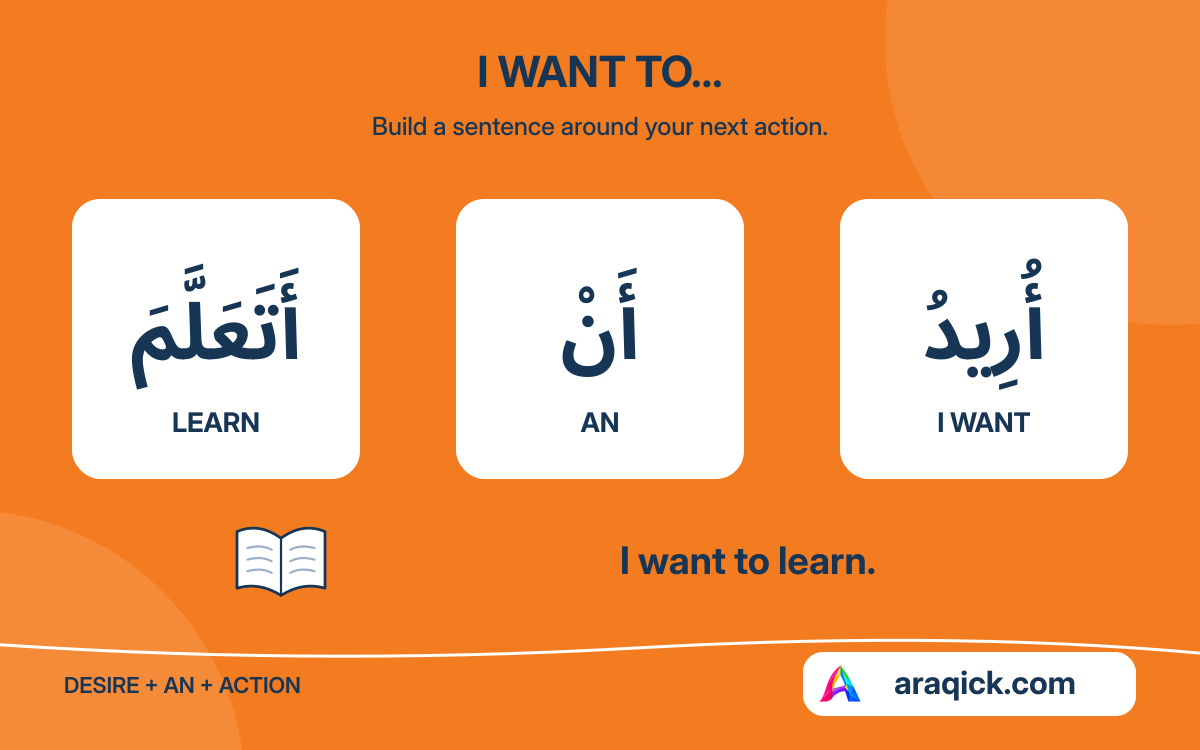
أُرِيدُ أَنْ أَدْرُسَ
uridu an adrusa
I want to study.
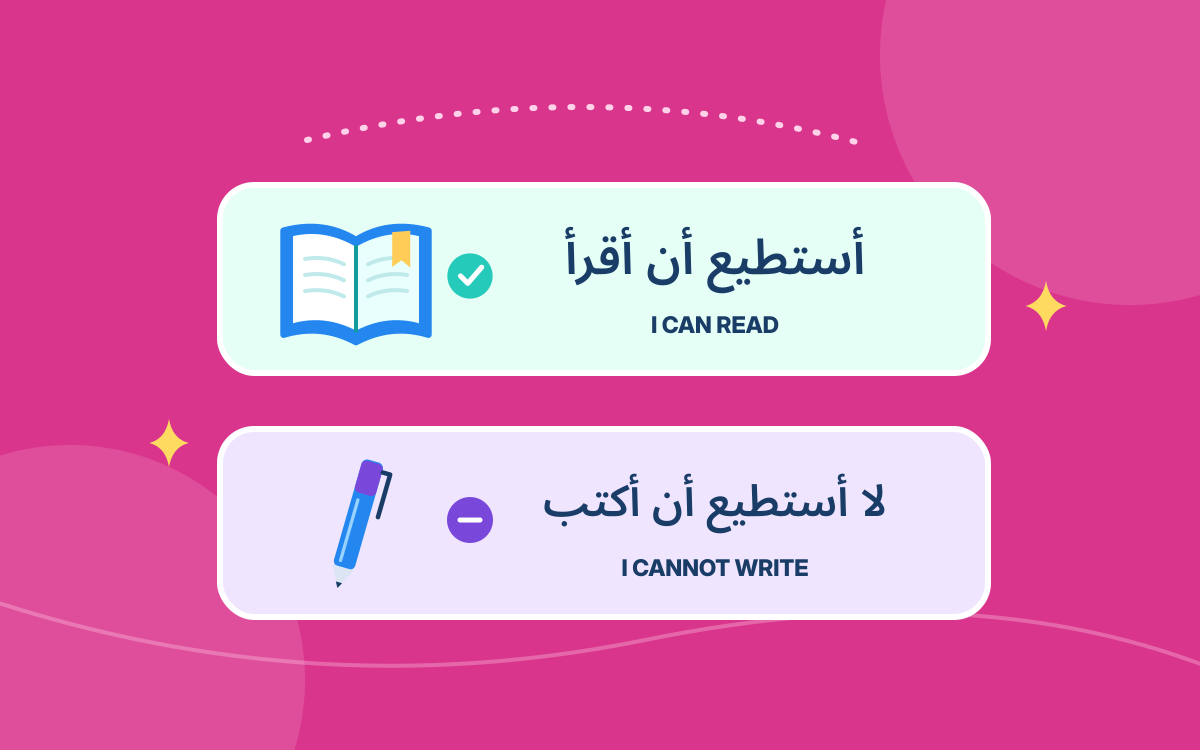
أَسْتَطِيعُ أَنْ أَدْرُسَ
astatiu an adrusa
I can study.
Wanting, being able and having to are different messages. The action after an can stay the same while the opening changes the meaning. Use yajibu alayya for the obligation model taught here.
For a negative instruction, use the separately taught do not construction. Avoid treating every negative of necessity as must not: absence of obligation and prohibition differ. The prepositions with pronouns guide helps with alayya and alayna. Plain reading aids simplify sounds and vowel length.
What to remember
- Yajibu alayya an expresses I must or I have to.
- Match alayya, alayna, alayka or alayki with the action’s person form.
- Obligation, desire, ability and prohibition are different meanings.
Your reference shelf
Open a guide whenever you need it.
Who has the obligation?Four useful writing models
| Person | Arabic | Reading aid |
|---|---|---|
| I | يَجِبُ عَلَيَّ أَنْ أَكْتُبَ | yajibu alayya an aktuba |
| We | يَجِبُ عَلَيْنَا أَنْ نَكْتُبَ | yajibu alayna an naktuba |
| You: one man | يَجِبُ عَلَيْكَ أَنْ تَكْتُبَ | yajibu alayka an taktuba |
| You: one woman | يَجِبُ عَلَيْكِ أَنْ تَكْتُبِي | yajibu alayki an taktubi |
Alayya is ala plus the first-person pronoun; its doubled ya matters. In these models, the an clause names what is necessary. The feminine action form loses the mood nun, while its ya identifying the listener remains.
Sources & further learning
References for the language explanations and learning guidance.