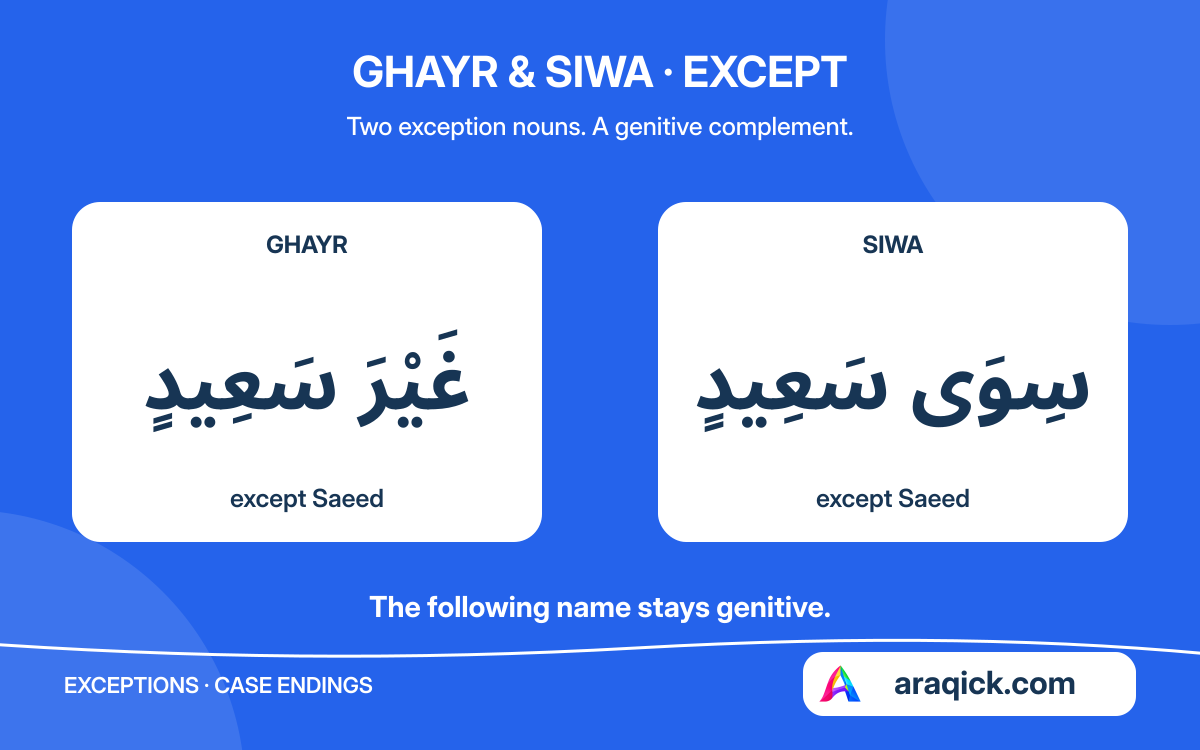
Ghayr and siwa can both mean except or other than. Unlike illa, they are nouns, and each forms an idafa with the name that follows. The important distinction is between the case of ghayr or siwa and the always-genitive complement after it.
01Exclude one member of a named group
حَضَرَ الضُّيُوفُ غَيْرَ سَعِيدٍ
hadara adduyufu ghayra saidin
The guests attended except Saeed.
The guests are the stated group, and Saeed is the excluded member. This is a complete affirmative exception. Ghayra is accusative, while Saidin is genitive as its complement.
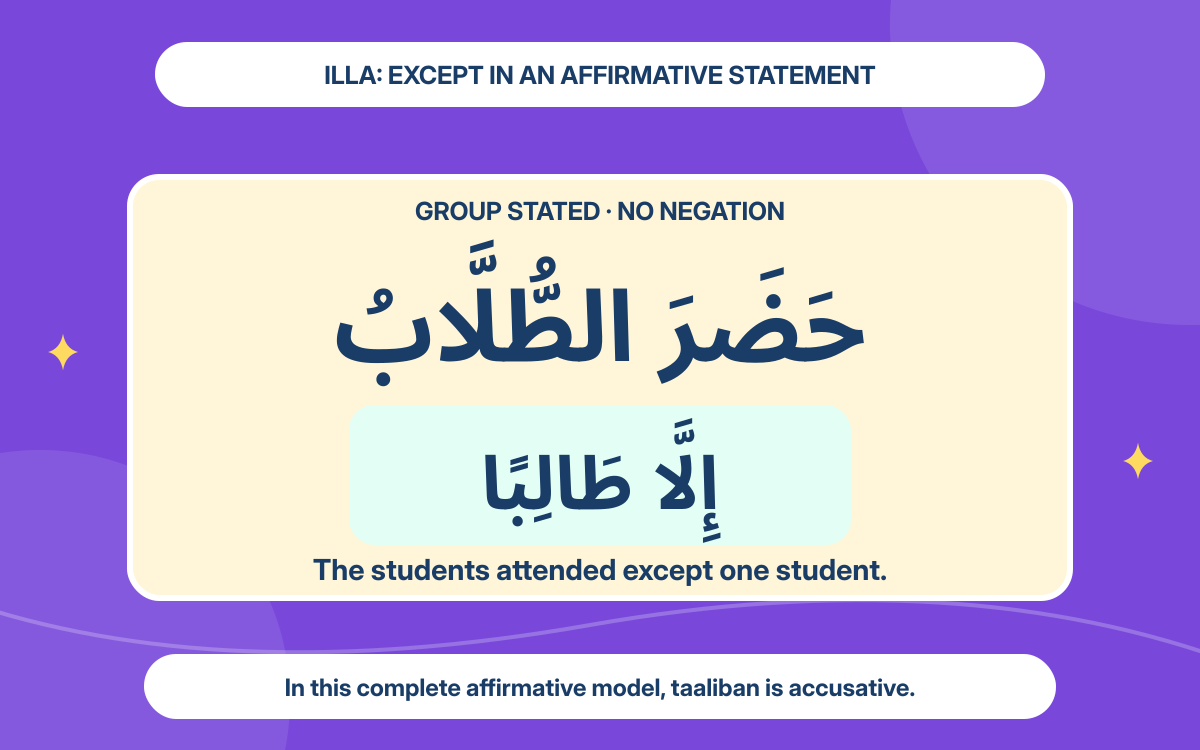
With illa, the comparable ending is إِلَّا سَعِيدًا. Replacing illa changes the grammar inside the phrase: do not carry the accusative ending of Saeed over unchanged. Review affirmative exceptions with illa.
02Keep siwa’s case separate from its spelling
حَضَرَ الضُّيُوفُ سِوَى سَعِيدٍ
hadara adduyufu siwa saidin
The guests attended except Saeed.
Siwa has the same exception role here as ghayra, but its final alif maqsurah cannot display the short case vowel. Its accusative case is understood rather than visibly added after the alif.
Saidin remains genitive. The unchanged surface form siwa does not mean that it has no grammatical case. Use the sentence structure to identify that case, just as you do with other nouns ending in alif maqsurah.
03Allow two analyses in a complete negative
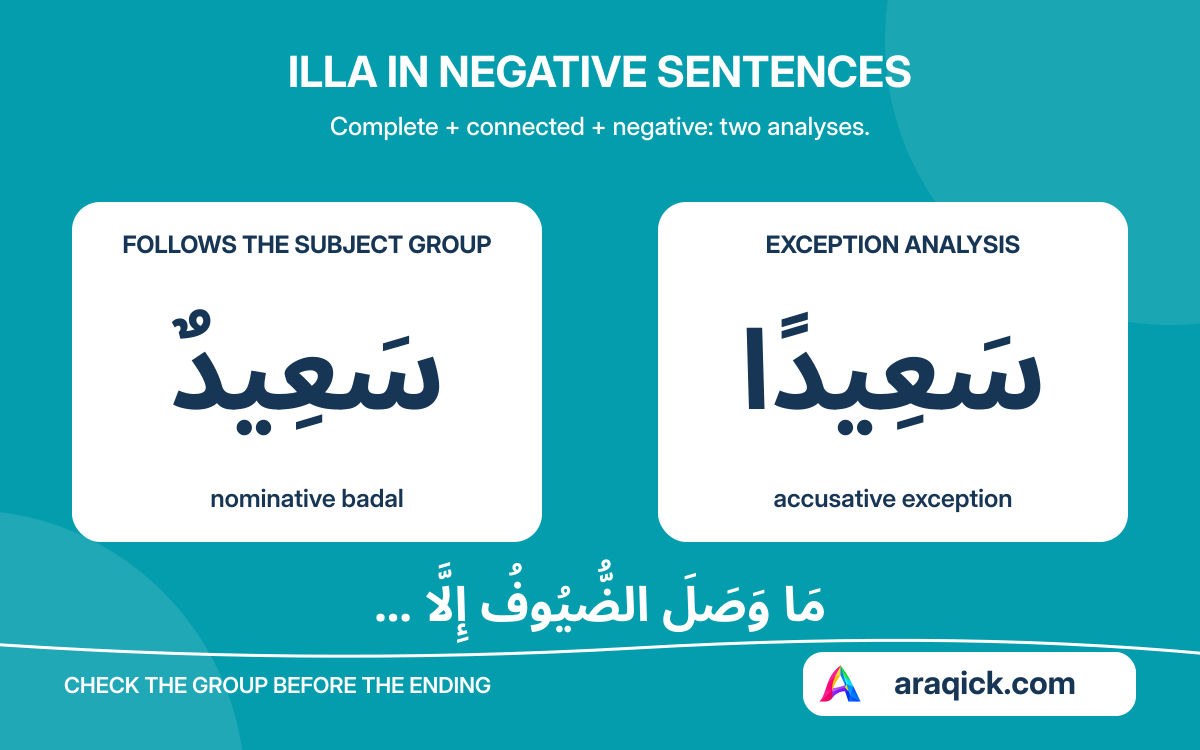
مَا حَضَرَ الضُّيُوفُ غَيْرُ سَعِيدٍ
ma hadara adduyufu ghayru saidin
None of the guests attended except Saeed.
The group is still named, but the statement is negative. In this complete, connected exception, ghayru may follow the nominative group as a badal. The exception analysis also permits غَيْرَ سَعِيدٍ.
These are two grammatical analyses of the exception, not a choice between a male and a female guest. The name after ghayr stays genitive in both. Compare negative exceptions with illa.
04Find the role when the group is omitted
مَا حَضَرَ غَيْرُ سَعِيدٍ
ma hadara ghayru saidin
No one other than Saeed attended.
No separate group such as the guests appears. Ghayru now fills the subject position of hadara, so it is nominative. Saidin remains its genitive complement; it does not become the grammatical subject itself.
This pattern expresses that only Saeed attended. Do not automatically assign the accusative to every ghayr phrase. First ask whether the larger group has been stated and what role the phrase performs.
05Change ghayr when its role changes
مَا قَابَلْتُ غَيْرَ سَعِيدٍ
ma qabaltu ghayra saidin
I met no one other than Saeed.
Here ghayra fills the direct-object position of qabaltu, so it is accusative. After a preposition, the phrase can begin بِغَيْرِ سَعِيدٍ, with ghayri in the genitive. Saidin keeps its own genitive relationship in either case.
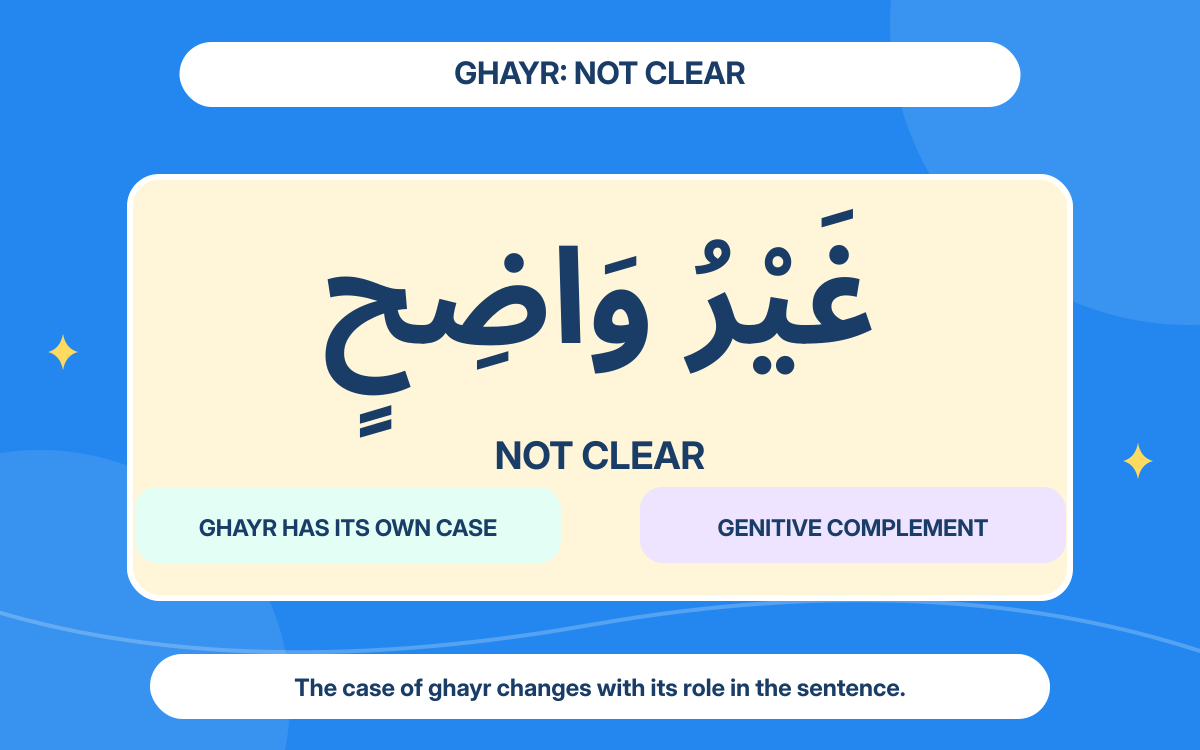
The general ghayr guide also explains descriptions such as not clear. This lesson concerns exceptions. Plain reading aids simplify vowel length and Arabic consonants; use the Arabic endings and the idafa structure to check the analysis.
What to remember
- Ghayr and siwa take genitive complements.
- Ghayr’s own case follows the exception construction or its sentence role.
- Siwa has an estimated case ending on its final alif.
Your reference shelf
Open a guide whenever you need it.
Exception constructions at a glanceSeparate the group, the negative and the role of the phrase
| Construction | Model | Case of ghayr |
|---|---|---|
| Complete affirmative | حَضَرَ الضُّيُوفُ غَيْرَ سَعِيدٍ | Accusative exception |
| Complete connected negative | مَا حَضَرَ الضُّيُوفُ غَيْرُ سَعِيدٍ | Nominative badal is possible |
| Same negative, exception analysis | مَا حَضَرَ الضُّيُوفُ غَيْرَ سَعِيدٍ | Accusative is also possible |
| Group omitted; subject slot | مَا حَضَرَ غَيْرُ سَعِيدٍ | Nominative subject |
| Group omitted; object slot | مَا قَابَلْتُ غَيْرَ سَعِيدٍ | Accusative object |
These examples concern a person belonging to the stated or understood group. The complement Saidin stays genitive throughout.
Illa, ghayr and siwa comparedThe meaning can match while the internal grammar differs
| Tool | Affirmative exception phrase | Analysis |
|---|---|---|
| Illa | إِلَّا سَعِيدًا | Saeed is the accusative exception |
| Ghayr | غَيْرَ سَعِيدٍ | Ghayra is accusative; Saeed is genitive |
| Siwa | سِوَى سَعِيدٍ | Siwa is accusative by estimation; Saeed is genitive |
| After bi | بِغَيْرِ سَعِيدٍ | Bi governs ghayri; the name completes the idafa |
Neither ghayr nor siwa takes tanwin while it is the first term of these idafas.
Sources & further learning
References for the language explanations and learning guidance.