

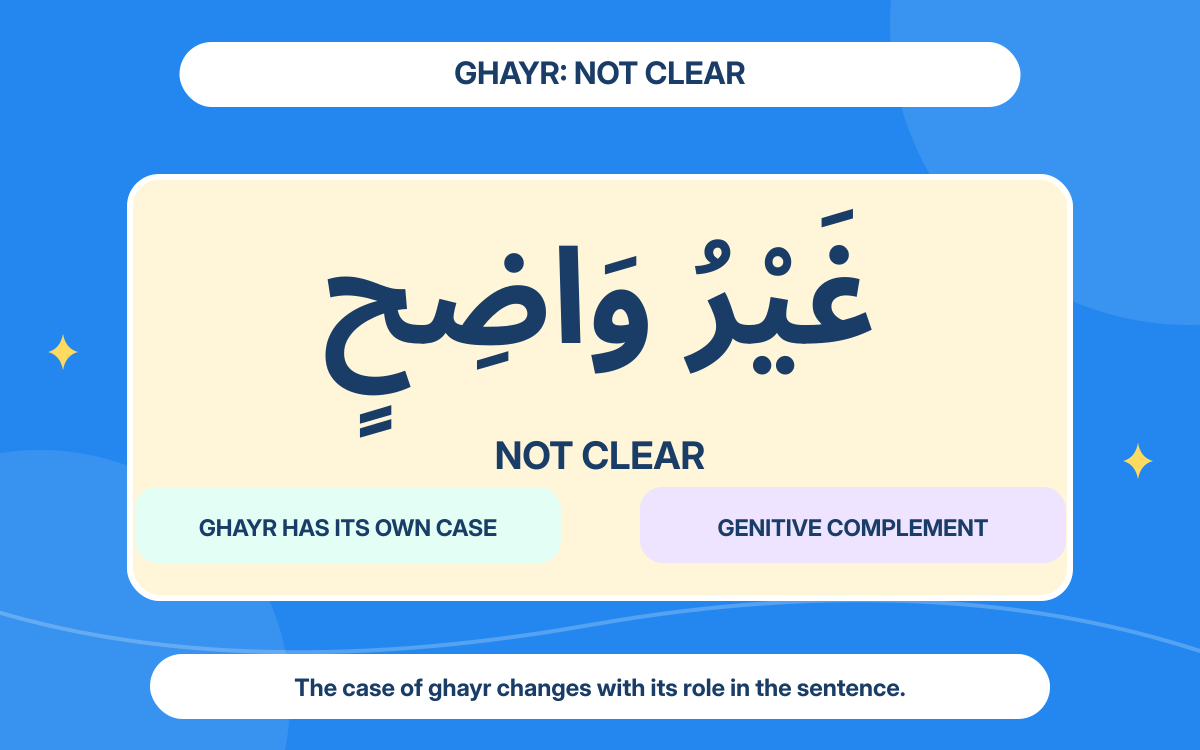
Ghayr can turn “clear” into “not clear” or describe paper as unlined. It can also mean “other than.” Its grammar is useful: ghayr is a noun with a changing case ending, and it links to a genitive complement. Follow those two words separately.
01Say that something is not clear
غَيْر (ghayr) is a noun, not a fixed negative particle. Before a descriptive word, it often gives a meaning like “not” or “un.”
الدَّرْسُ غَيْرُ وَاضِحٍ.
addarsu ghayru wadihin
The lesson is not clear.
Ghayru begins the nominative predicate, so it has dammah. Wadihin is its genitive complement, the second term of an idafa. The phrase means “not clear”; it does not say that the lesson itself is genitive.
02Keep lined and unlined apart
مُسَطَّرٌ (musattarun) means “lined” or “ruled.” Add ghayr to describe paper without those lines.
وَرَقٌ مُسَطَّرٌ
waraqun musattarun
Lined paper
وَرَقٌ غَيْرُ مُسَطَّرٍ
waraqun ghayru musattarin
Unlined paper
In the second phrase, ghayru describes the nominative paper. Musattarin is genitive after ghayr. Ghayr has no tanween here because it is mudaf, the first term of the idafa. “Unlined” belongs to the phrase containing ghayr.
03Change ghayr with the noun it describes
When ghayr describes an indefinite noun, it follows that noun’s grammatical case. Its complement remains genitive.
قَرَأْتُ كَلَامًا غَيْرَ وَاضِحٍ.
qaratu kalaman ghayra wadihin
I read unclear words.
فِي دَفْتَرٍ غَيْرِ مُسَطَّرٍ
fi daftarin ghayri musattarin
In an unlined notebook
Kalaman is an accusative object, so its description begins ghayra. After fi, daftarin is genitive, so its description begins ghayri. The endings on wadihin and musattarin still mark genitive complements.
04Recognise “other than” in context
Ghayr can contrast one thing with another. Translate the whole construction rather than automatically replacing ghayr with “not.”
كَتَبْتُ بِغَيْرِ الْقَلَمِ.
katabtu bighayri lqalami
I wrote with something other than the pen.
Bi governs ghayri directly, so ghayr is genitive. Alqalami is also genitive, as its complement. The sentence leaves the other writing tool unspecified. Keep the spelling of ghayr unchanged apart from its case vowel; do not put al on it in these idafa models.
05Let the description express the gender
Ghayr itself does not gain a feminine ta. A descriptive complement such as “correct” uses the form appropriate to the thing being described.
الْإِجَابَةُ غَيْرُ صَحِيحَةٍ.
alijabatu ghayru sahihatin
The answer is incorrect.
Sahihatin is feminine because ijabah, “answer,” is feminine. It remains genitive after ghayr. Ghayru is nominative as the start of the predicate. Our plain reading aids simplify Arabic sounds and vowel length; the Arabic text shows the formal endings.
What to remember
- Ghayr is a noun: its case follows its role, or the case of the indefinite noun it describes.
- In these idafa models, ghayr has no tanween and its following complement is genitive.
- Ghayru wadihin means not clear; ghayru musattarin means unlined. Other contexts can express other than.
Your reference shelf
Open a guide whenever you need it.
Check the two endings separatelyPredicate, description and preposition examples
| Construction | Model | Why ghayr has this form |
|---|---|---|
| Nominative predicate | الدَّرْسُ غَيْرُ وَاضِحٍ | Ghayru starts the predicate. |
| Accusative description | قَرَأْتُ كَلَامًا غَيْرَ وَاضِحٍ | Ghayra describes an accusative object. |
| Genitive description | فِي دَفْتَرٍ غَيْرِ مُسَطَّرٍ | Ghayri describes a noun after fi. |
| Directly after bi | كَتَبْتُ بِغَيْرِ الْقَلَمِ | Bi itself governs ghayri. |
The complement after ghayr stays genitive in all these models. Ghayr can also serve in exception constructions, where its own case depends on the particular sentence. Advanced exceptions, omitted complements and definiteness questions need their own analysis; this guide practises the explicit complements shown above.
Sources & further learning
References for the language explanations and learning guidance.





