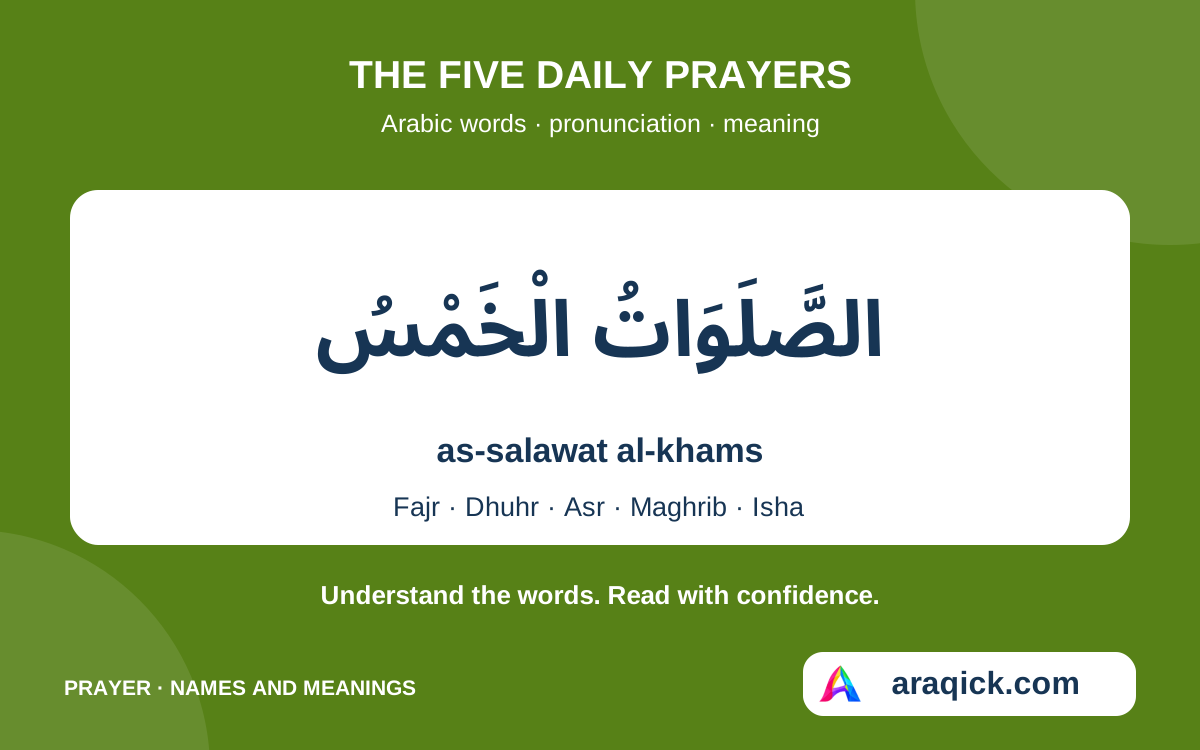
The five daily prayers are الْفَجْرُ (Fajr), الظُّهْرُ (Dhuhr), الْعَصْرُ (Asr), الْمَغْرِبُ (Maghrib) and الْعِشَاءُ (Isha). Their names connect with dawn, midday, afternoon, sunset and night. The names identify daily prayer periods; they are not fixed clock times.
01Learn the names in their daily order
Start with the sequence Fajr, Dhuhr, Asr, Maghrib, Isha. This dawn-to-night order is useful when reading a timetable or following a conversation. Each name points to a part of the day. Local schedules change with date and place, so memorising an English clock time does not teach the meaning of the Arabic name.
Sahih Muslim 612a discusses all five prayers through solar markers. Here we use broad time descriptions to learn vocabulary. For the difference between ritual prayer and a personal supplication, see salah versus dua.
02Fajr: the dawn prayer
فَجْرٌ (fajr) means dawn. The phrase صَلَاةُ الْفَجْرِ (salatu alfajr) means the Fajr prayer. Quran 24:58 names the dawn prayer explicitly. Fajr belongs before sunrise; it does not mean sunrise itself.
You may also hear صَلَاةُ الصُّبْحِ (salatu assubh), the morning prayer, referring to the same obligatory dawn prayer. Usage varies by community. These are not two extra obligatory prayers. Keep the context in mind because discussions may distinguish the dawn prayer from other prayers associated with that part of the morning.
أَقْرَأُ بَعْدَ الْفَجْرِ.
aqrau bada alfajr
I read after Fajr.
03Dhuhr and Asr: midday and afternoon
الظُّهْرُ (adhdhuhr) names the midday prayer, associated with the period after the sun passes its highest point. الْعَصْرُ (alasr) names the afternoon prayer. They follow one another, but are distinct words and prayer names. The general word asr can also mean an age or era in other contexts.
English spellings include Dhuhr, Zuhr and sometimes Zohar. Arabic writes the same prayer name with the letter za, an emphatic sound. Asr begins with ayn. The plain-letter readings are approximate: do not assume that an English z or a captures the complete Arabic sound.
نَلْتَقِي بَعْدَ الْعَصْرِ.
naltaqi bada alasr
We meet after Asr.
04Maghrib and Isha: sunset and night
الْمَغْرِبُ (almaghrib) names the sunset prayer, after the sun has set. الْعِشَاءُ (alisha) names the night prayer, associated with the period after twilight. Neither word should be translated as a universal hour such as six or eight o’clock.
Maghrib includes ghayn, a voiced throat sound different from an ordinary English g. Isha starts with ayn and has a long aa before its final hamza. It is not the same word as asha, dinner, although simplified roman spellings can look similar. Quran 24:58 explicitly mentions the Isha prayer alongside Fajr.
05Add salah, before and after
To say the prayer of a particular time, place salat before the name: salatu alfajr, for example. The final ta marbutah of salah is heard as t when it connects in this construction. The prayer name follows it with a grammatical ending that may disappear when speech pauses.
أَعُودُ قَبْلَ الْمَغْرِبِ.
audu qabla almaghrib
I return before Maghrib.
Qabla means before and bada means after. These phrases locate an event relative to a prayer; they do not state that the event takes place at its exact starting time. Our prepositions guide gives more ways to connect information, while telling time in Arabic explains clock expressions.
06Recognise a name without overtranslating
On a timetable, a short label such as Maghrib is enough to identify the prayer. In a general text, the same spelling may need a different translation: almaghrib can refer to the west or to Morocco, depending on context. The prayer setting is what makes sunset prayer the intended reading.
Practise by matching each name to its broad period, then read one before-or-after sentence. Use a locally appropriate timetable when an actual time matters. Our daily routine vocabulary helps you place these expressions within ordinary descriptions of a day. Vocabulary recognition and precise prayer scheduling serve different purposes.
What to remember
- The five names are Fajr, Dhuhr, Asr, Maghrib and Isha.
- Prayer names relate to parts of the day rather than fixed clock times.
- Subh can refer to the obligatory Fajr prayer; context helps distinguish related uses.
Your reference shelf
Open a guide whenever you need it.
The five names at a glanceBroad periods support vocabulary learning; consult a suitable timetable for exact times.
| Arabic | Name | Broad association |
|---|---|---|
| الْفَجْرُ | Fajr | Dawn, before sunrise |
| الظُّهْرُ | Dhuhr | Midday, after the sun passes its highest point |
| الْعَصْرُ | Asr | Afternoon |
| الْمَغْرِبُ | Maghrib | After sunset |
| الْعِشَاءُ | Isha | Night, after twilight |
Use a prayer name in a phraseThe grammatical ending changes with the construction.
| Arabic | Reading | Meaning |
|---|---|---|
| صَلَاةُ الْفَجْرِ | salatu alfajr | The Fajr prayer |
| بَعْدَ الْعَصْرِ | bada alasr | After Asr |
| قَبْلَ الْمَغْرِبِ | qabla almaghrib | Before Maghrib |
| بَعْدَ الْعِشَاءِ | bada alisha | After Isha |
Sources & further learning
References for the language explanations and learning guidance.