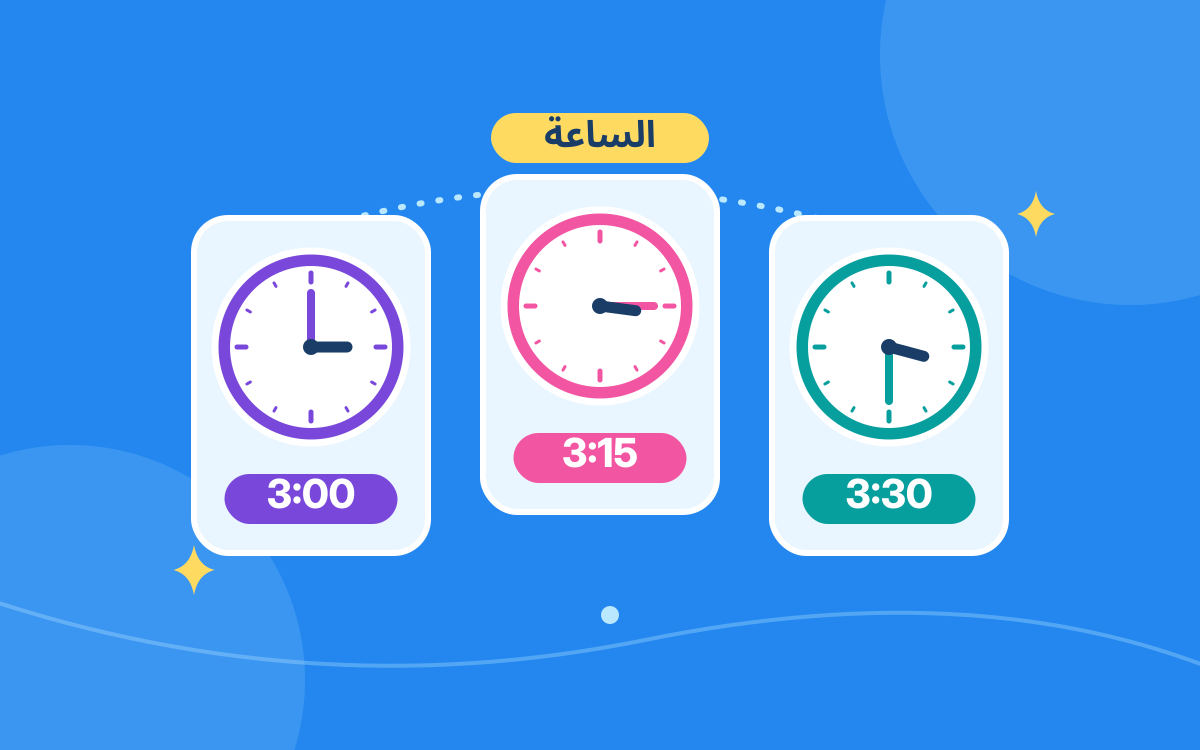
To tell the time in Modern Standard Arabic, start with assaa and an hour word: assaa aththalitha means three o’clock. Add wannisf for half past or warrub for quarter past. The clock pictures below show how a small phrase changes the time.
01Ask a useful question
كَمِ السَّاعَة؟
kam assaa
What time is it?
Learn this as a complete question. The word السَّاعَة can refer to the time or a clock, depending on the sentence. Here, it asks for the current time.
السَّاعَة الثَّالِثَة
assaa aththalitha
It is three o’clock.
You do not need to translate a separate “it is.” Start the answer with assaa and add the hour. We will keep using three as our anchor so that the new minute phrases are easier to spot.
02Start with the whole hour
assaa aththalitha
Three o’clock
- Use feminine hour forms: second, third and so on.
- One o’clock is an exception: السَّاعَة الْوَاحِدَة assaa alwahida.
- Two o’clock is السَّاعَة الثَّانِيَة assaa aththaniya.
The hour words match the feminine noun saa. Do not simply insert a counting number such as thalatha for three. Open the full twelve-hour chart below when you need another hour.
03Half past adds thirty minutes
assaa aththalitha wannisf
Half past three
النِّصْف annisf means the half. With وَ, and, the phrase becomes wannisf. Say the hour first, then add half an hour.
At 3:30, the long minute hand points to six and the short hour hand sits halfway between three and four. The Arabic phrase still begins with the three-o’clock form because thirty minutes have passed since three.
04Quarter past adds fifteen
assaa aththalitha warrub
Quarter past three
الرُّبْع arrub means the quarter. Add wa to get warrub: and a quarter. A quarter of an hour is fifteen minutes, so 3:15 is quarter past three.
Notice the short hand: it has moved just beyond three. The long hand points to three, marking fifteen minutes. Read the hands together, then choose the matching phrase.
05Turn the time into a plan
الدَّرْس فِي السَّاعَة الثَّالِثَة
addars fi assaa aththalitha
The lesson is at three o’clock.
Add فِي fi to say “at” in this time phrase. Then use the hour you already know. If the lesson starts at 3:30, add wannisf after aththalitha.
A twelve-hour time alone does not tell someone whether you mean morning or afternoon. Make that clear when arranging a real meeting. This short lesson focuses on the clock patterns; regional speech can use different hour forms.
Our plain reading aids omit pronunciation symbols and some grammatical endings. Keep the Arabic beside them, and practise one time aloud before trying another.
What to remember
- Use feminine hour words, with alwahida for one o’clock.
- Wannisf adds thirty minutes; warrub adds fifteen.
- The phrase fi assaa introduces the time of an activity.
Your reference shelf
Open a guide whenever you need it.
All twelve hoursOpen the whole-hour reference with plain reading aids
| Time | Arabic | Plain reading aid |
|---|---|---|
| 1:00 | السَّاعَة الْوَاحِدَة | assaa alwahida |
| 2:00 | السَّاعَة الثَّانِيَة | assaa aththaniya |
| 3:00 | السَّاعَة الثَّالِثَة | assaa aththalitha |
| 4:00 | السَّاعَة الرَّابِعَة | assaa arrabia |
| 5:00 | السَّاعَة الْخَامِسَة | assaa alkhamisa |
| 6:00 | السَّاعَة السَّادِسَة | assaa assadisa |
| 7:00 | السَّاعَة السَّابِعَة | assaa assabia |
| 8:00 | السَّاعَة الثَّامِنَة | assaa aththamina |
| 9:00 | السَّاعَة التَّاسِعَة | assaa attasia |
| 10:00 | السَّاعَة الْعَاشِرَة | assaa alashira |
| 11:00 | السَّاعَة الْحَادِيَة عَشْرَة | assaa alhadiya ashra |
| 12:00 | السَّاعَة الثَّانِيَة عَشْرَة | assaa aththaniya ashra |
Sources & further learning
References for the language explanations and learning guidance.