Turn eight small Arabic sentences into one connected day: wake up, wash, eat breakfast, go to work, have lunch, return home, study and sleep. These Modern Standard Arabic examples all mean I. Practise the sample order first, then adapt it to a day that fits your life.
01Begin the morning
1. أَسْتَيْقِظُ صَبَاحًا
astayqizu sabahan
I wake up in the morning.
2. أَغْسِلُ وَجْهِي
aghsilu wajhi
I wash my face.
Both verbs describe the speaker. You do not need to add أَنَا ana to every line because the verb already identifies “I.” These forms work for a man or a woman talking about themself.
Picture the sample day beginning: waking comes first, washing follows. The second sentence includes وَجْهِي wajhi, my face, so it tells you what gets washed.
02Eat, then head out
3. أَتَنَاوَلُ الْفُطُور
atanawalu alfutur
I have breakfast.
4. أَذْهَبُ إِلَى الْعَمَل
adhhabu ila alamal
I go to work.
أَتَنَاوَلُ atanawalu is useful for having a meal. Here the meal is breakfast. The next sentence moves the sample day to work.
Keep إِلَى الْعَمَل ila alamal, to work, together as a destination phrase. Change the destination to fit your own day.
03Continue through the day
5. أَتَنَاوَلُ الْغَدَاء
atanawalu alghada
I have lunch.
6. أَعُودُ إِلَى الْبَيْت
audu ila albayt
I return home.
The meal verb stays the same, but breakfast becomes lunch. That lets you express a new activity without starting from zero.
Compare the movement phrases: adhhabu ila alamal takes the speaker to work; audu ila albayt brings the speaker home. In our sample sequence, lunch comes before the return home.
04Close the day
7. أَدْرُسُ الْعَرَبِيَّة
adrusu alarabiyya
I study Arabic.
8. أَنَامُ لَيْلًا
anamu laylan
I sleep at night.
The last two sentences give the sample day a clear ending: some Arabic study, then sleep. لَيْلًا laylan means at night; it does not give an exact bedtime.
These present-tense forms describe a routine in this context. They can also refer to a current action in other sentences. Use the whole situation to understand the meaning, rather than translating the verb in isolation.
05Make it a short story
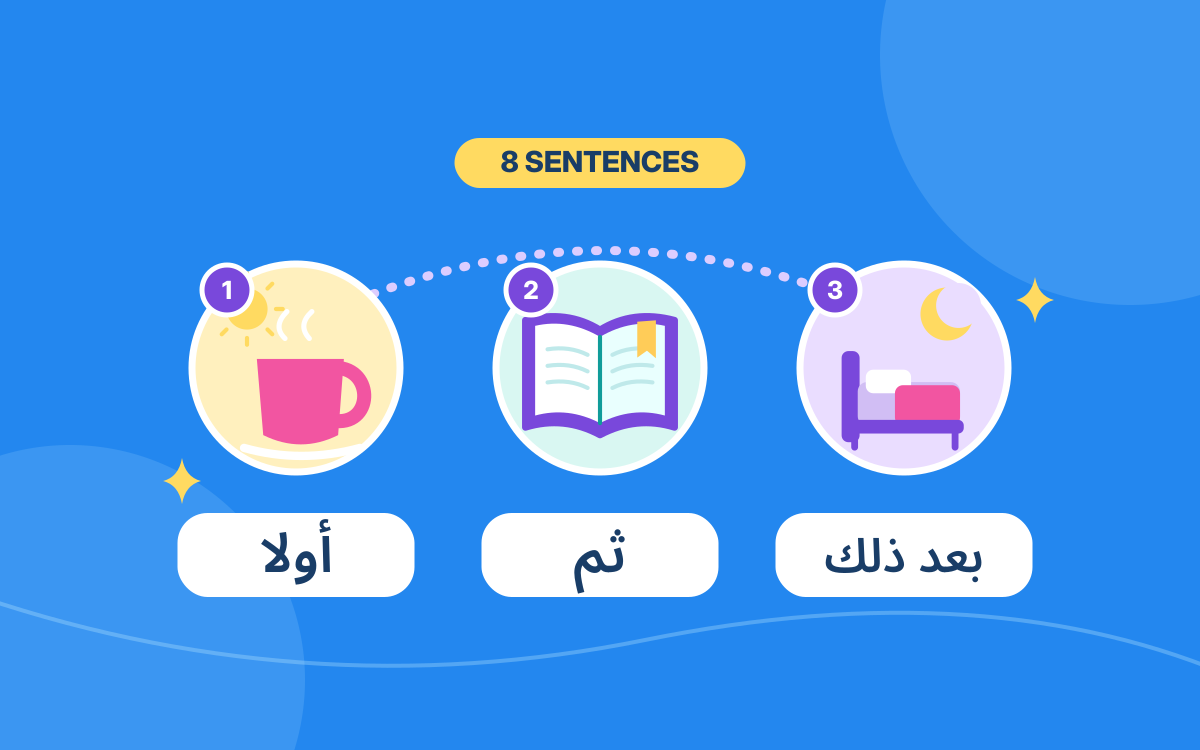
awwalan
First
thumma
Then
bada dhalika
After that
أَوَّلًا أَسْتَيْقِظُ، ثُمَّ أَغْسِلُ وَجْهِي
awwalan astayqizu thumma aghsilu wajhi
First I wake up, then I wash my face.
You can continue: بَعْدَ ذَلِكَ أَتَنَاوَلُ الْفُطُور bada dhalika atanawalu alfutur, “After that, I have breakfast.” The linking phrases show order; they do not tell you the exact gap between activities.
Start your own version with three true activities. You can leave out a step or change the order. Our quizzes refer to the sample day, so different real routines are not treated as mistakes. Plain reading aids simplify sounds and some endings; practise alongside the Arabic text.
What to remember
- All eight example verbs describe I; the same forms work for any speaker.
- Keep the action with its object or destination to express a complete thought.
- Use awwalan, thumma and bada dhalika to connect a sequence, then adapt it to your life.
Your reference shelf
Open a guide whenever you need it.
The complete eight-sentence dayOpen the sample routine as a compact reference
| Step | Arabic | Plain reading aid | Meaning |
|---|---|---|---|
| 1 | أَسْتَيْقِظُ صَبَاحًا | astayqizu sabahan | I wake up in the morning. |
| 2 | أَغْسِلُ وَجْهِي | aghsilu wajhi | I wash my face. |
| 3 | أَتَنَاوَلُ الْفُطُور | atanawalu alfutur | I have breakfast. |
| 4 | أَذْهَبُ إِلَى الْعَمَل | adhhabu ila alamal | I go to work. |
| 5 | أَتَنَاوَلُ الْغَدَاء | atanawalu alghada | I have lunch. |
| 6 | أَعُودُ إِلَى الْبَيْت | audu ila albayt | I return home. |
| 7 | أَدْرُسُ الْعَرَبِيَّة | adrusu alarabiyya | I study Arabic. |
| 8 | أَنَامُ لَيْلًا | anamu laylan | I sleep at night. |
This is a model sequence to practise, not a required schedule. Connect selected sentences with first, then or after that.
Sources & further learning
References for the language explanations and learning guidance.