Eight follows the usual gender opposition for three to ten, but its form with feminine counted nouns needs extra care. You may see thamaniya, thamani or thamanin. These are not three different numbers. The counted noun’s gender and the number’s grammatical construction explain which form appears.
01Use thamaniya with masculine counted nouns
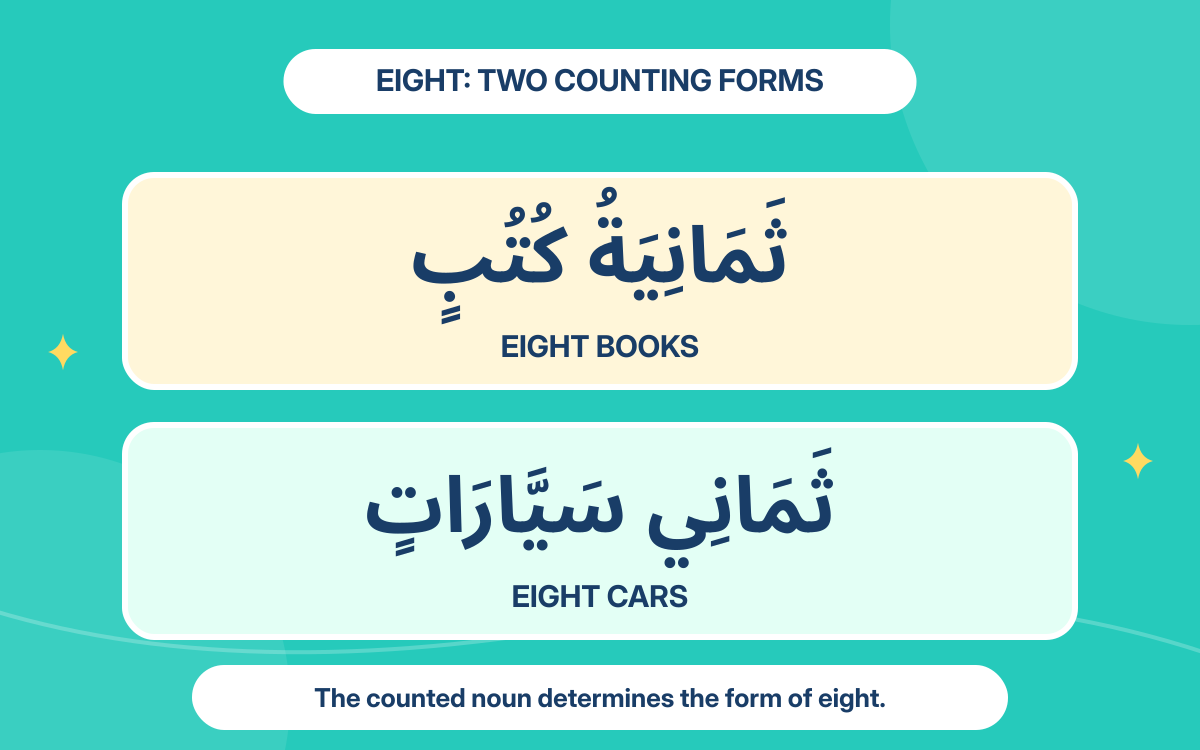
Start from the singular noun’s gender. Kitab, book, is masculine, so eight uses the form with taa marbuta. The counted noun is plural and genitive.
عِنْدِي ثَمَانِيَةُ كُتُبٍ
indi thamaniyatu kutubin
I have eight books.
Thamaniyatu is nominative in this sentence, and kutubin is genitive as the second noun of the idafa. The number has no tanween while directly linked to books. Its final taa marbuta is pronounced t in connected reading.
02Keep ya before a feminine counted noun
Sayyara, car, is feminine. For eight cars, use the form without taa marbuta. Keep the final ya because the number is directly linked to the counted noun.
عِنْدِي ثَمَانِي سَيَّارَاتٍ
indi thamani sayyaratin
I have eight cars.
Thamani ends in a long i. Its nominative dammah is estimated rather than visibly added to that ya. Sayyaratin is still a genitive plural. Do not write thamanin directly before cars in this idafa, and do not choose the number from the plural ending alone.
03Recognise a hidden genitive ending
After bi, eight is genitive. With a feminine counted noun directly attached, the written form remains thamani, with its final ya.
مَرَرْتُ بِثَمَانِي سَيَّارَاتٍ
marartu bithamani sayyaratin
I passed by eight cars.
The number now has an estimated kasrah; earlier it had an estimated dammah. Identical spelling does not make it mabni or remove its case. In both sentences, cars remains genitive through the counted-noun idafa. Use the surrounding construction to identify the number’s job.
04Show the fathah in the accusative
As a direct object, this feminine-count construction has a visible fathah on the retained ya. The counted noun stays genitive.
رَأَيْتُ ثَمَانِيَ سَيَّارَاتٍ
raaytu thamaniya sayyaratin
I saw eight cars.
Read the number as thamaniya: the final ya is now a consonant carrying a short a. This spelling has no taa marbuta. Compare it with the book form thamaniyatu; the similar reading aids must not hide their different Arabic endings. The verb determines the number’s accusative case.
05Drop ya in standalone indefinite eight
If the feminine counted noun is not directly linked as the second noun of an idafa, indefinite eight uses thamanin in the nominative and genitive. The ya drops in writing.
عِنْدِي ثَمَانٍ مِنَ السَّيَّارَاتِ
indi thamanin mina ssayyarati
I have eight of the cars.
Here min separates the number from cars. Thamanin has a short i followed by the tanween n; it does not end in the long i of thamani. Compare direct thamani sayyaratin with thamanin mina ssayyarati. Keep the final ya when the direct idafa link returns.
What to remember
- Masculine counted nouns use the taa marbuta form of eight; feminine counted nouns use the form without it.
- Before a directly linked feminine counted noun, retain ya: thamani in the nominative or genitive, thamaniya in the accusative.
- Standalone indefinite eight for a feminine count is thamanin in the nominative and genitive; its short i and tanween differ from construct thamani.
Your reference shelf
Open a guide whenever you need it.
Direct link or standalone?Compare the forms with feminine counted nouns across three cases
| Case | Direct idafa with cars | Indefinite eight without direct idafa |
|---|---|---|
| Nominative | ثَمَانِي سَيَّارَاتٍ — thamani sayyaratin | ثَمَانٍ — thamanin |
| Genitive | بِثَمَانِي سَيَّارَاتٍ — bithamani sayyaratin | بِثَمَانٍ — bithamanin |
| Accusative | ثَمَانِيَ سَيَّارَاتٍ — thamaniya sayyaratin | ثَمَانِيًا — thamaniyan |
Thamaniyan is a regular accepted accusative form when indefinite eight stands without a direct idafa; it retains ya and has tanween. Some grammatical descriptions also allow an untanweened accusative variant. The quizzes avoid making the tanweened variant an exclusive rule.
With masculine books, the number has ordinary visible endings: ثَمَانِيَةُ كُتُبٍ, ثَمَانِيَةَ كُتُبٍ and بِثَمَانِيَةِ كُتُبٍ. This article practises standalone eight and direct counts of eight; compound numbers such as eighteen have additional rules.
Sources & further learning
References for the language explanations and learning guidance.