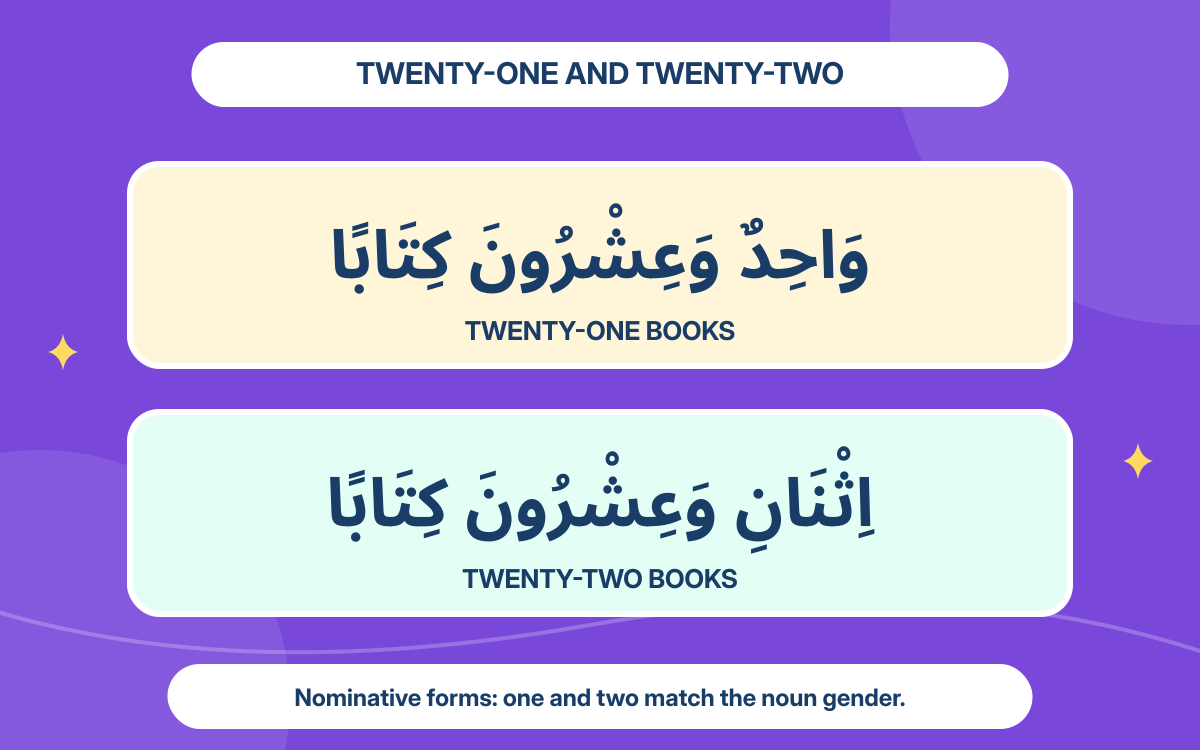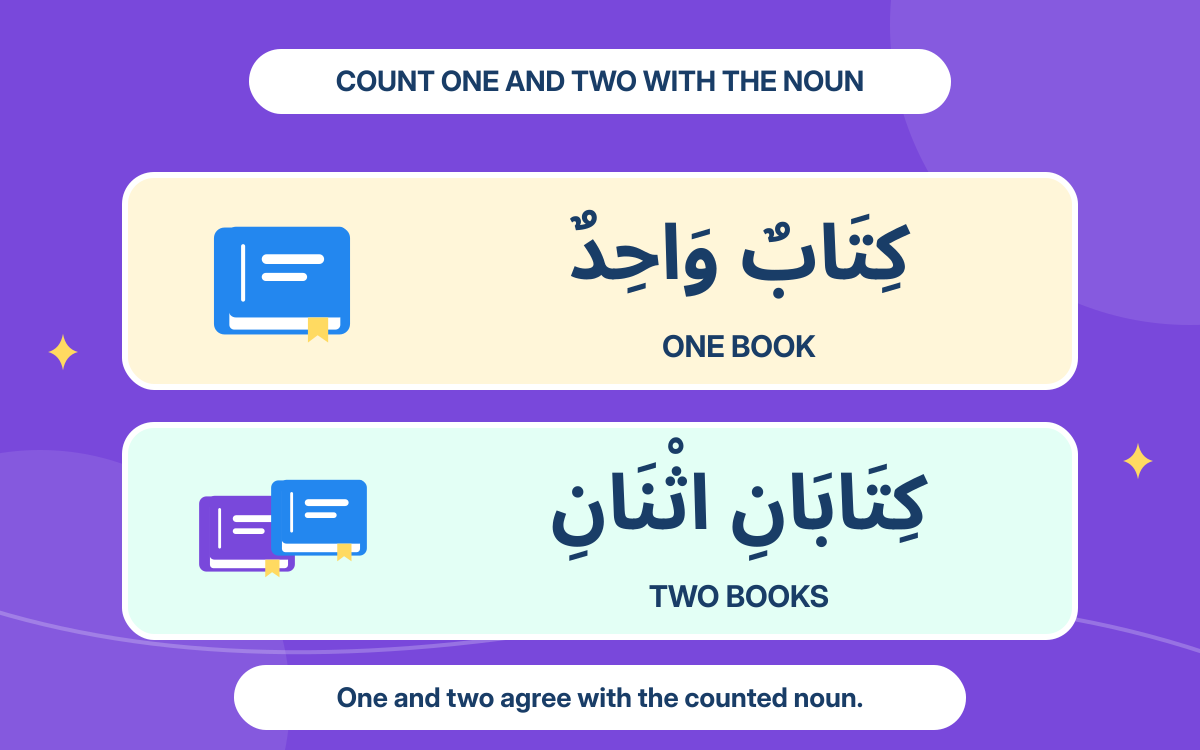
One and two have a useful Arabic pattern: the noun comes first, and the number follows it like an adjective. Both words match in grammatical gender and case. The singular or dual noun already carries the count, so an added number often emphasises exactly one or exactly two.
01Match one to the noun
Use wahidun after a masculine singular noun and wahidatun after a feminine singular noun. These model phrases are nominative and indefinite.
كِتَابٌ وَاحِدٌ
kitabun wahidun
One book
سَيَّارَةٌ وَاحِدَةٌ
sayyaratun wahidatun
One car
Book is grammatically masculine; car is feminine. The number matches the thing counted, regardless of who owns it. Keep the noun first. The final un endings shown here belong to full formal pronunciation; a different grammatical role will change them.
02Follow a dual noun with two
Use a dual noun for two items. Add ithnani for a masculine noun or ithnatani for a feminine noun in the nominative pattern.
كِتَابَانِ اثْنَانِ
kitabani thnani
Two books
سَيَّارَتَانِ اثْنَتَانِ
sayyaratani thnatani
Two cars
The feminine two has an extra t: ithnatani. Its form follows the noun’s gender. In these connected reading aids, the initial i of ithnani and ithnatani drops after the preceding vowel because it belongs to a connecting hamzah.
03Add the number when the count needs emphasis
The dual noun already means two. You usually do not need to add a separate number simply to communicate a pair.
عِنْدِي كِتَابَانِ
indi kitabani
I have two books.
Adding ithnani after kitabani emphasises that there are exactly two. Removing that number does not turn the dual into a singular. In an ordinary counting context, singular kitabun can likewise name one book without wahidun. Use the added number when the contrast matters: one book rather than several, or two rather than three.
04Let one follow the noun’s case
The number acts as a describing adjective here. When the noun changes case, one changes with it.
فِي كِتَابٍ وَاحِدٍ
fi kitabin wahidin
In one book
رَأَيْتُ كِتَابًا وَاحِدًا
raaytu kitaban wahidan
I saw one book.
After fi, both kitab and wahid are genitive with in. As the object of I saw, both are accusative with an. Do not keep wahidun in every sentence just because it was the first form you learned.
05Change two with the dual ending
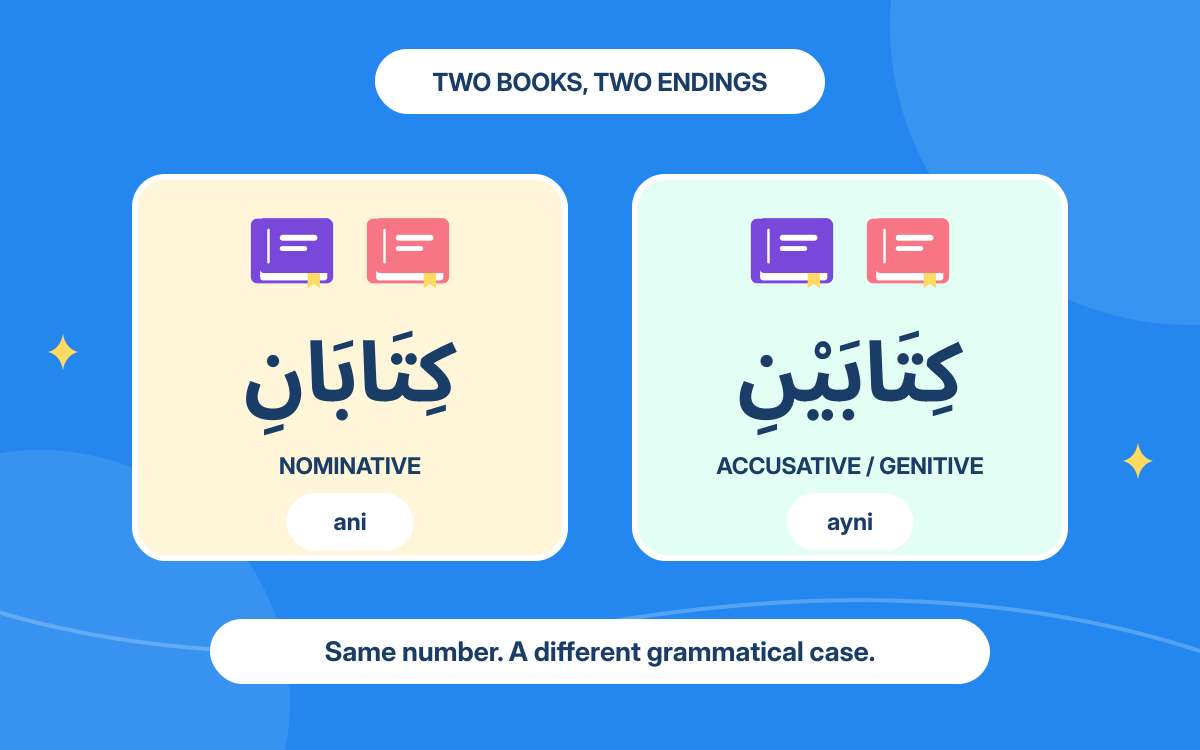
For these dual forms, nominative ani becomes ayni in the accusative or genitive. The noun and the following number make the change together.
فِي كِتَابَيْنِ اثْنَيْنِ
fi kitabayni thnayni
In two books
فِي سَيَّارَتَيْنِ اثْنَتَيْنِ
fi sayyaratayni thnatayni
In two cars
The pair still contains two items. Fi makes both words genitive, shown by the ya pattern rather than a final kasrah alone. Keep feminine ithnatayni with the cars. One and two use agreement; the opposite gender pattern for three to ten belongs to a different construction.
What to remember
- One and two follow the noun in this describing pattern and agree with its gender and case.
- The singular or dual noun often communicates the count by itself; the added number can emphasise it.
- Dual ani changes to ayni in the accusative and genitive, for both the noun and the describing two.
Your reference shelf
Open a guide whenever you need it.
Gender and case at a glanceCompare the nominative models with forms after fi
| Count | Nominative model | After fi: genitive |
|---|---|---|
| One masculine | كِتَابٌ وَاحِدٌ | فِي كِتَابٍ وَاحِدٍ |
| One feminine | سَيَّارَةٌ وَاحِدَةٌ | فِي سَيَّارَةٍ وَاحِدَةٍ |
| Two masculine | كِتَابَانِ اثْنَانِ | فِي كِتَابَيْنِ اثْنَيْنِ |
| Two feminine | سَيَّارَتَانِ اثْنَتَانِ | فِي سَيَّارَتَيْنِ اثْنَتَيْنِ |
The full forms for two are ithnani and ithnatani in the nominative, and ithnayni and ithnatayni in the accusative or genitive. Their connecting hamzah loses its initial vowel after a preceding pronounced vowel, as the sentence reading aids show.
This guide teaches one and two when they describe a preceding counted noun. It does not claim that these number words can never appear independently or in another construction. Ordinary adjective agreement applies here; the number-first idafa pattern for three to ten has its own rules.
Sources & further learning
References for the language explanations and learning guidance.