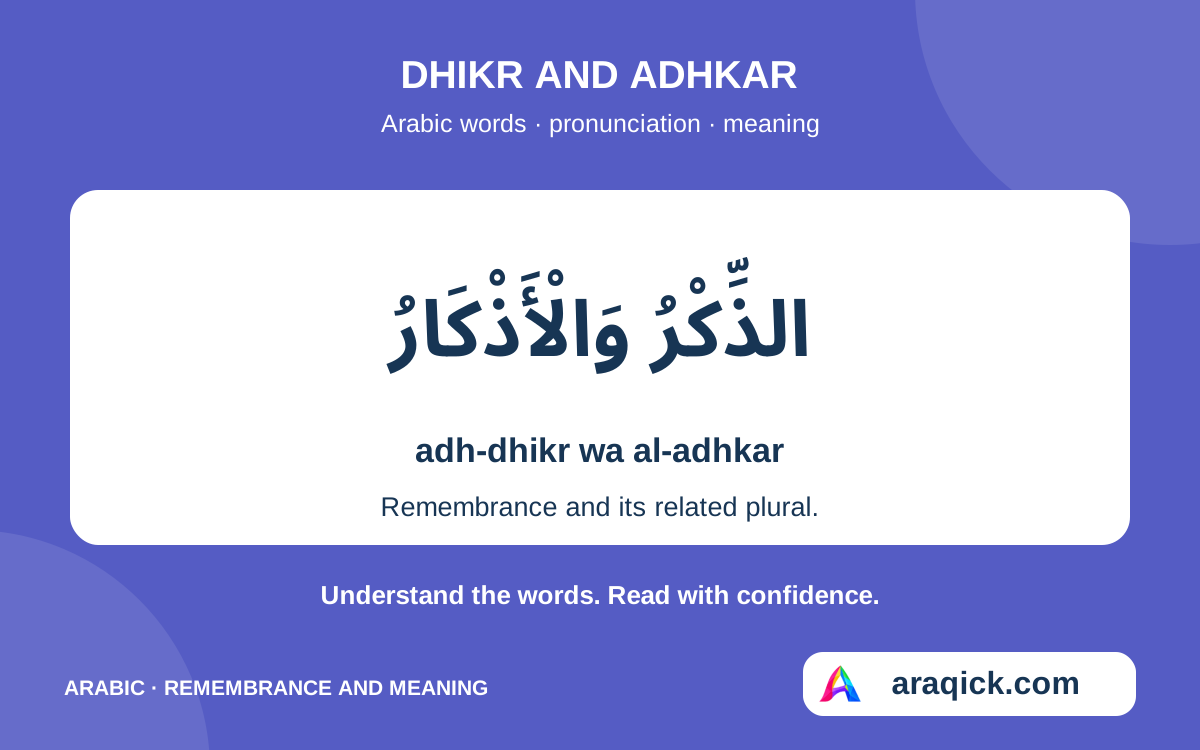
Dhikr, ذِكْرٌ, means remembrance or mention; in Muslim devotional use it commonly means remembering Allah. Adhkar, أَذْكَارٌ, is a plural form, often used for expressions of remembrance. These are related Arabic words, not two unrelated practices. Their broader meanings and the surrounding sentence matter when reading Quranic or everyday Arabic.
01Pronounce dhikr without adding a vowel
ذِكْرٌ begins with dhal, the voiced th sound heard at the start of English “this.” The spelling dh represents that one Arabic consonant. Follow it with a short i, then k and r. The pause reading dhikr has no long vowel and no extra vowel between k and r.
You may encounter zikr or zikir in borrowed spellings and other languages. Those forms reflect their own pronunciation traditions; the Arabic spelling identifies the original consonants. With its nominative case ending, the word can be read dhikrun. The shorter dhikr is the ordinary reading when pausing on this noun.
02Adhkar is a plural with a long aa
أَذْكَارٌ is read adhkaar at a pause. Its initial hamza is pronounced: it is hamzat al-qat, so it does not disappear simply because another word comes before it. The a after k is long, unlike the short i in dhikr. In a fully connected nominative form, the ending gives adhkaarun.
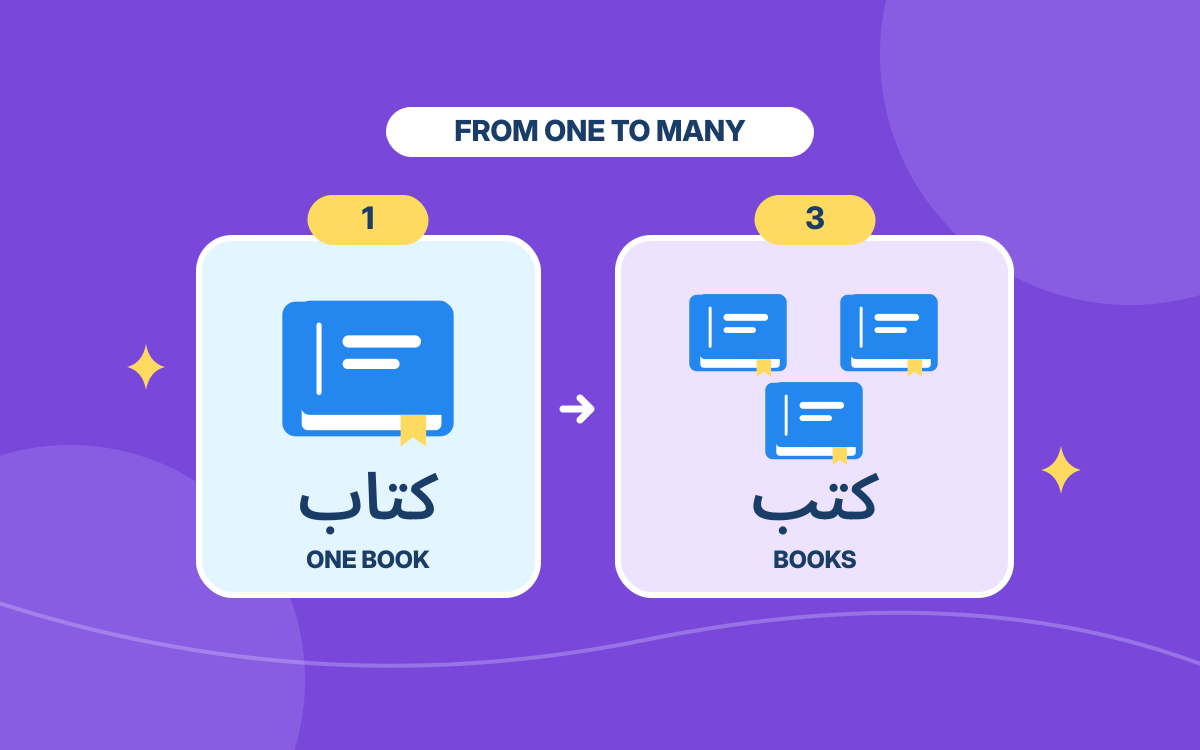
The plural often labels several devotional expressions or a collection containing them. It does not mean that dhikr always counts one sentence, or that every dictionary use of the plural denotes the same devotional collection. Arabic can use dhikr for remembrance as an activity. See our Arabic plurals guide for internal pattern changes.
03Follow the root dh-k-r through different patterns
The root letters are ذ ك ر. The verb ذَكَرَ, dhakara, can mean “he remembered” or “he mentioned”; يَذْكُرُ, yadhkuru, can mean “he remembers” or “he mentions.” Context decides whether remembering inwardly or mentioning something is intended.
Other patterns include ذَكَّرَ, dhakkara, “he reminded,” and تَذَكَّرَ, tadhakkara, “he remembered.” تَذْكِرَةٌ, tadhkirah, can mean a reminder, while ذِكْرَى, dhikraa, can mean remembrance or a memory. Dhikraa is a separate related noun, not the plural adhkar. Our Arabic roots guide explains how patterns add information.
04Recognise familiar expressions of remembrance
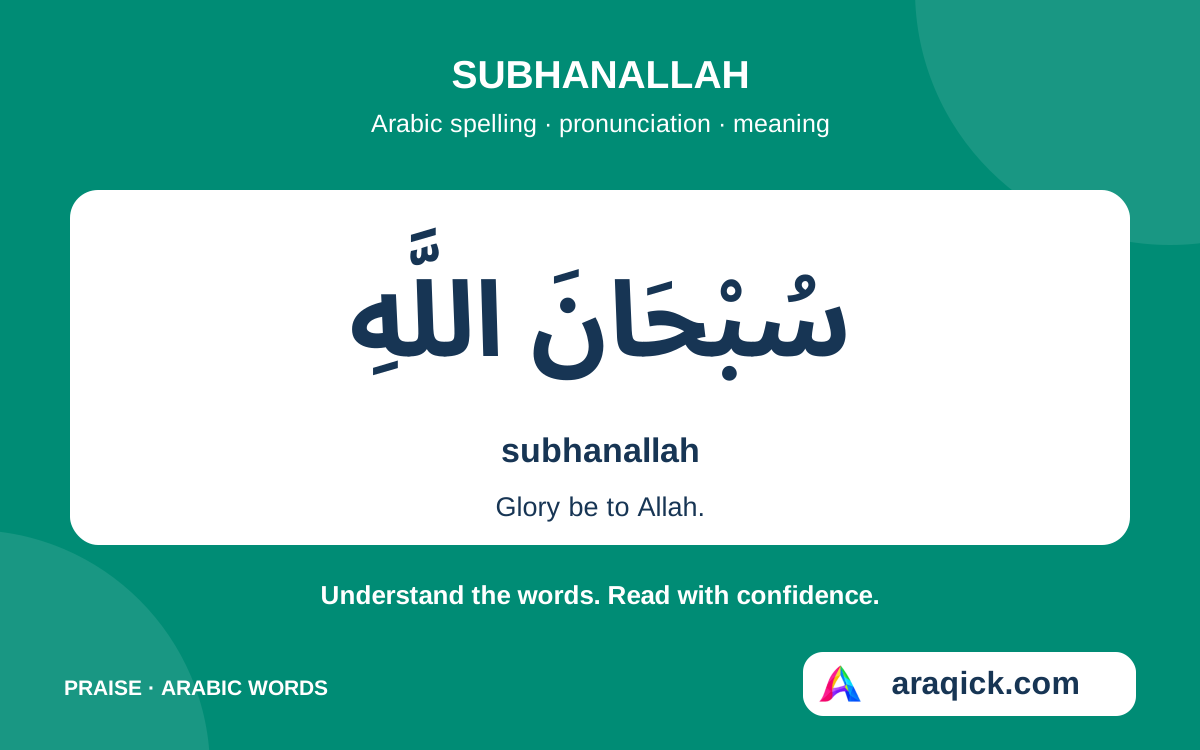
Subhanallah, alhamdulillah and Allahu akbar are familiar devotional expressions. Sahih Muslim 2137a includes these among four valued expressions, alongside the declaration that none is worthy of worship except Allah. Each expression carries its own meaning rather than serving as an interchangeable sound.
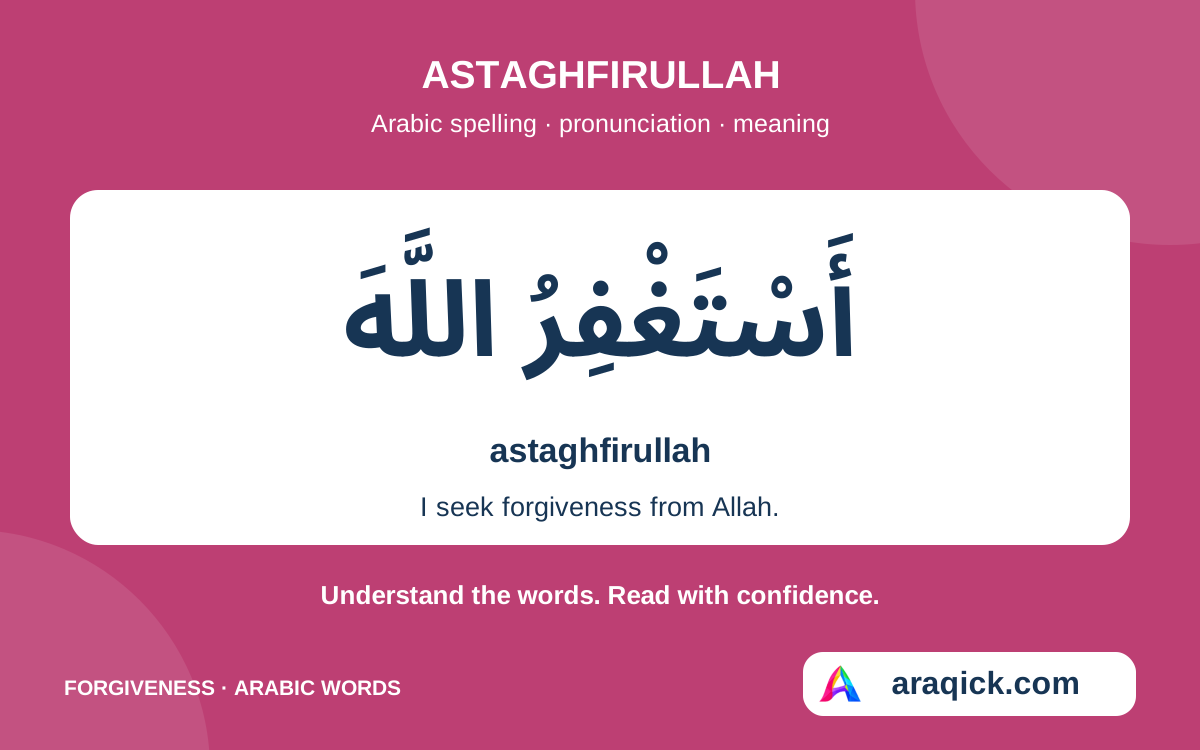
Tasbih names glorifying Allah, tahmid names praising Him, and takbir names declaring His greatness. Istighfar names seeking His forgiveness. Learning these labels helps you understand a lesson or a collection headed “adhkar.” Start with our explanations of Subhanallah and Astaghfirullah, then connect each expression to what it says.
05Let the Quranic context guide the translation
Quran 13:28 speaks about believers finding reassurance through remembrance of Allah. Here, remembrance fits the spiritual context. Quran 19:2 introduces an account of the Lord’s mercy to Zakariyya using dhikr, where “mention” or “reminder” helps explain its function in the passage.
In Quran 15:9, the definite form al-dhikr refers to the revealed Reminder, understood here as the Quran. Translating every occurrence as “a repeated devotional phrase” would therefore be too narrow. The same noun can point to remembrance, an account or revealed reminder without those meanings being interchangeable in every sentence. Compare the passage before choosing an English gloss.
06Distinguish dhikr from dua while allowing overlap
دُعَاءٌ, dua, means calling or supplication in this religious context. Dhikr highlights remembering and mentioning Allah; dua often includes addressing Him with a request. An expression can involve both remembrance and supplication, so the terms overlap without being identical labels for every utterance.
When reading a collection, identify each expression’s meaning before looking at its heading. A heading alone does not establish wording, a particular occasion or a repetition count; those details require their own source. For another useful distinction, read salah and dua. Keep a vocabulary notebook with the Arabic form, its reading and the context in which you found it.
What to remember
- Dhikr has a short i; adhkaar has a long aa and a pronounced initial hamza.
- Adhkar is a plural, while related nouns such as dhikraa and tadhkirah have their own meanings.
- Devotional remembrance is a common use; Quranic context can indicate mention or the revealed Reminder.
Your reference shelf
Open a guide whenever you need it.
Dhikr and its word familyRead nouns without final case endings; verb readings retain their dictionary-form vowels. The glosses are starting points for context.
| Arabic | Plain-letter reading | Meaning or use |
|---|---|---|
| ذِكْرٌ | dhikr | Remembrance; mention |
| أَذْكَارٌ | adhkaar | Plural; often devotional expressions |
| ذَكَرَ | dhakara | He remembered or mentioned |
| يَذْكُرُ | yadhkuru | He remembers or mentions |
| ذَكَّرَ | dhakkara | He reminded |
| تَذَكَّرَ | tadhakkara | He remembered |
| ذِكْرَى | dhikraa | Remembrance; a memory |
| تَذْكِرَةٌ | tadhkirah | A reminder; other meanings occur by context |
| دُعَاءٌ | duaa | Supplication; calling upon |
Names for familiar devotional actionsThese labels describe meanings. They do not prescribe a schedule or number of repetitions.
| Arabic | Plain-letter reading | Meaning or use |
|---|---|---|
| تَسْبِيحٌ | tasbiih | Glorifying Allah; associated with Subhanallah |
| تَحْمِيدٌ | tahmiid | Praising Allah; associated with alhamdulillah |
| تَكْبِيرٌ | takbiir | Declaring Allah’s greatness; associated with Allahu akbar |
| اِسْتِغْفَارٌ | istighfaar | Seeking Allah’s forgiveness; associated with Astaghfirullah |
Sources & further learning
References for the language explanations and learning guidance.
- Cairo Arabic Language Academy, al-Mujam al-Wasit: dhikr and its plural adhkar
- Quranic Arabic Corpus: root dh-k-r and its contextual meanings
- Quran 13:28: remembrance of Allah
- Quran 19:2: mention or reminder of mercy to Zakariyya
- Quran 15:9: the revealed Reminder
- Sahih Muslim 2137a: four devotional expressions