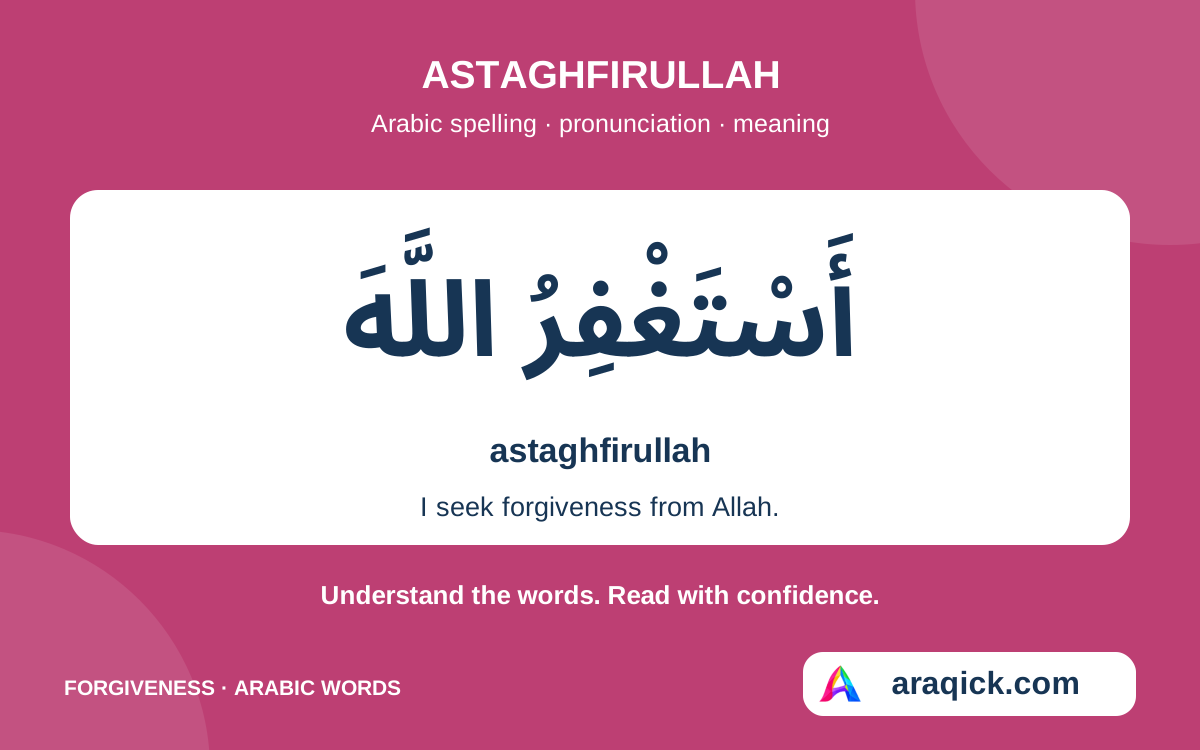
Astaghfirullah is أَسْتَغْفِرُ اللَّهَ, meaning “I ask Allah for forgiveness.” It is a first-person statement of seeking forgiveness. It may accompany regret or concern in conversation, but it does not literally mean “sorry,” “how shocking,” or “God has forgiven me.”
01What does astaghfirullah mean?
The speaker asks God for forgiveness. This is a request, not a statement that forgiveness has already been granted. Keeping that difference clear makes the expression easier to understand in prayer, personal reflection and ordinary messages.
أَسْتَغْفِرُ اللَّهَ
astaghfirullah
I ask Allah for forgiveness.
Sahih Muslim 591 explicitly records these Arabic words in an explanation of seeking forgiveness after prayer. The wording also shows why the expression should be translated as an action by the speaker rather than as a description of another person.
02The verb and the name of God
أَسْتَغْفِرُ (astaghfiru) means “I ask for forgiveness.” Its initial a sound marks the first-person singular present form here. اللَّهَ names God as the one whose forgiveness is sought. Arabic writes the expression as two words even though astaghfirullah is often one word in English.
The final short a of Allaha appears in a fully connected grammatical reading. At a normal pause it is not pronounced. The plain reading aid astaghfirullah follows that paused form. Do not add a new word between the verb and Allah.
03How to say astaghfirullah clearly
Use as-tagh-fi-rul-laah as a rough pronunciation practice guide for beginners. The gh represents the voiced Arabic throat sound ghayn. It is different from a hard English g and from the unvoiced kh sound. The l is doubled, and the aa in Allah is long.
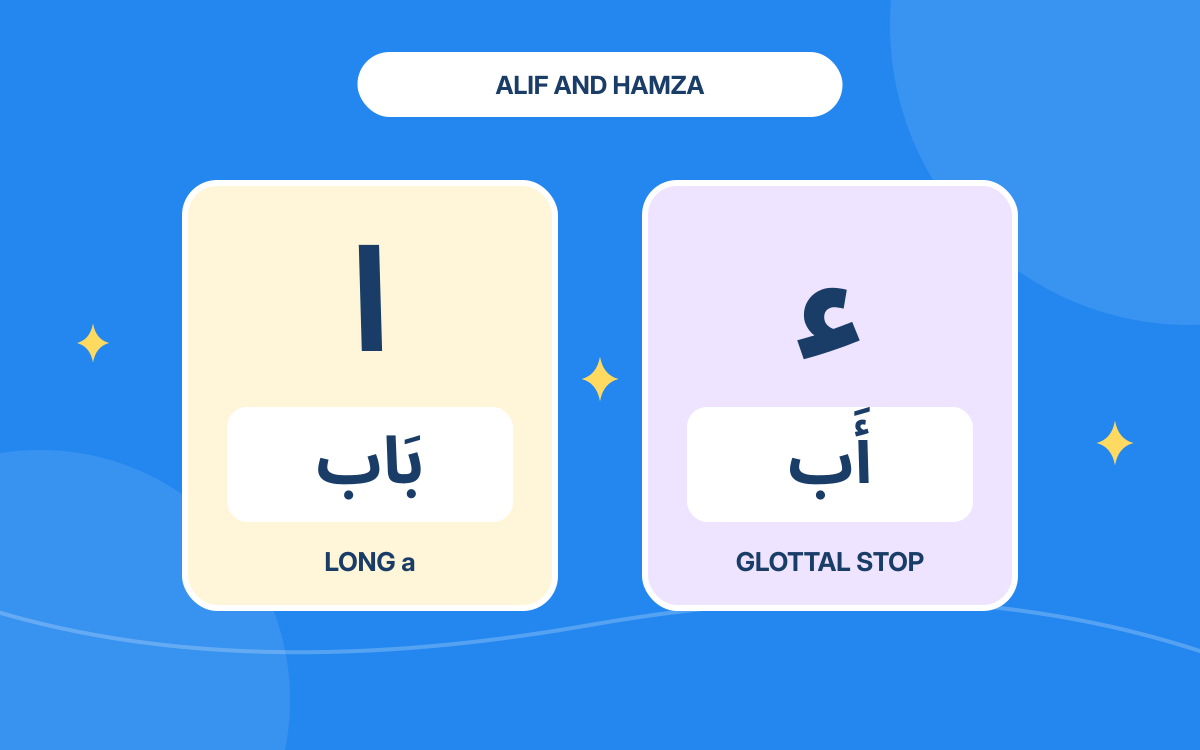
Try the verb slowly first, then connect it to the name of God without inserting an extra vowel after gh. Simple roman letters cannot reproduce every Arabic sound, so use them as a memory aid while following the Arabic. Our alif and hamza guide helps you recognise the initial written hamza.
04What does it convey in everyday speech?
Someone may say astaghfirullah after recognising a fault, remembering something they regret, or hearing something they consider wrong. A surprised tone can add an emotional reaction, but the words still mean seeking God’s forgiveness. Tone alone does not tell you the full situation.
أَسْتَغْفِرُ اللَّهَ، لَقَدْ أَخْطَأْتُ
astaghfirullah laqad akhtatu
I ask Allah for forgiveness; I made a mistake.
This is an illustrative sentence rather than a quotation from scripture. Its second part states the mistake. Astaghfirullah itself does not specify what happened or who was affected.
05Astaghfirullah, istighfar and ghafur
These words belong to the root family ghayn-fa-ra: غ ف ر. اِسْتِغْفَارٌ (istighfar) names the act of seeking forgiveness; astaghfirullah performs that request. غَفُورٌ (ghafur) is a related adjective meaning forgiving, used of God. Shared roots connect meanings, while patterns and sentence roles distinguish them.
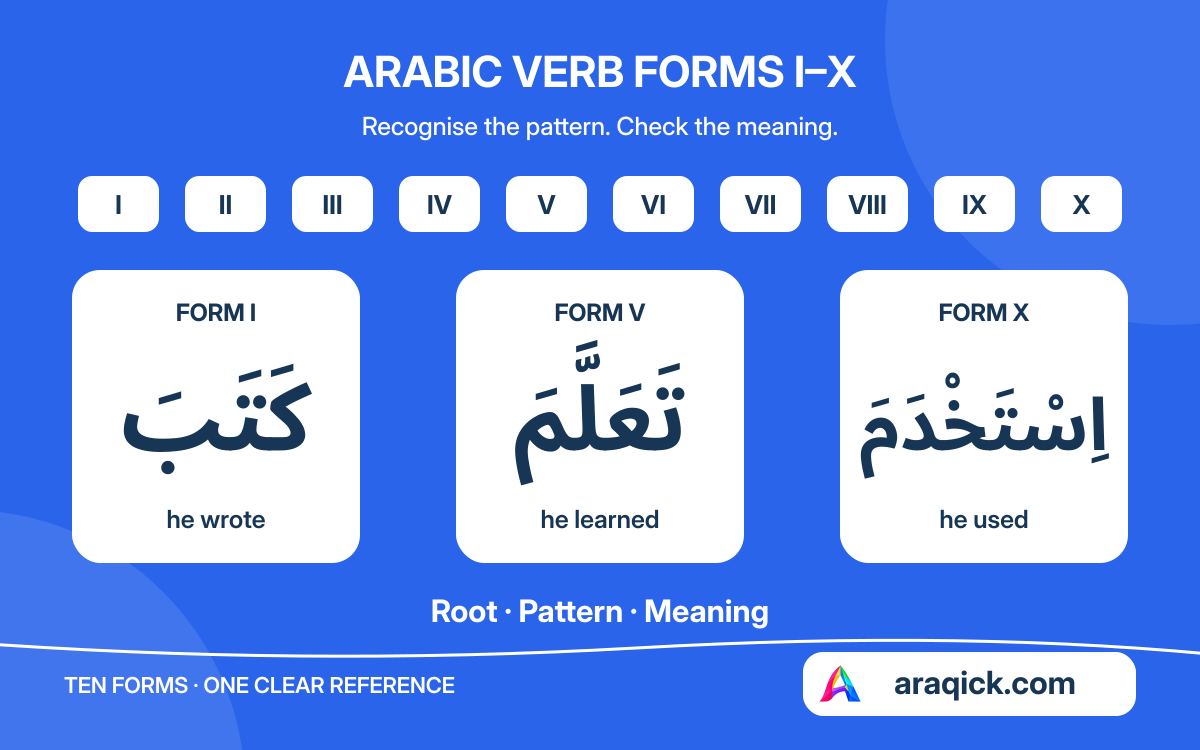
Quran 71:10 contains اِسْتَغْفِرُوا (istaghfiru), an instruction to several people to seek forgiveness. That is not the same grammatical form as “I seek.” See Arabic verb forms for how patterns build related vocabulary.
06Is it the same as apologising to a person?
No. Astaghfirullah addresses the question of God’s forgiveness. If you have interrupted or inconvenienced someone, an apology to that person communicates a different message. Expressing regret to God does not itself tell the other person what you are apologising for.
أَعْتَذِرُ عَنِ التَّأْخِيرِ
atadhiru ani attakhir
I apologise for being late.
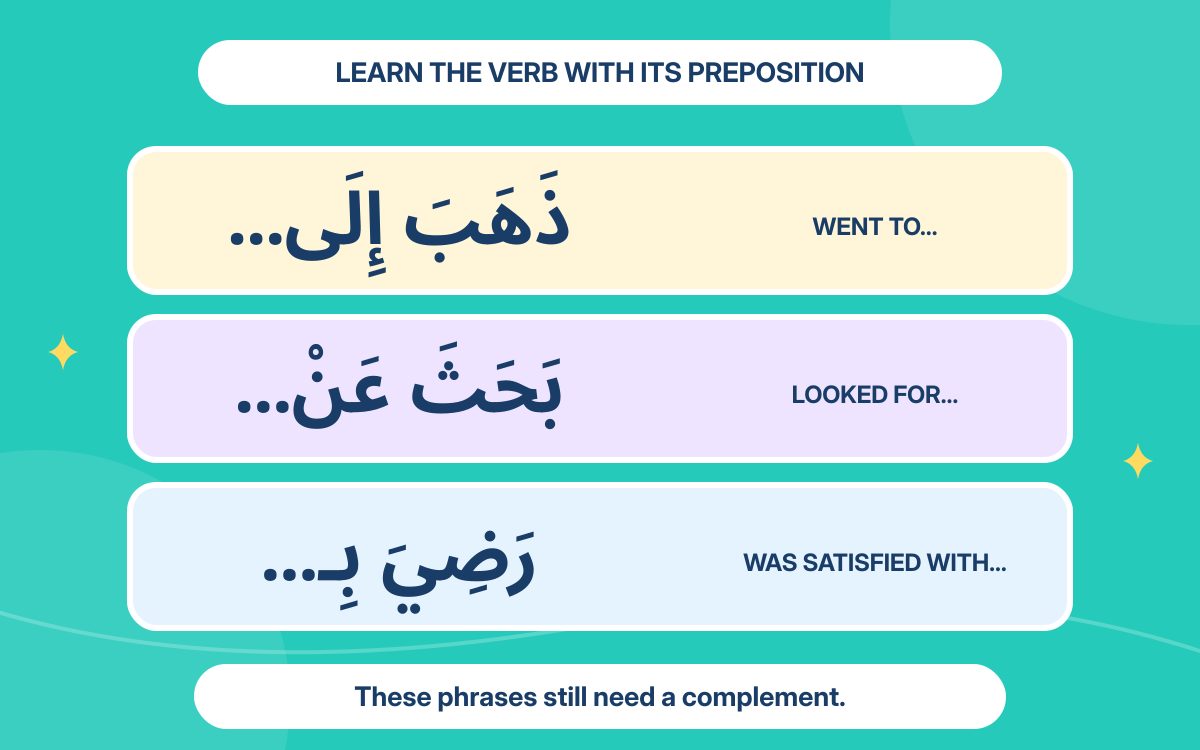
The apology names the delay. Learn the two purposes separately, then choose wording that fits the situation. Our verbs with prepositions guide shows why a verb’s following words matter.
What to remember
- Astaghfirullah means I ask Allah for forgiveness, not God has already forgiven me.
- أَسْتَغْفِرُ اللَّهَ contains a first-person verb followed by Allah.
- Istighfar names seeking forgiveness; an apology to another person communicates a separate message.
Your reference shelf
Open a guide whenever you need it.
Astaghfirullah: parts and readingNotice the verb before the name of God.
| Arabic | Reading | Meaning or function |
|---|---|---|
| أَسْتَغْفِرُ | astaghfiru | I ask for forgiveness |
| اللَّهَ | allaha | Allah, object of the verb here |
| أَسْتَغْفِرُ اللَّهَ | astaghfirullah | I ask Allah for forgiveness; paused reading |
Forgiveness words and formsA shared root does not make the grammatical forms interchangeable.
| Arabic | Reading | Meaning or function |
|---|---|---|
| اِسْتِغْفَارٌ | istighfar | The act of seeking forgiveness |
| اِسْتَغْفِرُوا | istaghfiru | Seek forgiveness; addressing several people |
| غَفُورٌ | ghafur | Forgiving |
Sources & further learning
References for the language explanations and learning guidance.