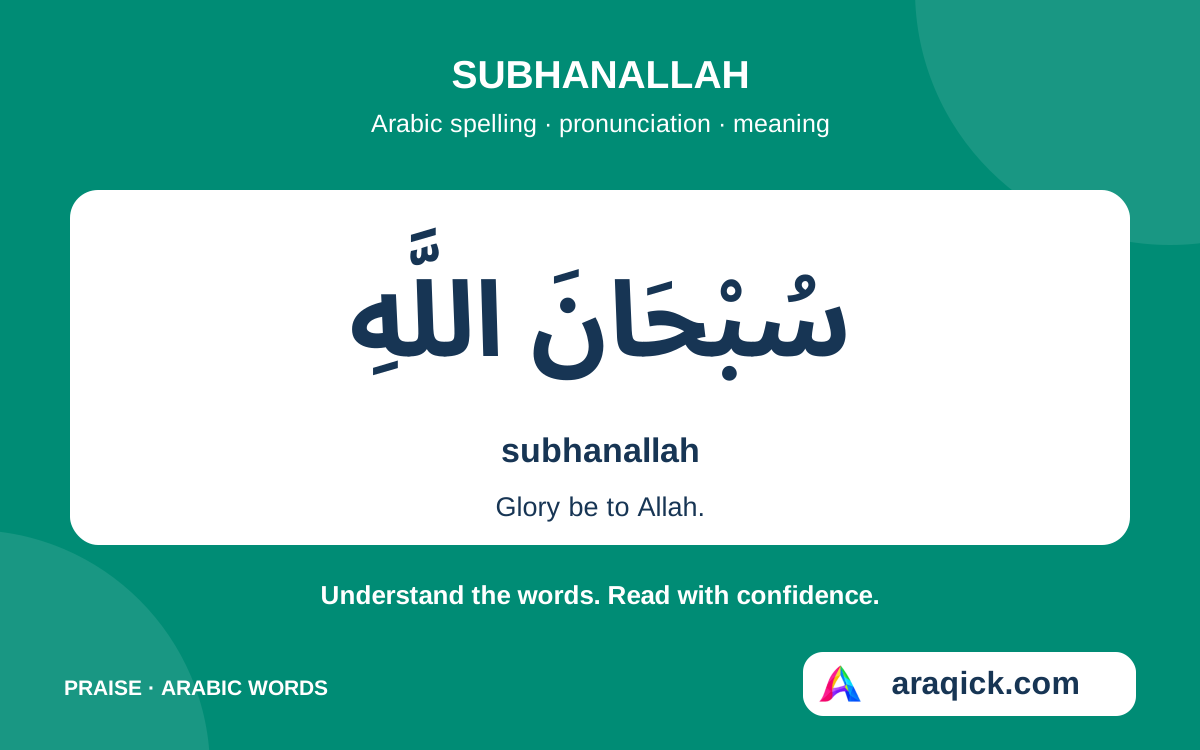
Subhanallah is سُبْحَانَ اللَّهِ, usually translated “Glory be to Allah.” It declares God free from imperfection. People also say it when something inspires wonder, but its meaning remains glorification of God; it is more than an Arabic equivalent of “wow.”
01What does subhanallah mean?
“Glory be to Allah” is a familiar English rendering. A fuller explanation is that God is exalted above defects and anything unworthy of Him. The expression concerns God, even when a beautiful view or unexpected event prompts a person to say it.
سُبْحَانَ اللَّهِ
subhanallah
Glory be to Allah.
Quran 17:43 uses the related form subhanahu in a statement exalting God above what people claim. This helps explain the expression’s religious meaning rather than reducing it to an emotional reaction.
02Why are there two Arabic words?
English often joins the reading as subhanallah. Arabic writes سُبْحَانَ and اللَّهِ separately. The first part expresses glorification; the second names God. In this construction Allah ends with a short i vowel when read in full, although that final vowel is normally dropped at a pause.
The expression has a fixed form. It does not change because a man or woman says it, or because the speaker is admiring one thing rather than several. Read the whole expression as a unit before studying its grammar.
03How do you pronounce subhanallah?
A practical reading aid is sub-haan-al-laah. Give the aa sounds time and keep the doubled l clear. The Arabic h here is the deeper, unvoiced throat sound represented by ha in this plain-letter guide. It is not the kh sound heard in other Arabic words.
سُبْحَانَ اللَّهِ
subhanallah
Two written words, joined naturally in speech.
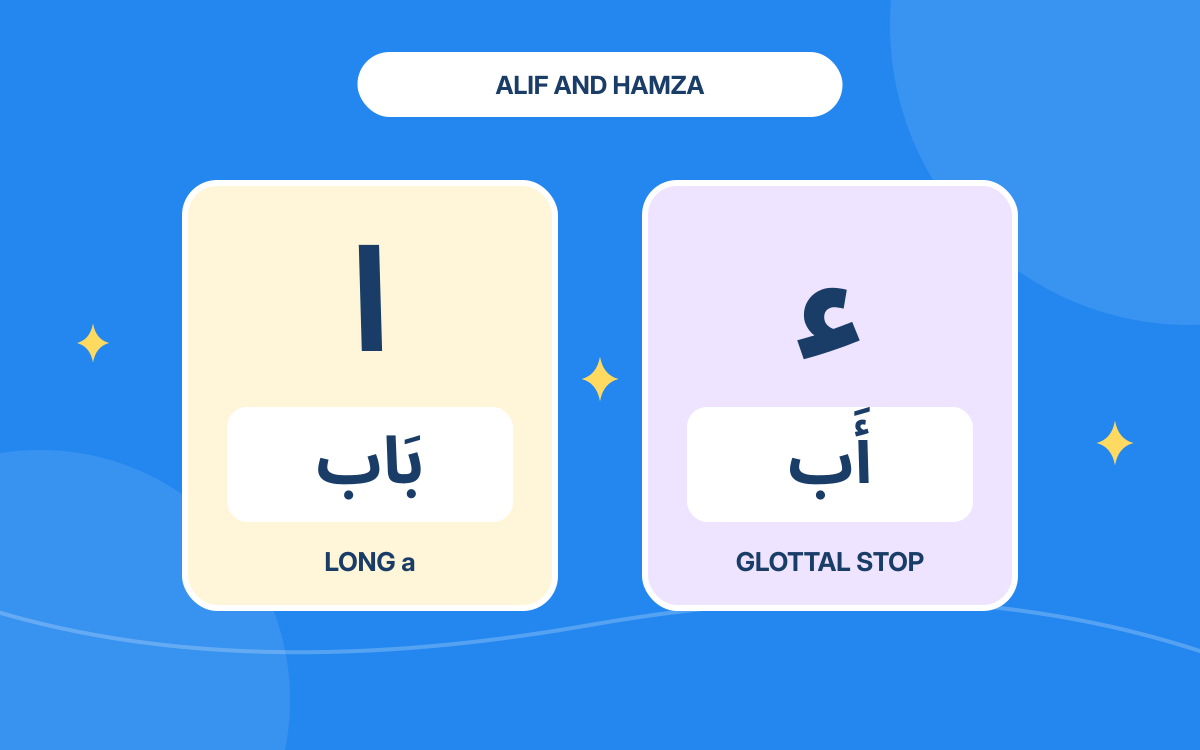
Short vowels should remain short during slow practice. Avoid turning the expression into several unrelated English syllables. Listen, copy a short portion, then join the parts. For writing practice, our alif and hamza guide explains distinctions that simple roman spelling can hide.
04Glorification when something inspires wonder
A person looking at a striking landscape might say subhanallah as a response of wonder and remembrance. The view explains the occasion; the Arabic expression still glorifies God. Tone and the surrounding conversation show whether the speaker feels admiration, surprise or disbelief.
سُبْحَانَ اللَّهِ! مَا أَجْمَلَ الْبَحْرَ!
subhanallah ma ajmala albahra
Glory be to Allah! How beautiful the sea is!
This is an illustrative Standard Arabic sentence. Its second part describes the sea. Do not translate subhanallah itself as “the sea is beautiful.”
05Related forms: subhanaka and subhanahu
The ending can change when a related expression addresses God directly or refers to Him. سُبْحَانَكَ means “Glory be to You”; سُبْحَانَهُ means “Glory be to Him.” Quran 2:32 contains the first form. The pronoun ending carries meaning, so these spellings are not interchangeable typing styles.
The term tasbih names glorification. Learn the connection without assuming that every word sharing the same root has exactly the same English translation. Our Arabic roots guide explains how roots and patterns work together.
06Does subhanallah require one fixed reply?
There is no single ordinary conversational response required by the word itself. Respond to what the person has said or shown you. A religious remembrance practice may have its own wording and setting; an everyday message does not automatically prescribe a new formula.
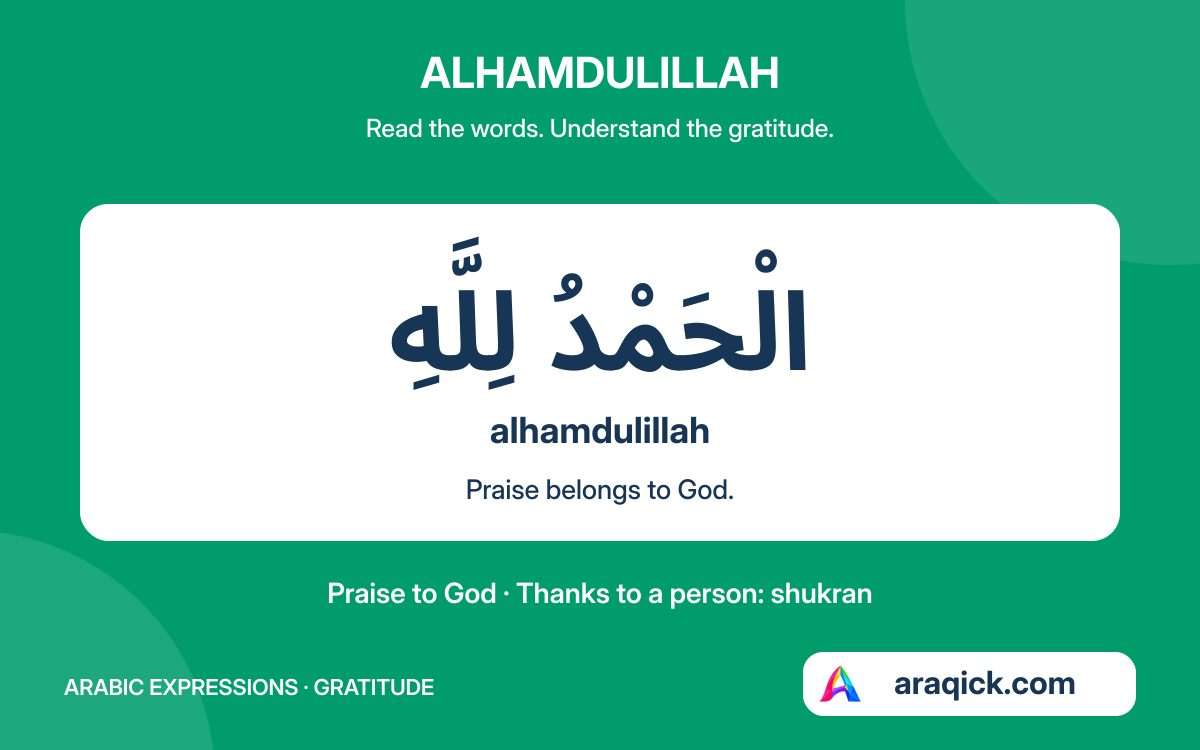
Sahih Muslim 2137a includes subhanallah among expressions of remembrance. That establishes a devotional setting alongside conversational uses. For the different purpose of expressing praise and gratitude, see our alhamdulillah explanation. Choose expressions by their meanings and keep the surrounding context in view.
What to remember
- Subhanallah glorifies God and declares Him free from imperfection.
- Arabic writes سُبْحَانَ اللَّهِ as two words; the common English reading joins them.
- Wonder can prompt the expression, but its meaning remains glorification.
Your reference shelf
Open a guide whenever you need it.
The expression at a glanceRead each part, then join the complete expression.
| Arabic | Reading | Meaning or function |
|---|---|---|
| سُبْحَانَ | subhana | Glorification; exaltation |
| اللَّهِ | allahi | Allah, in this grammatical construction |
| سُبْحَانَ اللَّهِ | subhanallah | Glory be to Allah |
A small family of related formsPronoun endings change who is addressed or referred to.
| Arabic | Reading | Meaning or function |
|---|---|---|
| سُبْحَانَكَ | subhanaka | Glory be to You |
| سُبْحَانَهُ | subhanahu | Glory be to Him |
| تَسْبِيحٌ | tasbih | Glorification |
Sources & further learning
References for the language explanations and learning guidance.