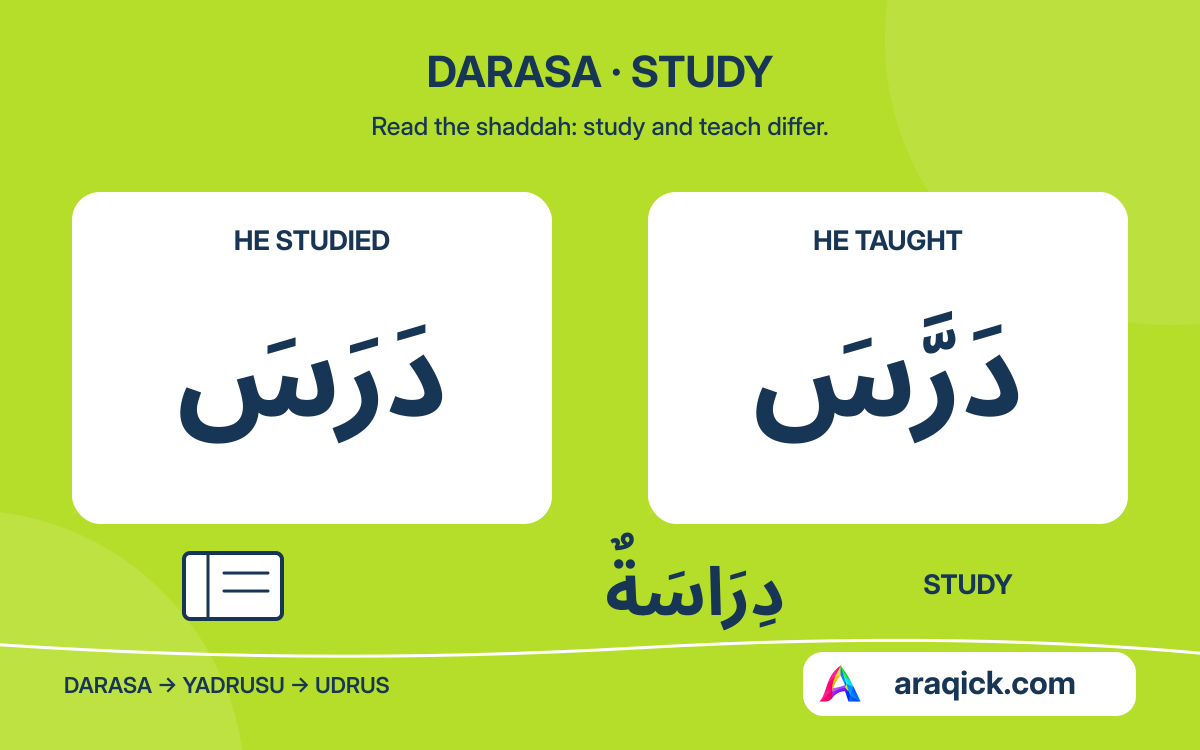
Darasa means he studied. Its present form is yadrusu, and its root is د ر س. A shaddah creates an important neighbouring verb: darrasa, he taught. Keep these two actions separate while learning to say what you study, when you study it and who should study next.
01Name the subject being studied
دَرَسَ النَّحْوَ فِي الْمَكْتَبَةِ
darasa annahwa fi almaktabati
He studied grammar in the library.
Annahwa is the subject matter studied and is the verb’s accusative object. Fi almaktabati gives the location. The Arabic grammatical subject, meaning the person doing the action, is the understood he in darasa.
Do not confuse those two uses of the English word subject: grammar is the study topic, while the learner is the doer.
02Change the learner with a past suffix
دَرَسْتُ الْخَرِيطَةَ — دَرَسْنَا الْخَرِيطَةَ
darastu alkharitata — darasna alkharitata
I studied the map — We studied the map
Darastu ends in tu for I; darasna ends in na for we. The s has sukun before these endings. The object stays the map even though the person studying changes.
She studied is دَرَسَتْ; you studied to one woman is دَرَسْتِ. Compare the position and vowel of t carefully rather than identifying every t form as the same person.
03Build a present study habit
أَدْرُسُ الْعَرَبِيَّةَ كُلَّ مَسَاءٍ
adrusu alarabiyyata kulla masain
I study Arabic every evening.
Adrusu has the I prefix a and u on r. Kulla masain makes the sentence a repeated habit. For we study, use نَدْرُسُ; for a male or mixed group, they study is يَدْرُسُونَ.
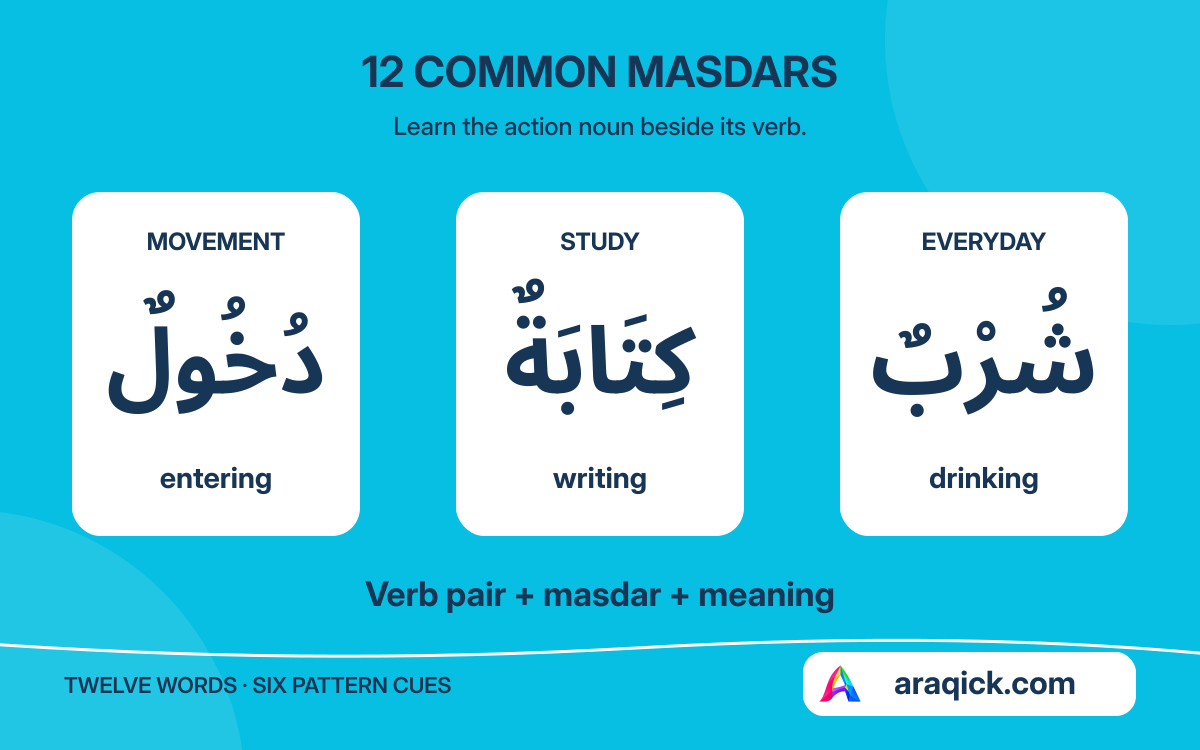
The action noun is دِرَاسَةٌ (dirasah), study or studying. It names the activity without assigning a person or tense. Find related pairs in common Arabic masdars.
04Keep study, read and teach distinct
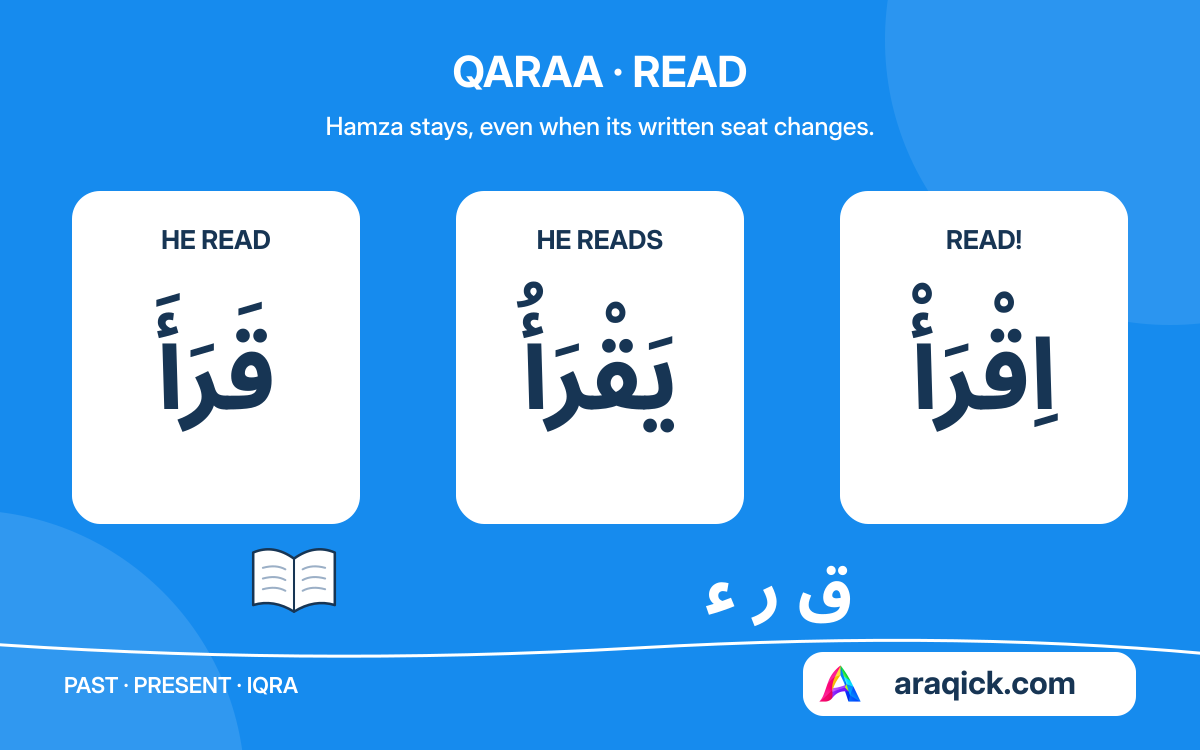
دَرَسَ — قَرَأَ — دَرَّسَ
darasa — qaraa — darrasa
He studied — He read — He taught
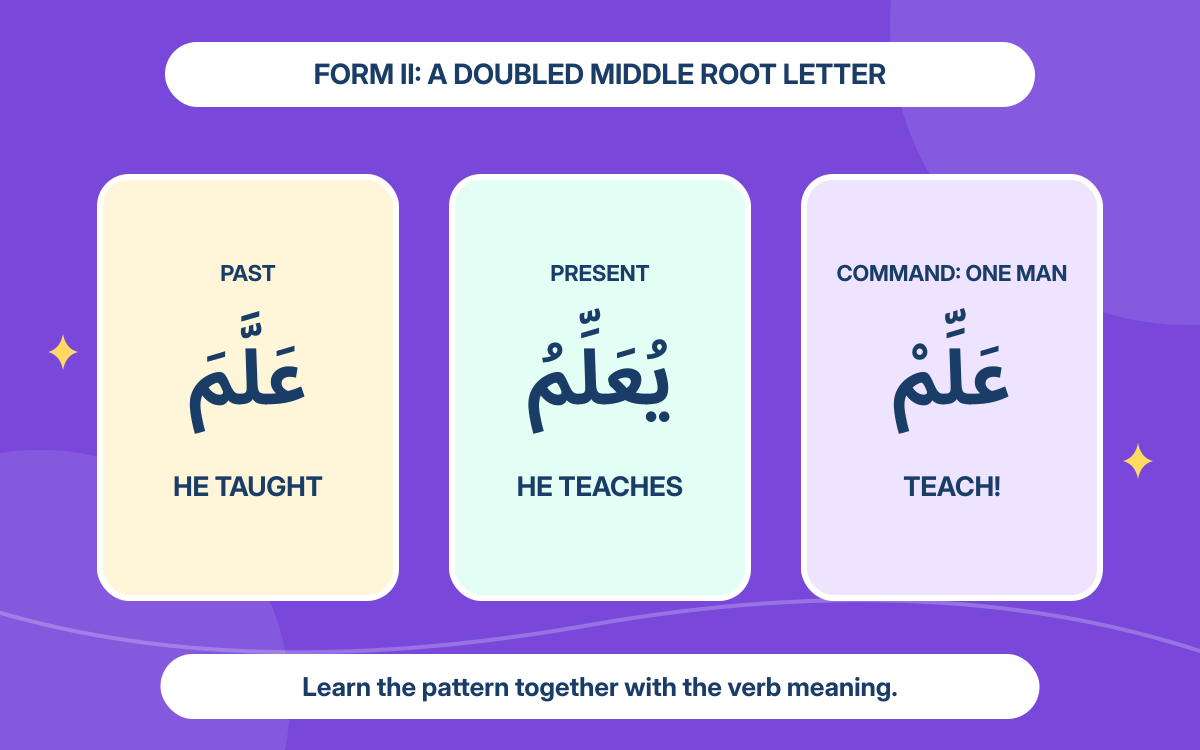
Reading is one possible part of studying, but darasa can also describe examining material such as a map. Qaraa focuses on reading. Darrasa, with shaddah on r, is a Form II teaching verb.
The present teaching form is يُدَرِّسُ (yudarrisu), not yadrusu. Read the shaddah and vowels together. See qaraa and Form II verbs for the neighbouring patterns.
05Give a study instruction and negate a past action
اُدْرُسْ هَذَا الْمِثَالَ
udrus hadha almithala
Study this example. — to one man
لَمْ أَدْرُسْ هَذَا الْمِثَالَ
lam adrus hadha almithala
I did not study this example.
Udrus begins with a helping u when said alone and ends in sukun. Lam adrus uses the I imperfect in the jussive. The internal r keeps its u in both forms.
For one woman, the command is اُدْرُسِي. Try the verb-conjugation routine to practise changing one feature at a time. Plain reading aids simplify vowel length and Arabic consonants; the charts supply the exact forms.
What to remember
- Darasa–yadrusu means study, and dirasah names the activity.
- Past suffixes and present prefixes identify the learner while the object names the material.
- Darrasa means teach; qaraa means read; udrus tells one man to study.
Your reference shelf
Open a guide whenever you need it.
Study: past and present formsPast and ordinary indicative present; use the lesson for other moods
| Person | Past | Present |
|---|---|---|
| He | دَرَسَ | يَدْرُسُ |
| They: two men | دَرَسَا | يَدْرُسَانِ |
| They: male or mixed group | دَرَسُوا | يَدْرُسُونَ |
| She | دَرَسَتْ | تَدْرُسُ |
| They: two women | دَرَسَتَا | تَدْرُسَانِ |
| They: female group | دَرَسْنَ | يَدْرُسْنَ |
| You: one man | دَرَسْتَ | تَدْرُسُ |
| You: two people | دَرَسْتُمَا | تَدْرُسَانِ |
| You: male or mixed group | دَرَسْتُمْ | تَدْرُسُونَ |
| You: one woman | دَرَسْتِ | تَدْرُسِينَ |
| You: female group | دَرَسْتُنَّ | تَدْرُسْنَ |
| I | دَرَسْتُ | أَدْرُسُ |
| We | دَرَسْنَا | نَدْرُسُ |
The dual you form serves two listeners of either gender. Shared spellings depend on context. The present column is indicative; do not use it unchanged after every mood particle.
Commands by listenerMatch the complete command to the listener
| Listener | Command |
|---|---|
| One man | اُدْرُسْ |
| One woman | اُدْرُسِي |
| Two people | اُدْرُسَا |
| Male or mixed group | اُدْرُسُوا |
| Female group | اُدْرُسْنَ |
The dual command serves two listeners of either gender. A final alif after group waw is silent; the dual alif is pronounced.
Sources & further learning
References for the language explanations and learning guidance.