A negative question contains a negative statement such as “you are not a student.” In the formal pattern taught here, bala rejects that negation; naam confirms it. Give the full Arabic answer so the fact is clear, without relying on an English yes or no.
01Find the negative statement first
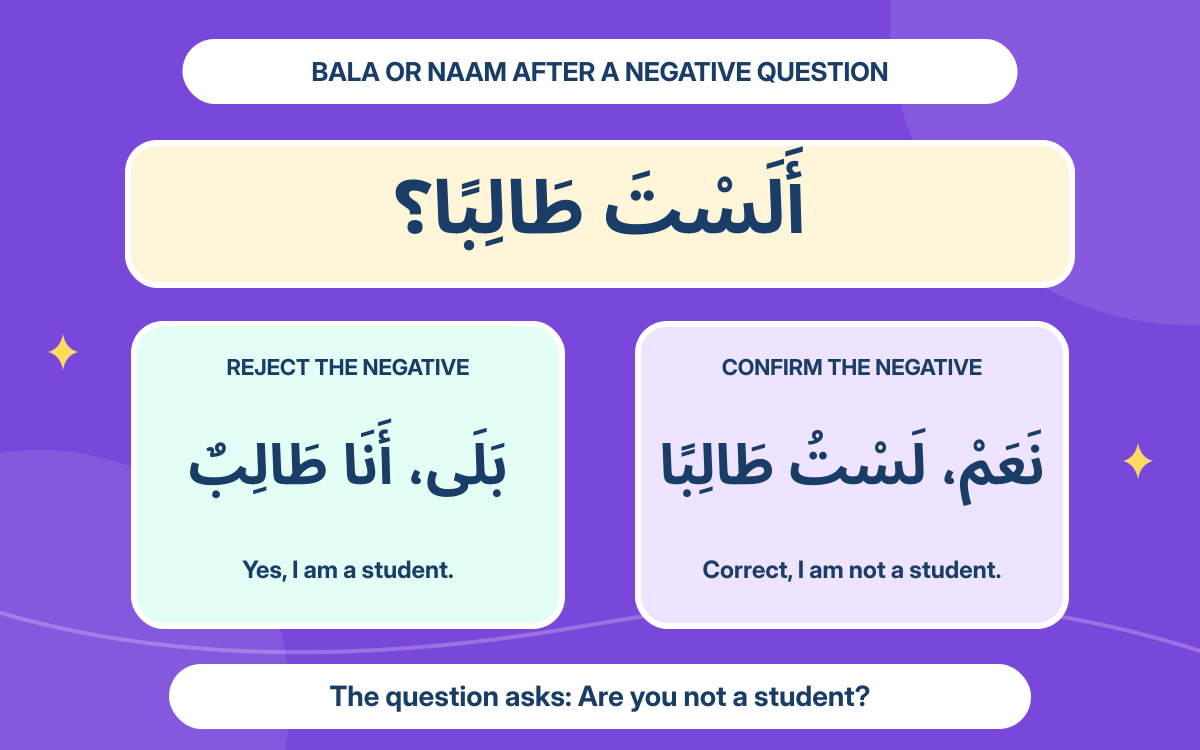
The attached question hamza أَ turns the negative form lasta into a question. This example addresses one man.
أَلَسْتَ طَالِبًا؟
alasta taliban
Are you not a student?
The statement being checked is لَسْتَ طَالِبًا, lasta taliban: you are not a student. Lasta already contains the negation. Taliban has the accusative an ending after this form of laysa. First decide whether the respondent really is a student.
02Reject the negation with bala
If the man is a student, use bala and a positive clause. The reply rejects “you are not a student.”
بَلَى، أَنَا طَالِبٌ
bala ana talibun
On the contrary, I am a student.
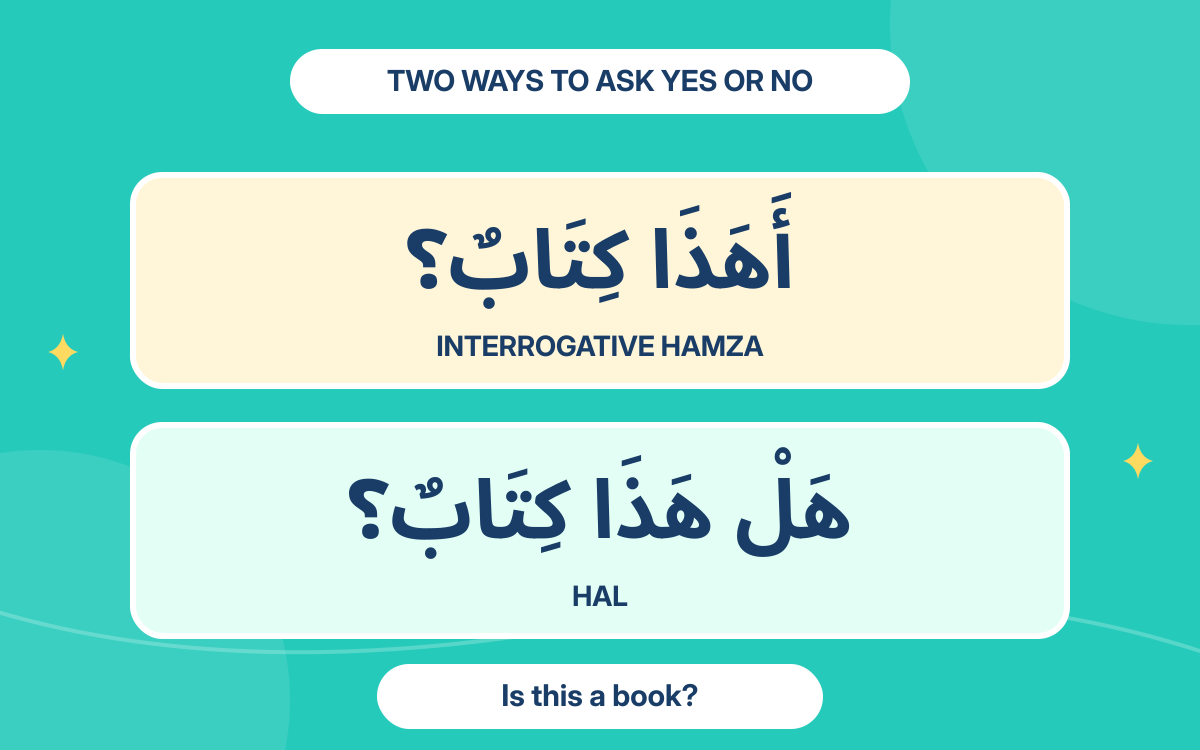
The reply switches from the listener’s you to the speaker’s I. In this positive nominal clause, talibun ends in un. For the affirmative question هَلْ أَنْتَ طَالِبٌ؟, hal anta talibun, the ordinary positive reply is different:
نَعَمْ، أَنَا طَالِبٌ
naam ana talibun
Yes, I am a student. — answering the affirmative hal question
Check the question’s negation before choosing the answer particle.
03Confirm the negation with naam
Return to alasta taliban. If the man is not a student, naam confirms the negative statement in the formal pattern here. Keep a negative clause in the reply.
نَعَمْ، لَسْتُ طَالِبًا
naam lastu taliban
That is correct: I am not a student.
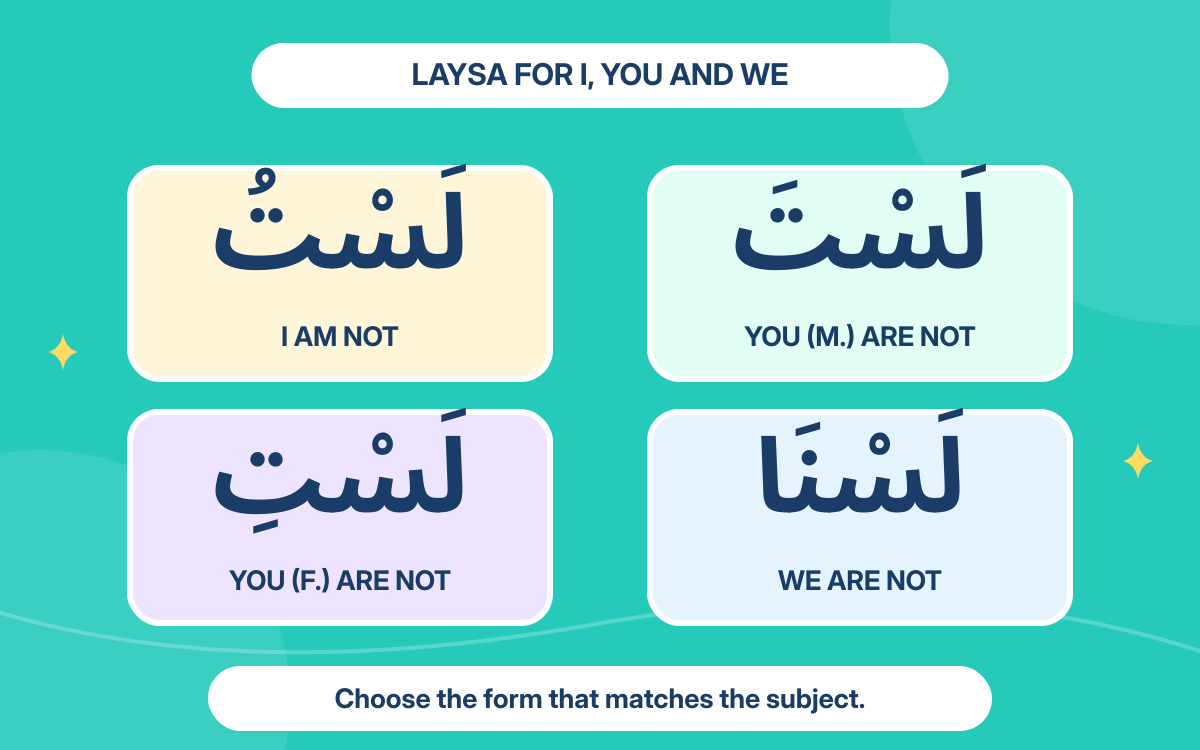
Lastu means I am not; lasta means you are not, addressed to one man. Do not pair bala with lastu taliban when answering this question: one part would reject the negation while the other repeats it.
04Apply the same check to a past action
Ma can negate a past verb. The attached question hamza comes before it in ama. This question addresses one man.
أَمَا كَتَبْتَ؟
ama katabta
Did you not write?
بَلَى، كَتَبْتُ
bala katabtu
On the contrary, I did write.
نَعَمْ، مَا كَتَبْتُ
naam ma katabtu
That is correct: I did not write.
Katabta means you wrote; katabtu means I wrote. Bala gives the positive fact; naam confirms the negative fact.
05Choose the fact, then the particle
For ama katabta, state the fact to yourself first: I wrote, or I did not write. If you wrote, reject the question’s negation with bala and give the positive clause.
بَلَى، كَتَبْتُ
bala katabtu
On the contrary, I did write.
Put the answer particle first, followed by the full clause. Katabtu already contains its I subject, so it is a complete clause without ana. These are formal examples; always include the clause when a short answer could be misunderstood.
What to remember
- After a negative question, bala overturns the negation and introduces the positive fact.
- In the formal pattern here, naam confirms the negative statement; include the negative clause.
- Check the fact and the question’s polarity, then answer with a complete clause using the correct person form.
Your reference shelf
Open a guide whenever you need it.
Read the entire question and reply togetherAffirmative and negative questions about a male student
| Question | Fact | Reply |
|---|---|---|
| هَلْ أَنْتَ طَالِبٌ؟ | I am a student | نَعَمْ، أَنَا طَالِبٌ |
| أَلَسْتَ طَالِبًا؟ | I am a student | بَلَى، أَنَا طَالِبٌ |
| أَلَسْتَ طَالِبًا؟ | I am not a student | نَعَمْ، لَسْتُ طَالِبًا |
Bala, بَلَى, is an answer particle that cancels a preceding negation and affirms the corresponding positive statement. Naam, نَعَمْ, confirms the statement asked about; in our negative examples that statement is negative. These meanings are easier to see in complete Arabic clauses than in isolated English translations of yes and no.
This guide teaches the conventional formal distinction for real questions. Conversational and rhetorical uses can differ; a complete clause makes the intended fact explicit. We do not treat these words as a universal translation rule for every English negative question.
The final letter in bala is alif maqsura, ى, pronounced as a long a, not a dotted ya. Our plain Latin aids simplify vowel length and retain the marked endings: talibun in the positive clause, taliban after lastu or lasta. Katabtu and katabta must keep different final vowels because they identify different people.
Sources & further learning
References for the language explanations and learning guidance.