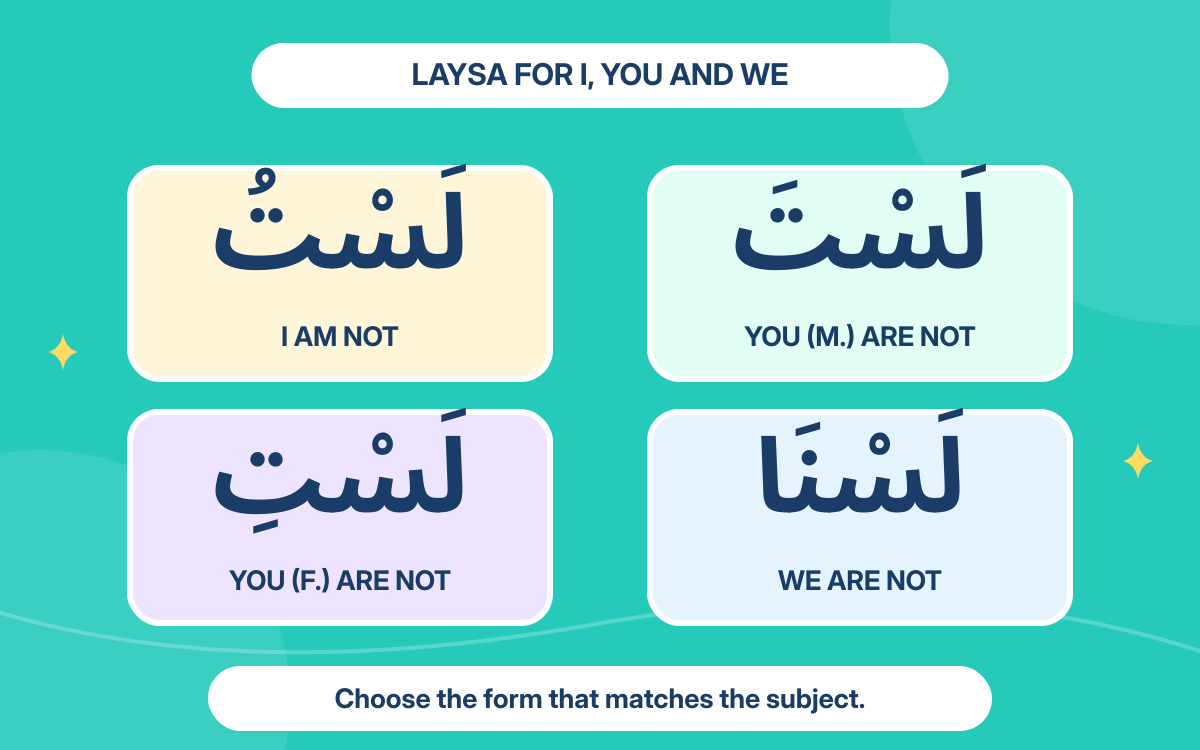
Laysa changes form when you speak about yourself or address another person. Lastu means “I am not,” lasta addresses one man, lasti addresses one woman, and lasna means “we are not.” Learn who each form identifies before adding a description or location.
01Use lastu for yourself
Lastu identifies I, whether the speaker is male or female. A descriptive word still matches the speaker’s gender.
لَسْتُ طَالِبًا
lastu taliban
I am not a student. — a male speaker
لَسْتُ طَالِبَةً
lastu talibatan
I am not a student. — a female speaker
The verb stays lastu in both sentences. The accusative predicate changes from taliban to talibatan. Do not use lasti merely because the speaker is a woman.
02Address one man or one woman
When you address someone, the final vowel on t distinguishes the two singular you forms.
لَسْتَ مُتْعَبًا
lasta mutaban
You are not tired. — to one man
لَسْتِ مُتْعَبَةً
lasti mutabatan
You are not tired. — to one woman
Lasta has final a; lasti has final i. Match the listener first, then the gender of the accusative description. The forms refer to the person listening, rather than someone being discussed as he or she.
03Negate where you are
Keep the same person form when the predicate is a location. No descriptive adjective is needed.
لَسْتُ فِي الْبَيْتِ
lastu fi albaiti
I am not at home.
Lastu identifies the speaker, and fi albaiti gives the location denied. Albaiti remains genitive after fi. This is a negative state now; it does not mean “I did not go home.” Laysa has past-shaped person endings but ordinarily supplies present negation in these models.
04Include yourself with lasna
Lasna means we are not. It includes the speaker and works for a male, female or mixed group.
لَسْنَا فِي الْبَيْتِ
lasna fi albaiti
We are not at home.
The location phrase does not change. The new verb form changes who is included in the statement. For a male or mixed group, لَسْنَا طُلَّابًا, lasna tullaban, means “We are not students.” A descriptive predicate must still agree with its group.
05Add a separate pronoun when useful
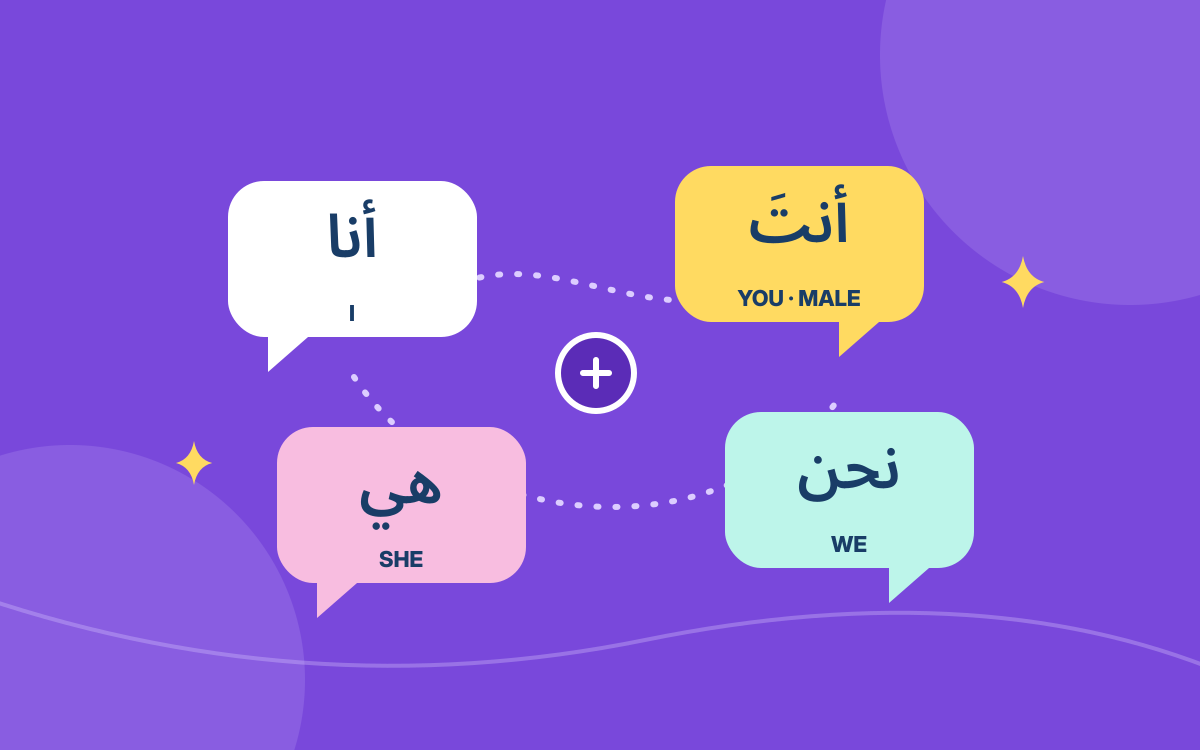
The person ending already supplies I or we. A separate pronoun can clarify or emphasise the person without changing the basic meaning.
أَنَا لَسْتُ مُتْعَبًا
ana lastu mutaban
I am not tired. — a male speaker
Removing ana leaves lastu mutaban with the same core meaning. Likewise, nahnu lasna fi albaiti and lasna fi albaiti both mean we are not at home. Keep the separate pronoun consistent with the person identified by the verb.
What to remember
- Lastu means I am not for either speaker gender; lasta and lasti address one man and one woman.
- Lasna means we are not for any group including the speaker.
- Match the predicate separately, and keep nouns after prepositions genitive.
Your reference shelf
Open a guide whenever you need it.
Check the laysa person formsSingular, dual and plural forms for reading
| Person | Arabic | Reading |
|---|---|---|
| He / masculine it | لَيْسَ | laysa |
| She / feminine it | لَيْسَتْ | laysat |
| They, two males or a mixed pair | لَيْسَا | laysa |
| They, two females | لَيْسَتَا | laysata |
| They, male or mixed plural | لَيْسُوا | laysu |
| They, female plural | لَسْنَ | lasna |
| You, one male | لَسْتَ | lasta |
| You, one female | لَسْتِ | lasti |
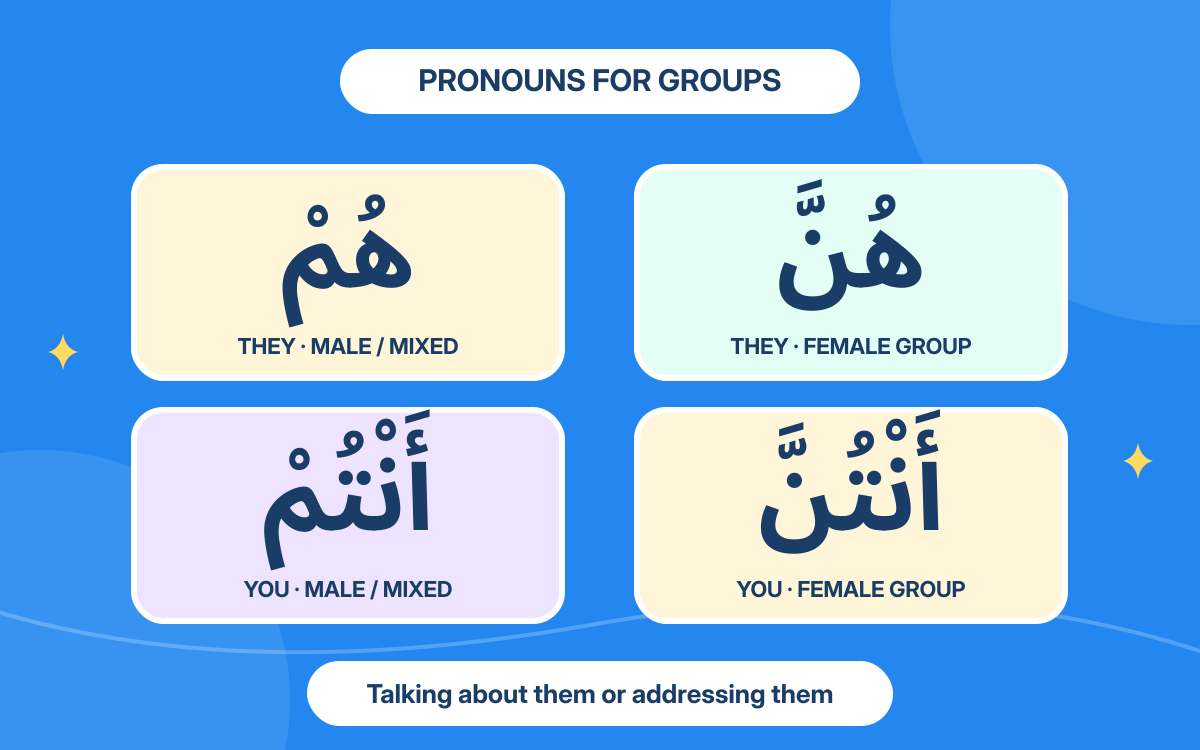
| You, two people | لَسْتُمَا | lastuma |
| You, male or mixed plural | لَسْتُمْ | lastum |
| You, female plural | لَسْتُنَّ | lastunna |
| I, either gender | لَسْتُ | lastu |
| We, any group | لَسْنَا | lasna |
These are fixed laysa forms, not a productive present-tense or imperative paradigm. In the models here, they mean am not, is not or are not. The plain reading aids simplify vowel length: لَيْسَ and لَيْسَا differ in final vowel length, as do لَسْنَ and لَسْنَا. Keep the Arabic beside the reading. The feminine plural subject nun and the shaddah in lastunna also matter.
Sources & further learning
References for the language explanations and learning guidance.