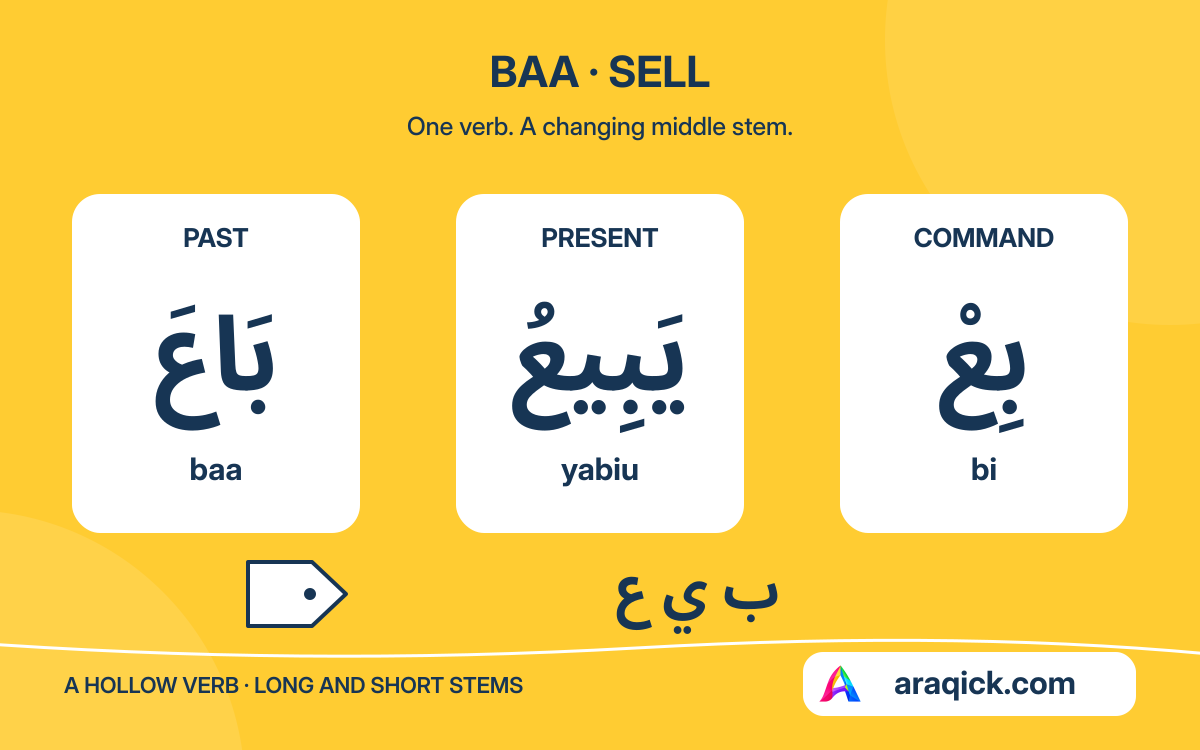
Baa means he sold, yabiu means he sells, and bi means sell to one man. These forms belong to one verb even though the middle changes. Its root is ب ي ع. Learn the complete forms through small shopping sentences, then use the reference tables to extend them to other people.
01Name the thing sold
بَاعَ تَمْرًا
baa tamran
He sold dates.
Baa is the past he form. Tamran names what was sold and is an accusative direct object. Here tamr is the collective word for dates, so English naturally uses the plural.
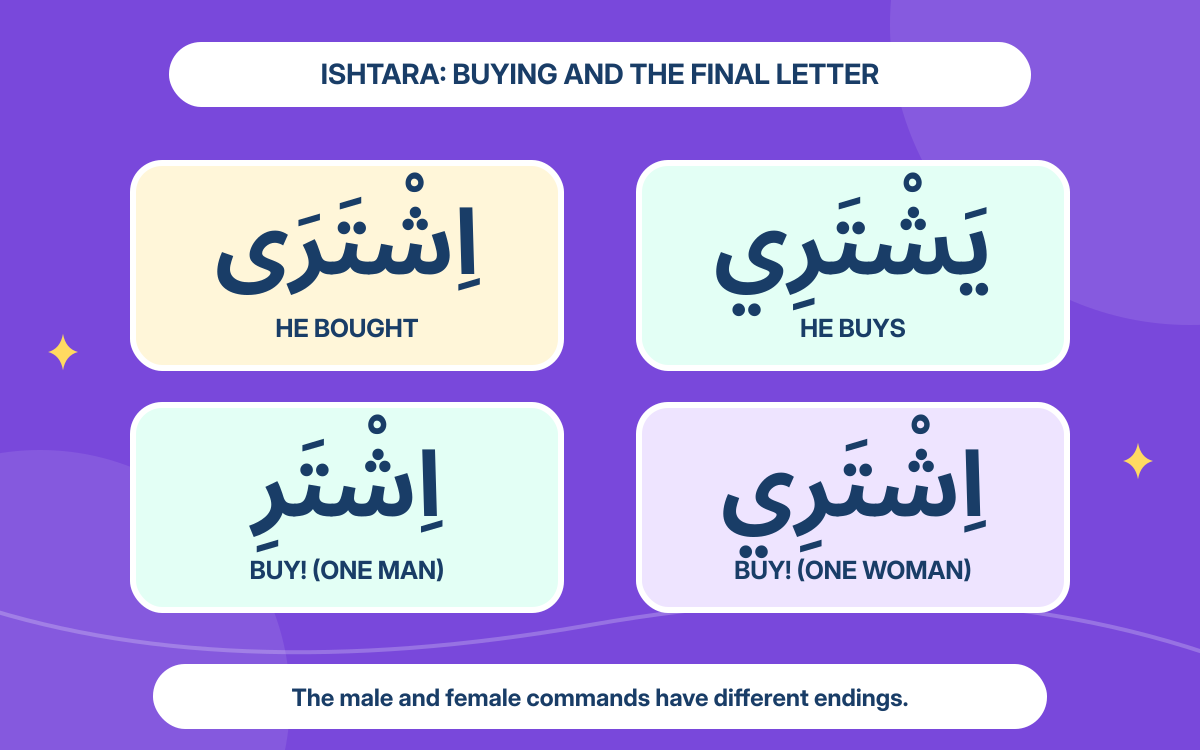
Selling and buying describe different sides of a transaction. اِشْتَرَى means he bought; do not use baa for both actions. Compare the buying verb guide.
02Shorten the middle in I and we
بِعْتُ كِتَابًا — بِعْنَا كُتُبًا
bitu kitaban — bina kutuban
I sold a book — We sold books
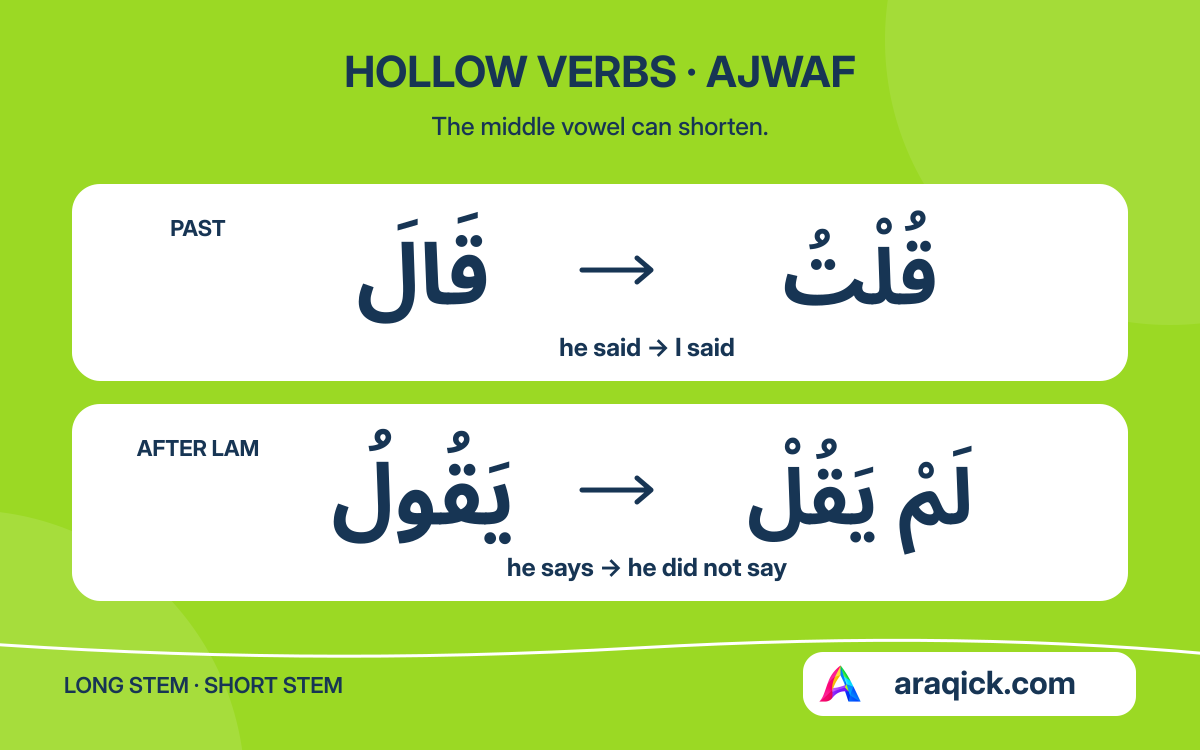
The past forms bitu and bina have a short i before the closed part of the stem. They are not made by attaching tu or na to unchanged baa. The vowelled Arabic shows ain with sukun.
Other endings keep the long a: بَاعَتْ is she sold, and بَاعُوا is they sold for a male or mixed group. Choose the whole past form from its person pattern.
03Recognise long i in the present
أَبِيعُ كُتُبًا — نَبِيعُ تَمْرًا
abiu kutuban — nabiu tamran
I sell books — We sell dates
The present stem has long i, written with ya. A identifies I and n identifies we. For one woman, تَبِيعِينَ means you sell; for a male or mixed group, يَبِيعُونَ means they sell.
The feminine-group present is يَبِعْنَ. Its middle is short before the subject nun. Long i therefore does not appear in every present person form.
04Compare did not and will not sell
لَمْ أَبِعْ كِتَابًا — لَنْ أَبِيعَ كِتَابًا
lam abi kitaban — lan abia kitaban
I did not sell a book — I will not sell a book
After lam, the singular jussive shortens the middle and ends with sukun on ain. After lan, the singular subjunctive keeps the long middle i and adds final fathah.
The plain readings simplify ain and vowel length, so the Arabic is essential: أَبِعْ and أَبِيعَ are different complete forms.
05Give a direct selling instruction
بِعْ كِتَابًا
bi kitaban
Sell a book. — to one man
The command bi has a short middle vowel and no extra initial alif. One woman receives بِيعِي (bii), while a male or mixed group receives بِيعُوا (biu). Those forms keep a long stem.
The female-group command بِعْنَ uses the short stem again. Review hollow verbs and command person forms rather than applying the short singular form to every listener.
What to remember
- Baa, yabiu and bi are forms of one selling verb with root ب ي ع.
- Past bitu and jussive abi use short middle stems.
- Group and feminine command forms need their own complete patterns.
Your reference shelf
Open a guide whenever you need it.
Sell: past and present formsPast and ordinary indicative present; use the lesson for other moods
| Person | Past | Present |
|---|---|---|
| He | بَاعَ | يَبِيعُ |
| They: two men | بَاعَا | يَبِيعَانِ |
| They: male or mixed group | بَاعُوا | يَبِيعُونَ |
| She | بَاعَتْ | تَبِيعُ |
| They: two women | بَاعَتَا | تَبِيعَانِ |
| They: female group | بِعْنَ | يَبِعْنَ |
| You: one man | بِعْتَ | تَبِيعُ |
| You: two people | بِعْتُمَا | تَبِيعَانِ |
| You: male or mixed group | بِعْتُمْ | تَبِيعُونَ |
| You: one woman | بِعْتِ | تَبِيعِينَ |
| You: female group | بِعْتُنَّ | تَبِعْنَ |
| I | بِعْتُ | أَبِيعُ |
| We | بِعْنَا | نَبِيعُ |
The dual you form serves two listeners of either gender. Shared spellings depend on context. The present column is indicative; do not use it unchanged after every mood particle.
Commands by listenerCompare the whole form, including the weak letter or doubled consonant
| Listener | Command |
|---|---|
| One man | بِعْ |
| One woman | بِيعِي |
| Two people | بِيعَا |
| Male or mixed group | بِيعُوا |
| Female group | بِعْنَ |
The singular masculine and female-group commands shorten the stem. The other forms keep long i. Root ain is still present even when the simple reading aid cannot show its sound precisely.
Sources & further learning
References for the language explanations and learning guidance.