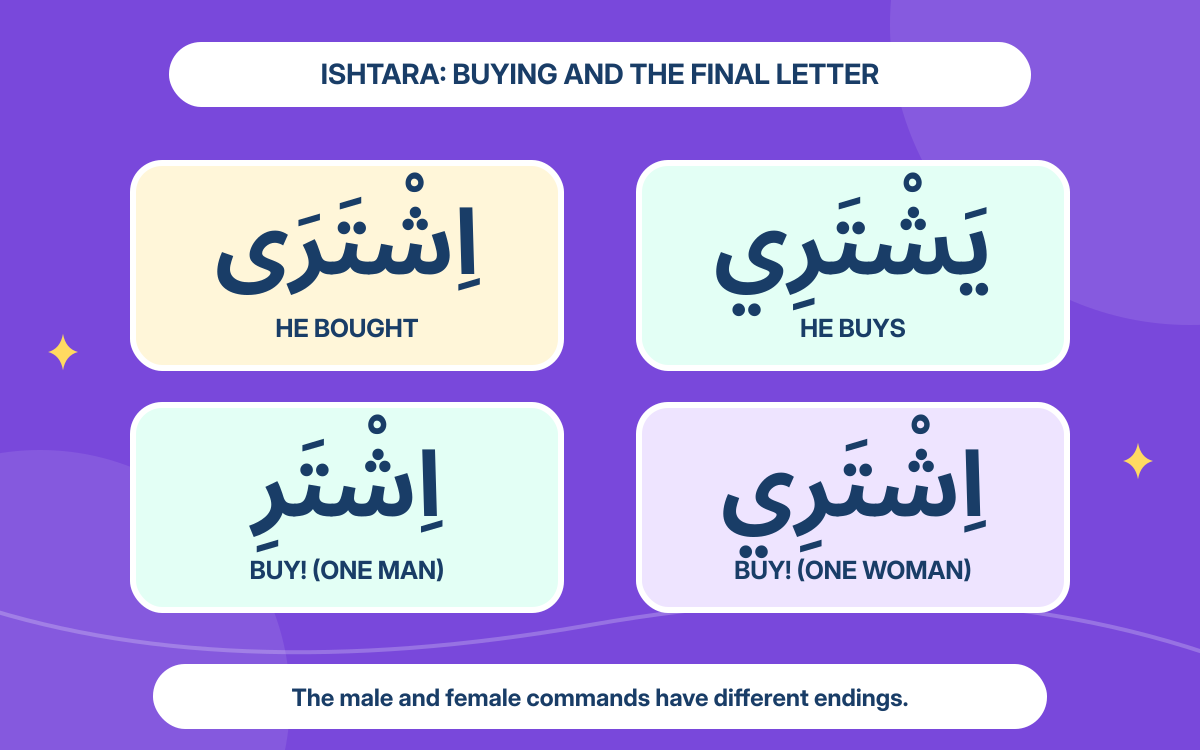
Ishtara means “he bought,” while yashtari means “he buys” or “he is buying.” This useful Form VIII verb has a weak final root letter. Its endings change when you say who bought something or address a listener.
01Learn the past and present together
اِشْتَرَى is a Form VIII verb from the root ش ر ي. The final root letter is weak. Its past spelling ends in alif maqsura, ى, representing a long a; its present ends in a long i written ي.
اِشْتَرَى → يَشْتَرِي
ishtara to yashtari
He bought → he buys / is buying.
The initial alif and inserted ta belong to the Form VIII pattern. The changing ending comes from the final weak root letter, not a different action.
02Say “I bought” and “we bought”
Before the past subject endings tu and na, this verb uses the stem ishtaray. These endings identify the buyer. Keep the ya with sukun before the ending.
اِشْتَرَيْتُ كِتَابًا.
ishtaraytu kitaban
I bought a book.
اِشْتَرَيْنَا كِتَابًا.
ishtarayna kitaban
We bought a book.
Use ishtaraytu for “I bought” and ishtarayna for “we bought.” Do not attach these endings directly to the unchanged long-a spelling of ishtara.
03Give a command to one male
For one male listener, the buying command is اِشْتَرِ. The final weak ya is removed. The ra keeps a short i vowel; there is no final ya.
اِشْتَرِ كِتَابًا.
ishtari kitaban
Buy a book. — to one male
Compare the long final i in يَشْتَرِي with the short final i in اِشْتَرِ. The command begins with hamzat wasl: i at the start of speech, omitted when joining from a preceding word.
04Keep the female listener’s long i
For one female listener, say اِشْتَرِي. Its final ya marks the feminine singular listener and is pronounced as a long i. Compare the two commands carefully.
اِشْتَرِي كِتَابًا.
ishtari kitaban
Buy a book. — to one female
اِشْتَرِ addresses one male with short final i; اِشْتَرِي addresses one female with long final i. Our simplified aids write both as ishtari, so use the Arabic spelling and listener label to see the length difference.
05Keep the buyer and bought item clear
The verb ending tells you who acted. The thing bought is a direct object. In these examples, an indefinite singular object takes the accusative ending an.
اِشْتَرَيْنَا قَلَمًا.
ishtarayna qalaman
We bought a pen.
Ishtarayna names the action and the “we” buyer; qalaman names the item. A past report uses a past form, while an instruction uses the appropriate command. Learn these selected weak forms as a set rather than forcing every weak verb into the same spelling.
What to remember
- اِشْتَرَى means he bought; يَشْتَرِي means he buys or is buying. This Form VIII verb has the final-weak root ش ر ي.
- The selected speaker forms are اِشْتَرَيْتُ, I bought, and اِشْتَرَيْنَا, we bought: use the ishtaray stem before these endings.
- Address one male with اِشْتَرِ, short final i without ya; address one female with اِشْتَرِي, long final i with the listener’s ya.
Your reference shelf
Open a guide whenever you need it.
Compare the selected buying formsPast speakers, ordinary present and two singular commands
| Use | Arabic | Plain aid | Meaning |
|---|---|---|---|
| Past; he | اِشْتَرَى | ishtara | He bought |
| Ordinary present; he | يَشْتَرِي | yashtari | He buys / is buying; final long i |
| Past; I | اِشْتَرَيْتُ | ishtaraytu | I bought |
| Past; we | اِشْتَرَيْنَا | ishtarayna | We bought |
| Command; one male | اِشْتَرِ | ishtari | Buy! Short final i; weak ya deleted |
| Command; one female | اِشْتَرِي | ishtari | Buy! Long final i; feminine listener ya |
The root is ش ر ي. The last radical is weak, while the ta in the written derived verb belongs to the Form VIII pattern. The past long a is written with alif maqsura. Before the selected consonant-initial past endings, the ya appears in اِشْتَرَيْتُ and اِشْتَرَيْنَا.
The feminine singular command’s final ya is the listener suffix, يَاءُ الْمُخَاطَبَةِ. Its long i distinguishes it from the masculine command. Both commands begin with joining hamzat wasl, written as alif without a hamza head. This reference is a selected comparison, not a full paradigm of all persons and verb moods.
Sources & further learning
References for the language explanations and learning guidance.