Arabic nouns have grammatical gender: masculine or feminine. A book is masculine; a bag is feminine. The ending ة is a useful clue, but it is not a guarantee. Learn a noun together with a matching description, then practise the common exceptions.
01Objects have grammatical gender too
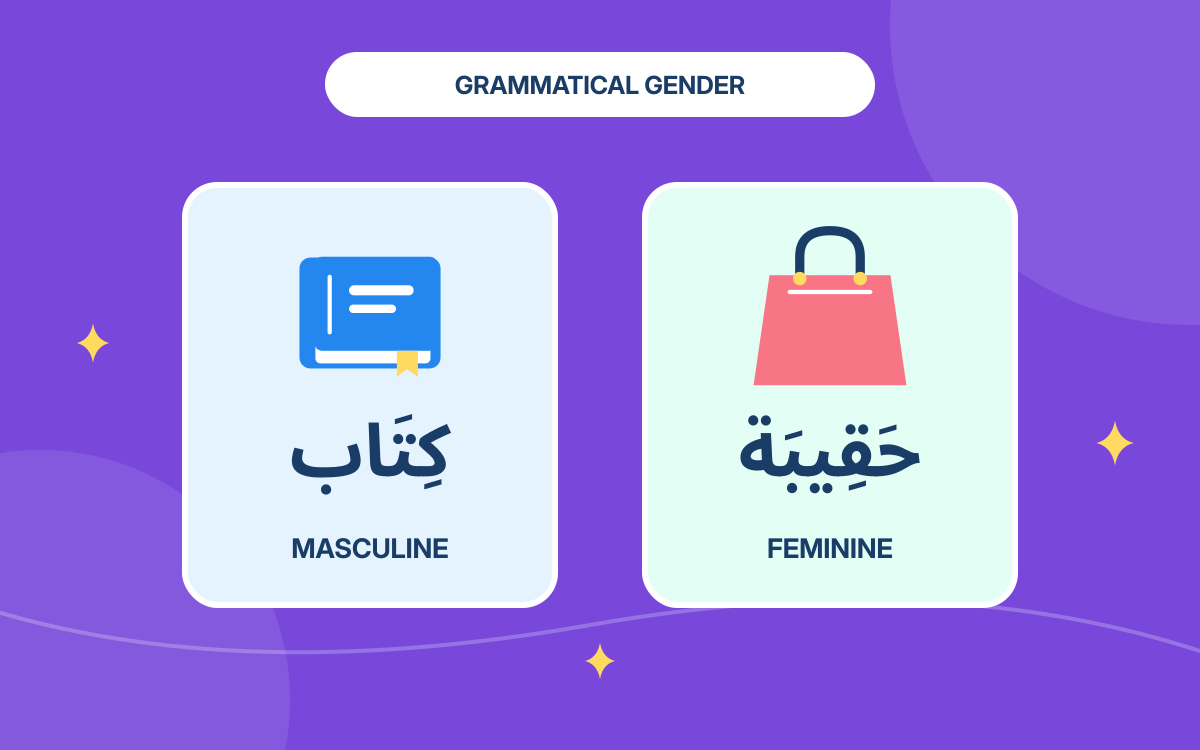
kitab
Book · masculine
haqiba
Bag · feminine
Gender belongs to the noun, even when it names an object. It does not depend on the owner. A woman’s book still uses the masculine word kitab; a man’s bag still uses the feminine word haqiba.
02Use ة as a clue
talib
Male student
taliba
Female student
Many feminine singular nouns end in taa marbuta, ة. For some words describing people, adding it makes the corresponding feminine form. Talib becomes taliba; مُعَلِّم (muallim, male teacher) becomes مُعَلِّمَة (muallima, female teacher).
Object words such as haqiba also use this ending. Do not add ة to every masculine object noun to create a feminine object: learn the actual word.
These word cards use simple pause forms, without final case endings. Taa marbuta is shown as a in our transliteration; its t is heard when grammatical endings are pronounced.
03Learn familiar feminine words without ة
shams
Sun · feminine
yad
Hand · feminine
umm
Mother · feminine
A missing ة does not prove that a word is masculine. Shams and yad are feminine nouns. Umm refers to a mother and is also feminine, although it has no visible feminine suffix.
Several familiar paired body-part words, including hand and eye, are feminine. Treat that as a memory aid for specific words, not a rule covering every body part. The reliable habit is to record the gender when learning each noun.
04A name can end in ة and be masculine
حَمْزَة
Hamza
A masculine personal name
Hamza names a male person, so it takes masculine agreement despite its final ة. This is why “every word ending in ة is feminine” is too broad.
- Use spelling as your first clue, then check meaning and usage.
- For people, learn the appropriate noun or name with its agreement.
- For objects and ideas, learn grammatical gender as part of the vocabulary.
Some nouns permit more than one gender in established usage. Our practice uses common examples with clear agreement, so you can build a dependable starting set.
05Make the nearby words agree
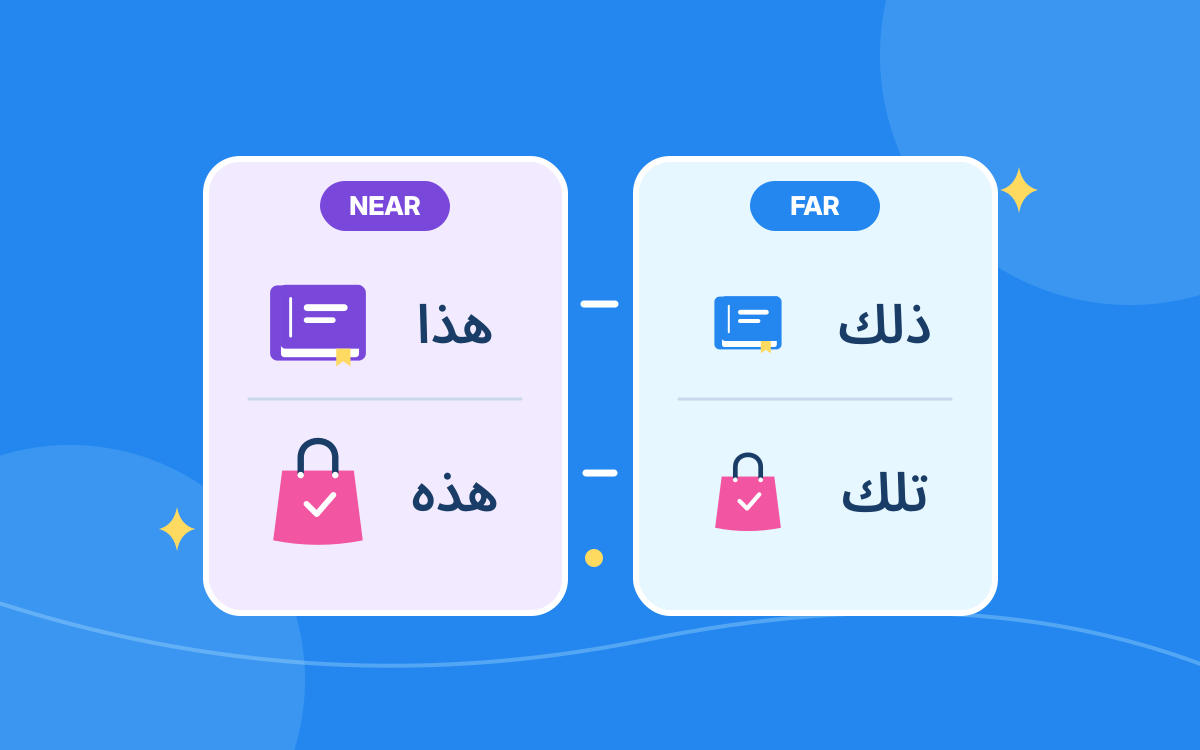
hadha kitab
This is a book.
hadhihi haqiba
This is a bag.
For one nearby item, use hadha with a masculine noun and hadhihi with a feminine noun. The same distinction appears in simple descriptions: كِتَاب كَبِير (kitab kabir, a big book), but حَقِيبَة كَبِيرَة (haqiba kabira, a big bag).
Here kabir becomes kabira to match the feminine singular noun. First identify the noun; then choose the matching words. Keep these as short vocabulary chunks. This lesson focuses on gender; number, definiteness and case agreement have their own patterns.
What to remember
- Arabic objects have grammatical gender: kitab is masculine; haqiba is feminine.
- Taa marbuta often marks feminine nouns, but shams and Hamza show why spelling is only a clue.
- Learn singular nouns with matching words: use hadhihi with feminine haqiba.
Your reference shelf
Open a guide whenever you need it.
A small gender referenceReview eight words and two common questions
| Arabic | Meaning | Gender |
|---|---|---|
| كِتَاب kitab | Book | Masculine |
| حَقِيبَة haqiba | Bag | Feminine |
| طَالِب talib | Male student | Masculine |
| طَالِبَة taliba | Female student | Feminine |
| شَمْس shams | Sun | Feminine |
| يَد yad | Hand | Feminine |
| أُمّ umm | Mother | Feminine |
| حَمْزَة Hamza | Personal name | Masculine |
Does adding ة always make a new word?
No. It works in many human noun and adjective pairs, but noun formation depends on actual usage. Do not invent an object’s name by adding an ending.
Why might I hear talibatun instead of taliba?
Talibatun includes the pronounced t and a nominative ending in full formal reading. Taliba is the simplified pause form used in this guide. Gender stays the same.
Sources & further learning
References for the language explanations and learning guidance.