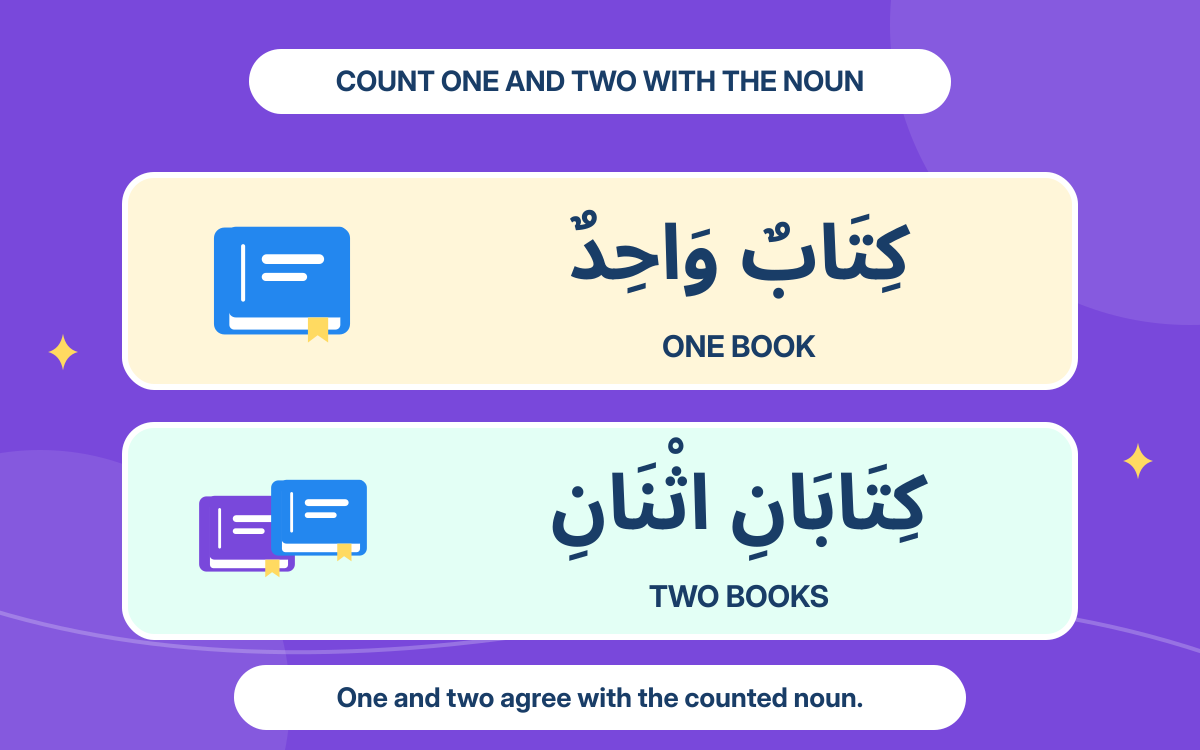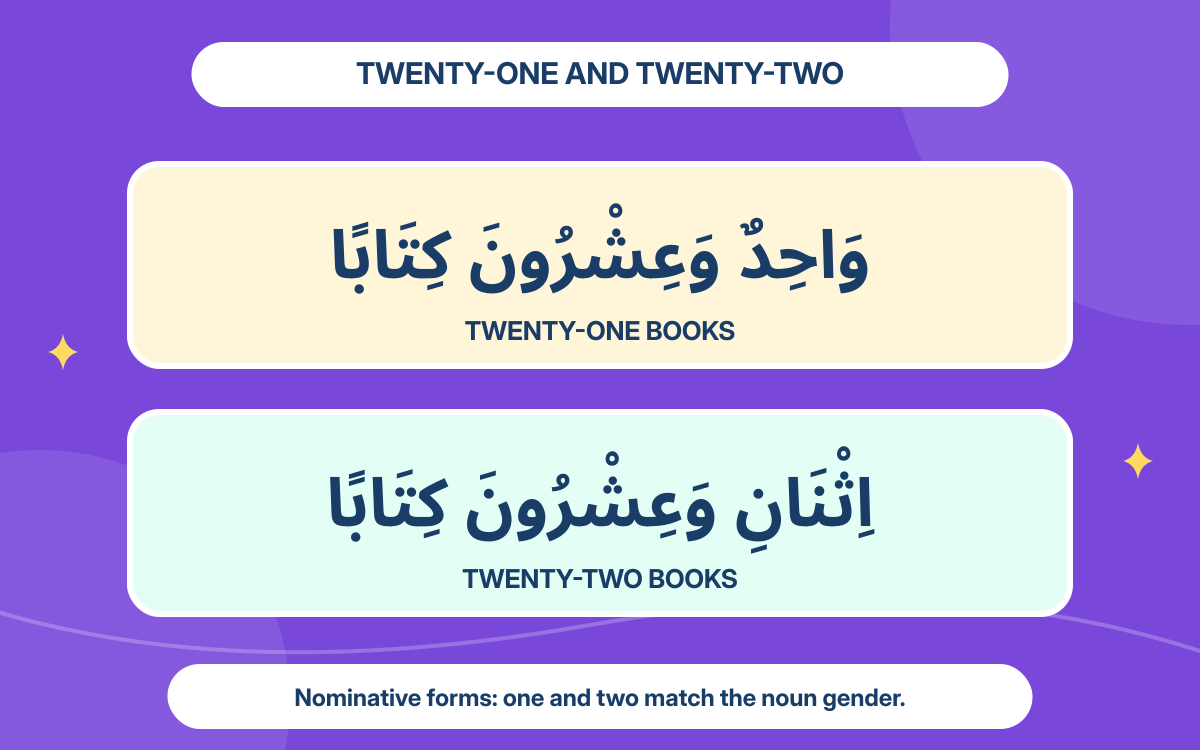
Arabic twenty-one and twenty-two put the unit first, then wa, then the tens. One and two match the counted noun’s gender. Both number parts follow the sentence’s case, while the counted noun stays singular and accusative.
01Put a matching one before the tens
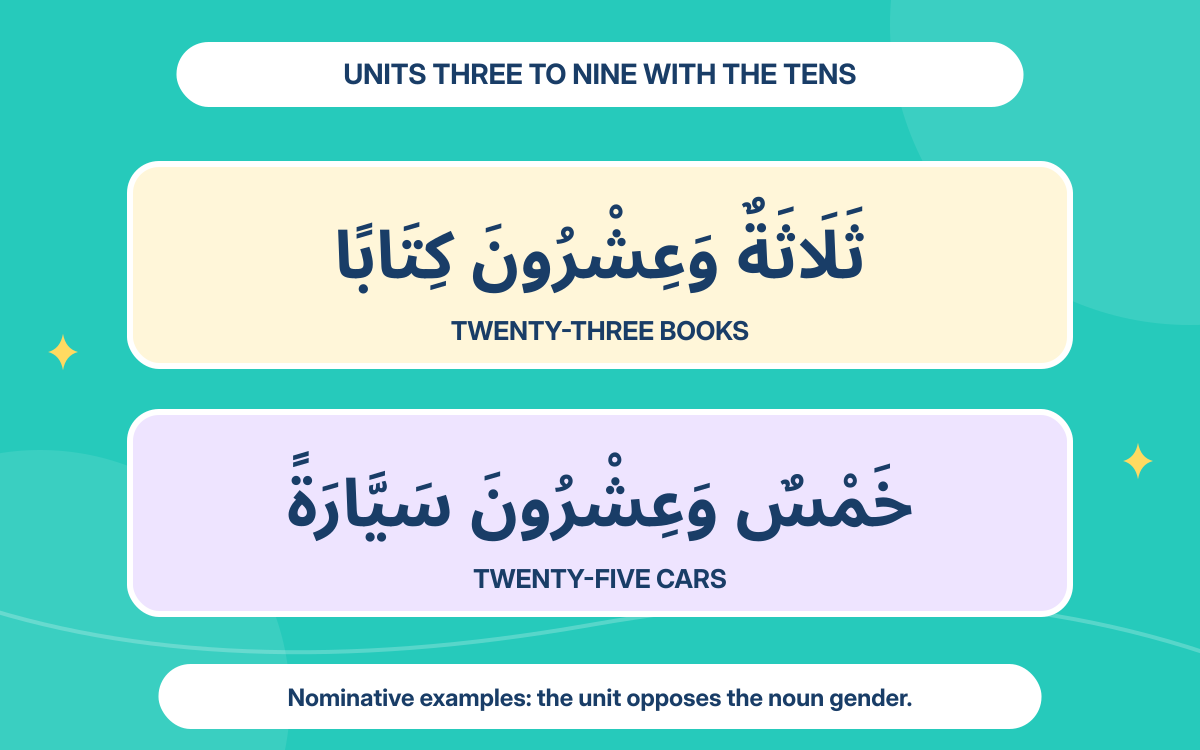
Use wahidun for a masculine counted noun and wahidatun for a feminine noun in the nominative. Then add wa and ishruna. Write wa attached to the following tens word.
عِنْدِي وَاحِدٌ وَعِشْرُونَ كِتَابًا
indi wahidun waishruna kitaban
I have twenty-one books.
وَاحِدَةٌ وَعِشْرُونَ سَيَّارَةً
wahidatun waishruna sayyaratan
Twenty-one cars
You can also use إِحْدَى وَعِشْرُونَ with a feminine noun. It is an accepted alternative; this guide uses wahida to show visible case endings.
02Keep two’s nun before wa
For twenty-two, use nominative ithnani with a masculine noun or ithnatani with a feminine noun. Two keeps its final nun here because wa coordinates it with the tens.
عِنْدِي اثْنَانِ وَعِشْرُونَ كِتَابًا
indi thnani waishruna kitaban
I have twenty-two books.
اثْنَتَانِ وَعِشْرُونَ سَيَّارَةً
ithnatani waishruna sayyaratan
Twenty-two cars
Do not copy twelve’s nunless ithna as the first word of twenty-two. In connected indi thnani, the initial i of ithnani drops because it is a connecting hamzah.
03Change both number parts for an object
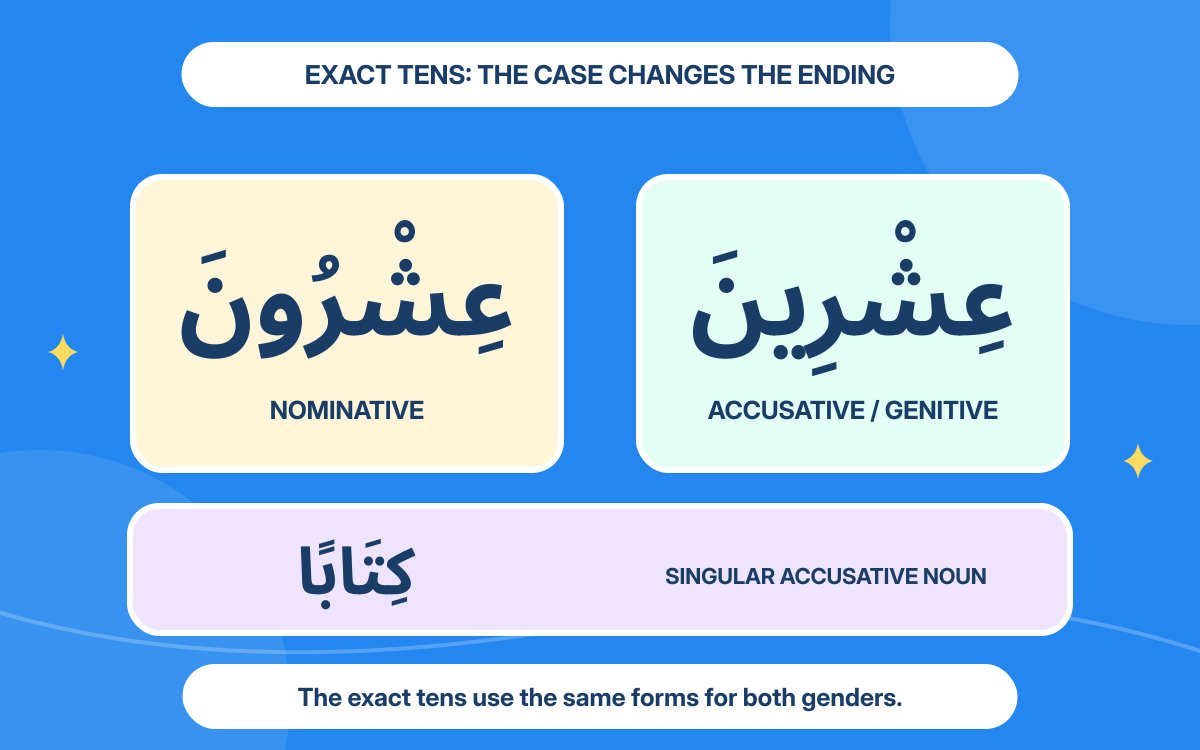
The direct object is accusative. One takes an: wahidan or wahidatan. Two takes ayni: ithnayni or ithnatayni. The tens also change from ishruna to ishrina.
قَرَأْتُ وَاحِدًا وَعِشْرِينَ كِتَابًا
qaraatu wahidan waishrina kitaban
I read twenty-one books.
قَرَأْتُ اثْنَيْنِ وَعِشْرِينَ كِتَابًا
qaraatu thnayni waishrina kitaban
I read twenty-two books.
Two’s nun still remains. An accusative number does not make the counted noun plural or dual.
04Change both parts after a preposition
After bi, one is genitive: wahidin or wahidatin. Two uses the same ayni forms as in the accusative. The coordinated tens are also genitive with in.
بِوَاحِدٍ وَعِشْرِينَ رِيَالًا
biwahidin waishrina riyalan
For twenty-one riyals
بِاثْنَيْنِ وَعِشْرِينَ رِيَالًا
bithnayni waishrina riyalan
For twenty-two riyals
Compare wahidun, wahidan and wahidin. Change the unit and the tens together for case; keep the counted noun riyalan accusative.
05Keep the noun’s rule separate
Twenty-one and twenty-two require a singular, indefinite, accusative counted noun. A quantity ending in two does not require a dual noun in this construction.
اثْنَتَانِ وَعِشْرُونَ سَيَّارَةً
ithnatani waishruna sayyaratan
Twenty-two cars
Use sayyaratan, not sayyaratani. The same matching-unit pattern applies to 31 and 32, continuing through 91 and 92; replace only the tens word and select the correct case endings.
What to remember
- Put a gender-matching one or two before wa and the tens.
- Change both number parts for case; retain two’s nun in this coordinated construction.
- Use a singular, indefinite, accusative counted noun for twenty-one and twenty-two.
Your reference shelf
Open a guide whenever you need it.
Compare masculine and feminine units in all three casesThe counted noun stays accusative as the number changes
| Case | 21 masculine | 21 feminine | 22 masculine | 22 feminine |
|---|---|---|---|---|
| Nominative | وَاحِدٌ وَعِشْرُونَ | وَاحِدَةٌ وَعِشْرُونَ | اثْنَانِ وَعِشْرُونَ | اثْنَتَانِ وَعِشْرُونَ |
| Accusative | وَاحِدًا وَعِشْرِينَ | وَاحِدَةً وَعِشْرِينَ | اثْنَيْنِ وَعِشْرِينَ | اثْنَتَيْنِ وَعِشْرِينَ |
| Genitive | وَاحِدٍ وَعِشْرِينَ | وَاحِدَةٍ وَعِشْرِينَ | اثْنَيْنِ وَعِشْرِينَ | اثْنَتَيْنِ وَعِشْرِينَ |
Each row still takes a singular accusative counted noun such as كِتَابًا or سَيَّارَةً. Feminine إِحْدَى is also used for one in these coordinated numbers. Its final written form stays the same across the cases; the coordinated tens still change. This is not the noun-first describing pattern of كِتَابٌ وَاحِدٌ.
The plain Latin aids retain the case endings being studied but simplify Arabic sounds and vowel length. At a natural pause, final case sounds may be reduced; use the fully marked Arabic to study the written construction.
Sources & further learning
References for the language explanations and learning guidance.