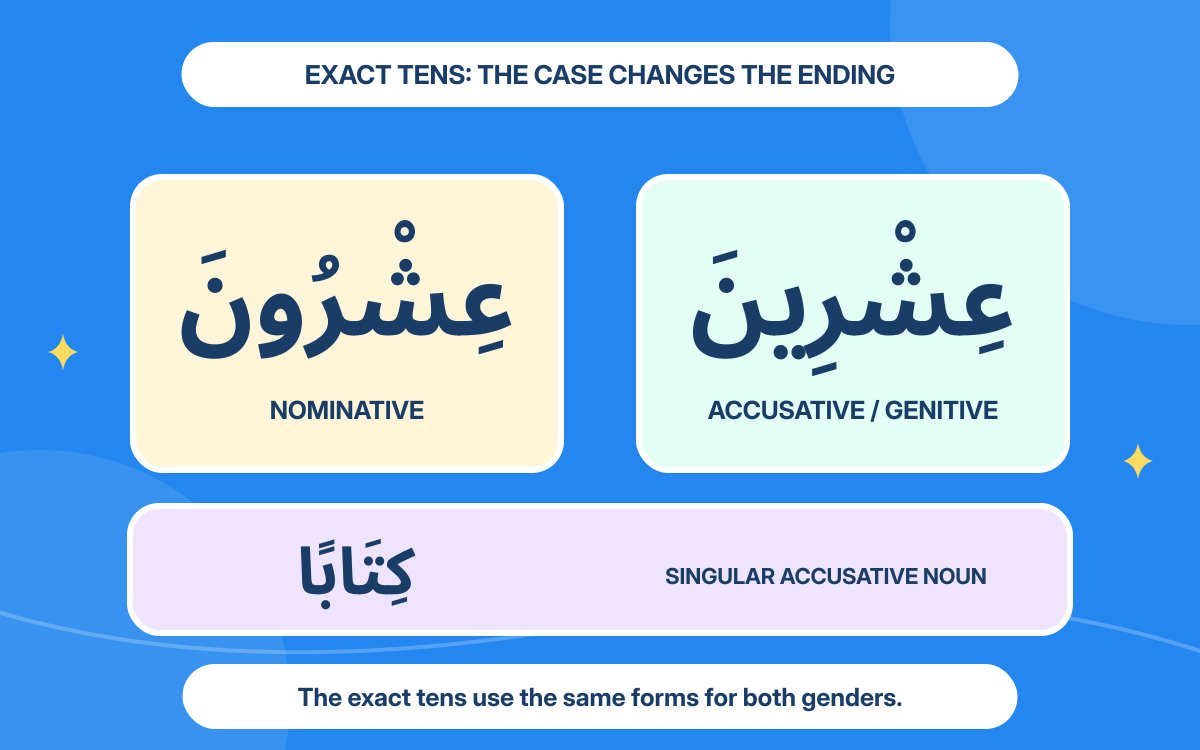
Exact tens such as twenty, thirty and ninety keep one form for masculine and feminine nouns. Their ending changes with their role in a sentence: un for nominative, in for accusative or genitive. The counted noun follows a separate rule.
01Use one form for both noun genders
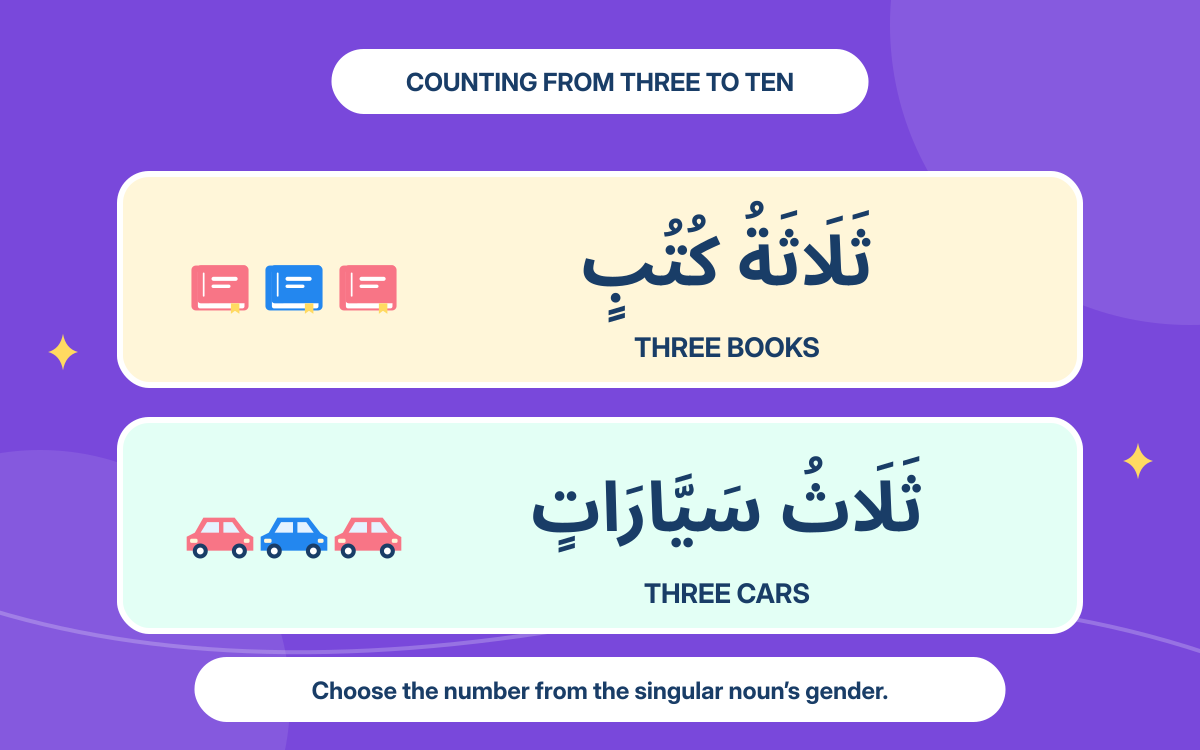
The exact tens are 20, 30, 40, 50, 60, 70, 80 and 90. Unlike three to ten, they do not switch form for the counted noun’s gender.
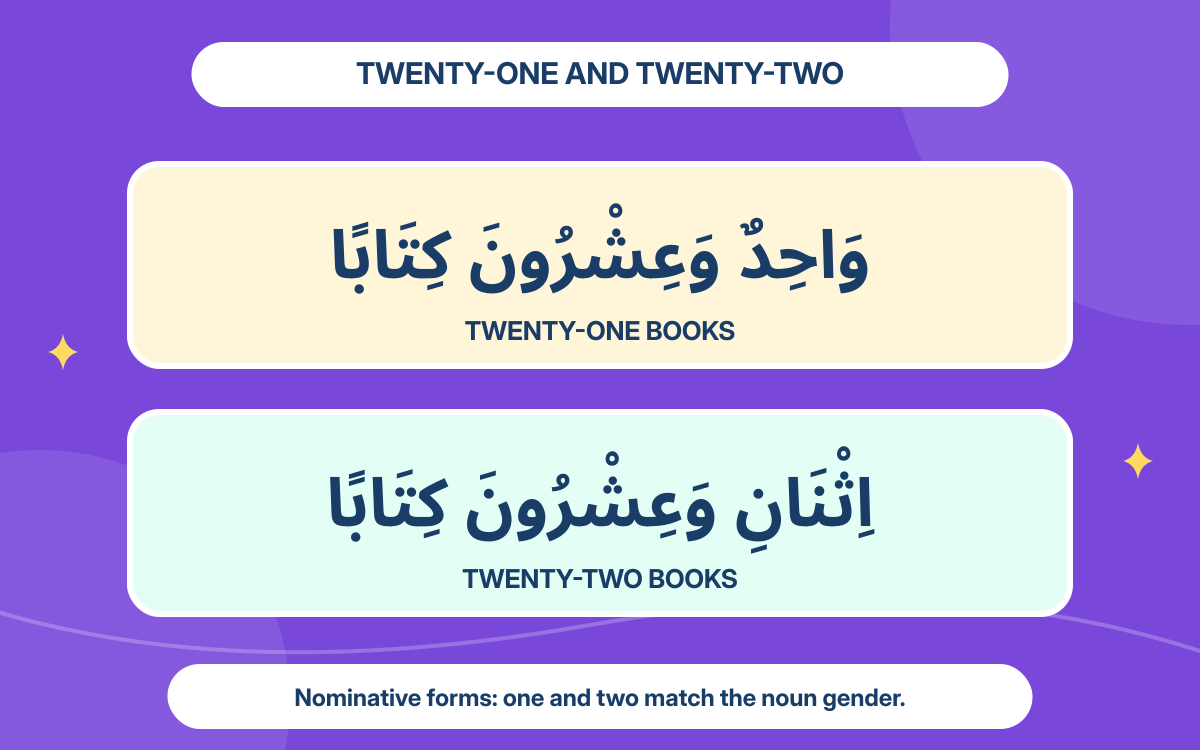
عِشْرُونَ كِتَابًا
ishruna kitaban
Twenty books
عِشْرُونَ سَيَّارَةً
ishruna sayyaratan
Twenty cars
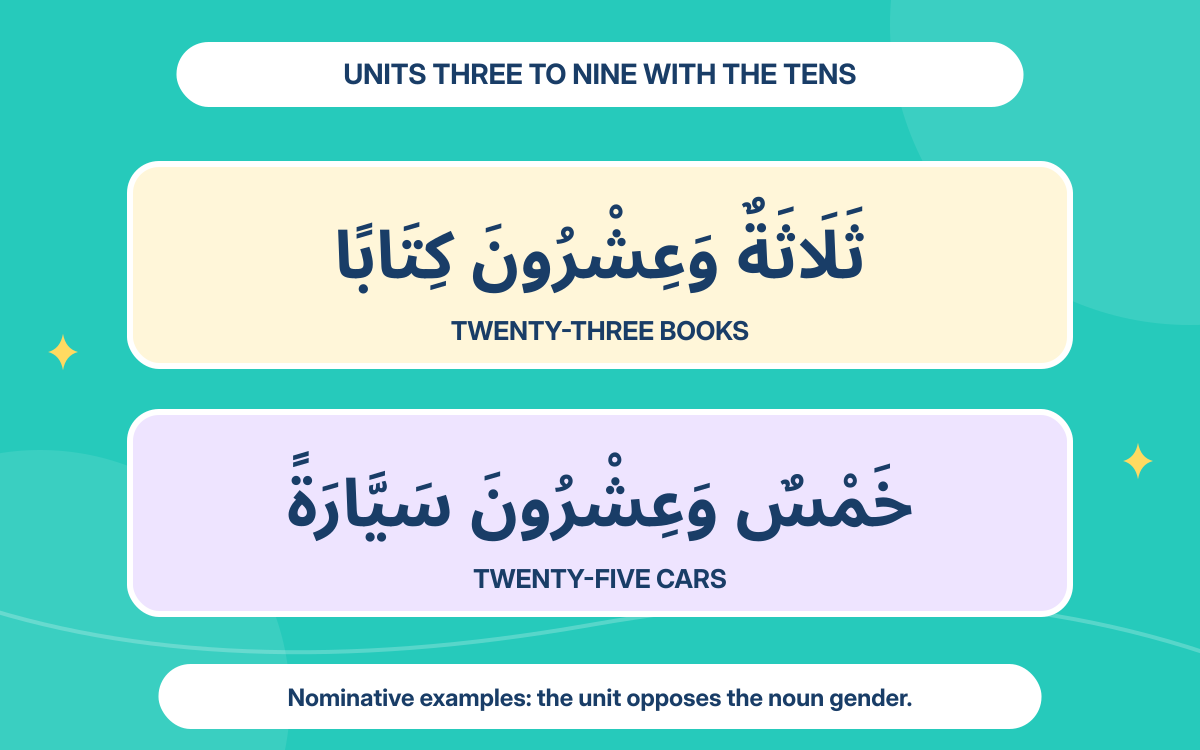
Kitab is masculine; sayyara is feminine. Ishruna works with both. The same rule applies to thalathuna, thirty, and the other exact tens.
02Keep the counted noun singular and accusative
After an exact ten, the noun says what is counted. It is singular, indefinite and accusative: a number tamyiz, or specification. Its singular form names the item type, even though the quantity is plural.
ثَلَاثُونَ كِتَابًا
thalathuna kitaban
Thirty books
Use kitaban, not the plural kutubun. With a feminine noun, use sayyaratan. Its accusative tanwin is written directly on ta marbuta without an extra alif: سَيَّارَةً.
03Use un in the nominative
The exact tens follow the case endings of the sound masculine plural: waw marks the nominative. Here the number is the delayed subject of an I have construction.
عِنْدِي عِشْرُونَ كِتَابًا
indi ishruna kitaban
I have twenty books.
The nominative number ends in ـُونَ. That does not make kitaban nominative: the counted noun remains accusative.
04Use in for an object
When the number phrase is the direct object of a verb, the tens become accusative. Replace the waw ending with ya: un becomes in.
قَرَأْتُ عِشْرِينَ كِتَابًا
qaraatu ishrina kitaban
I read twenty books.
Ishrina is accusative with ya. Kitaban stays singular and accusative. Thirty behaves similarly: ثَلَاثُونَ → ثَلَاثِينَ.
05Use in after a preposition
A preposition such as bi makes the number genitive. Exact tens use the same in ending as in the accusative; their sentence position distinguishes the two cases.
بِعِشْرِينَ رِيَالًا
biishrina riyalan
For twenty riyals
Bi governs ishrina, but riyalan still specifies the number. It remains accusative, not genitive. Keep the final nun in these ordinary indefinite number phrases.
What to remember
- Exact tens from twenty to ninety use the same form with masculine and feminine nouns.
- Use un in the nominative and in in the accusative or genitive.
- The counted noun stays singular, indefinite and accusative even after a preposition.
Your reference shelf
Open a guide whenever you need it.
Compare all eight exact tensOne gender form; two visible case endings
| Value | Nominative | Accusative or genitive |
|---|---|---|
| 20 | عِشْرُونَ | عِشْرِينَ |
| 30 | ثَلَاثُونَ | ثَلَاثِينَ |
| 40 | أَرْبَعُونَ | أَرْبَعِينَ |
| 50 | خَمْسُونَ | خَمْسِينَ |
| 60 | سِتُّونَ | سِتِّينَ |
| 70 | سَبْعُونَ | سَبْعِينَ |
| 80 | ثَمَانُونَ | ثَمَانِينَ |
| 90 | تِسْعُونَ | تِسْعِينَ |
These are attached to the sound masculine plural for case inflection; they do not describe the counted nouns as grammatically masculine. Ten itself belongs to the three-to-ten construction; it is not one of these exact tens.
The plain Latin aids retain the case endings being studied but simplify Arabic sounds and vowel length. At a natural pause, final case sounds may be reduced; use the fully marked Arabic to study the written construction.
Sources & further learning
References for the language explanations and learning guidance.