Arabic commonly uses ، for a comma, ؛ for a semicolon and ؟ for a question mark. It also uses familiar marks such as the full stop, colon and exclamation mark. Punctuation helps organise a written message; it does not replace grammar. Write in normal reading order and let a properly configured Arabic text field handle right-to-left display.
01Use the Arabic comma
Modern Standard Arabic
أَخَذْتُ كِتَابًا، وَقَلَمًا، وَدَفْتَرًا.
akhadhtu kitaban, wa qalaman, wa daftara
I took a book, a pen and a notebook.
The comma separates list items or parts of a sentence. Arabic writing often uses wa, “and,” in lists; the comma does not eliminate that conjunction. The mark ، is the Arabic comma, not an English comma rotated manually in a drawing tool.
02End a direct question with ؟
Modern Standard Arabic
أَيْنَ الْمَكْتَبَةُ؟
ayna almaktaba
Where is the library?
The question mark follows the question in reading order. It does not go at the beginning because Arabic runs right to left. Question words such as ayna and particles such as hal still carry grammatical information.
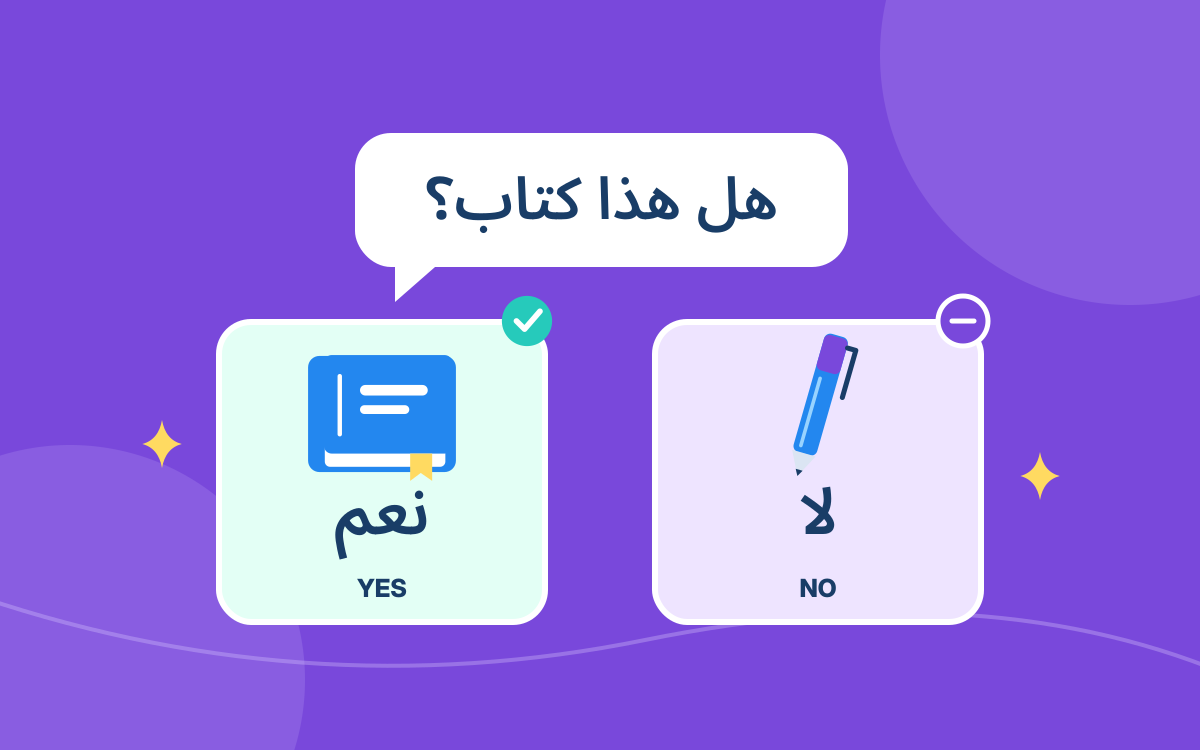
Compare هَلْ وَصَلَ؟ (hal wasal), “Has he arrived?”, with a statement. A mark helps readers recognise the function; it does not supply every missing word.
03Connect closely related clauses with ؛
Modern Standard Arabic
بَقِيتُ فِي الْبَيْتِ؛ لِأَنَّنِي كُنْتُ مُتْعَبًا.
baqitu fi albayt; liannani kuntu mutaba
I stayed at home because I was tired.
A semicolon can connect clauses whose relationship deserves a stronger separation than a comma, including a reason or result. It is not required before every lianna clause. A full stop and a rewritten second sentence may also work.
Follow the clarity of the sentence and the style expected by your audience.
04Recognise marks shared with other writing
A full stop closes a statement. A colon can introduce a list or explanation. An exclamation mark signals emphasis or emotion; use it when that tone is intended. These are familiar characters, not a rule that every mark must be reversed.
Modern Standard Arabic
أَحْتَاجُ إِلَى ثَلَاثَةِ أَشْيَاءَ: كِتَابٍ، وَقَلَمٍ، وَدَفْتَرٍ.
ahtaju ila thalathati ashyaa: kitabin, wa qalamin, wa daftar
I need three things: a book, a pen and a notebook.
Quotation and bracket conventions can vary by publication.
05Keep spacing consistent
For ordinary prose, place a comma, semicolon, full stop, colon or question mark directly after the preceding word. If the sentence continues, leave a space before the next word. Avoid a detached punctuation mark stranded between two spaces.
This is a practical prose convention, not an instruction to insert spaces inside numbers, website addresses or other special strings. Arabic vowel marks stay attached to their letters; they are not sentence punctuation.
06Check Arabic mixed with names and numbers
An Arabic sentence can contain a Latin product name, a date or a web address. Digits and Latin words may run in a different direction from the surrounding Arabic; punctuation near that boundary can appear in an unexpected place.
Use an Arabic-capable editor and the correct paragraph direction. Keep a name or address intact and inspect the displayed result. Reversing the letters by hand creates an incorrect underlying string. Our Arabic typing guide covers keyboards and mixed text.
07Read the message after adding punctuation
Write a short list, a direct question and two connected statements. Choose marks that reveal those relationships, then read the passage as a whole. If a sentence remains confusing, improve its wording rather than adding more punctuation.
Review question words, hal questions and giving a reason. Each helps explain the language that punctuation accompanies.
What to remember
- Recognise ، for a comma, ؛ for a semicolon and ؟ for a direct question.
- Many other punctuation marks are shared; do not reverse text or marks manually.
- Check ordinary spacing, sentence clarity and mixed-direction display together.
Your reference shelf
Open a guide whenever you need it.
Common Arabic punctuation marksUnicode identifies the characters; editorial usage also depends on the sentence and house style.
| Mark | Name | Useful function |
|---|---|---|
| ، | Arabic comma · U+060C | Separate items or sentence parts |
| ؛ | Arabic semicolon · U+061B | Connect related clauses with a stronger break |
| ؟ | Arabic question mark · U+061F | Close a direct question |
| . | Full stop | Close a statement |
| : | Colon | Introduce an explanation or list |
| ! | Exclamation mark | Express intended emphasis or emotion |
| « » | Quotation marks, one common style | Enclose a quotation; house styles vary |
Read the relationshipOriginal examples pair the intended message with a readable punctuation choice.
| Arabic example | English meaning | Notice |
|---|---|---|
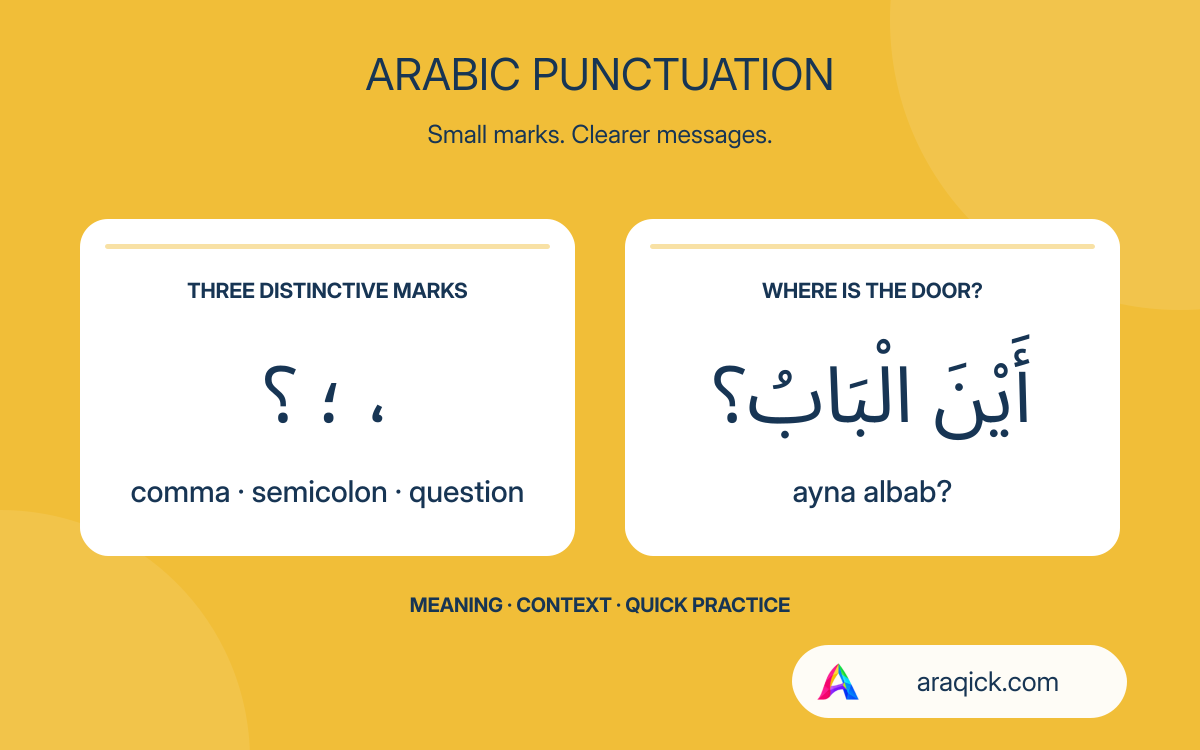
| أَيْنَ الْبَابُ؟ | Where is the door? | The question mark closes the question. |
| هَذَا كِتَابٌ. هَذَا قَلَمٌ. | This is a book. This is a pen. | Two complete statements can use two full stops. |
| عِنْدِي كِتَابٌ، وَقَلَمٌ. | I have a book and a pen. | The comma works alongside wa. |
| تَأَخَّرْتُ؛ لِأَنَّ الطَّرِيقَ مُزْدَحِمٌ. | I was late because the road is crowded. | The second clause gives a reason. |
Sources & further learning
References for the language explanations and learning guidance.