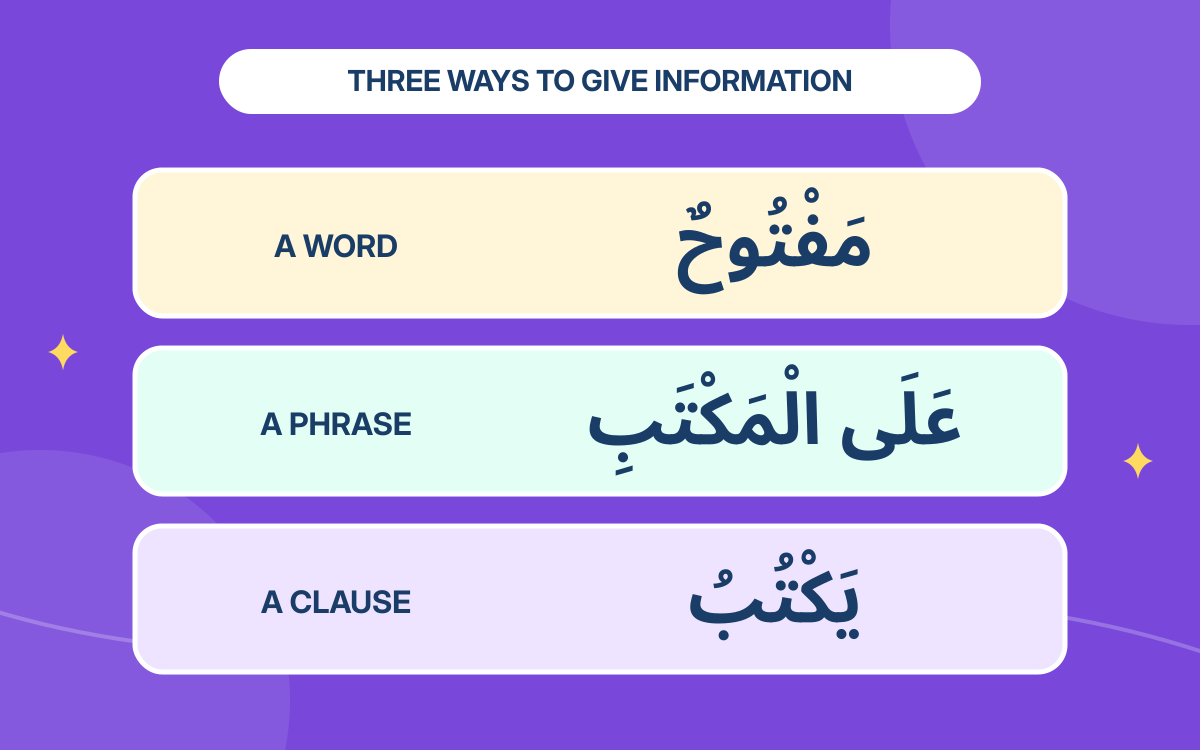
The khabar gives information about a topic, but that information can take several forms. It may be a describing word, a location phrase or an entire smaller sentence. Learning to recognise the complete predicate helps you read beyond simple two-word statements.
01Begin with a simple predicate
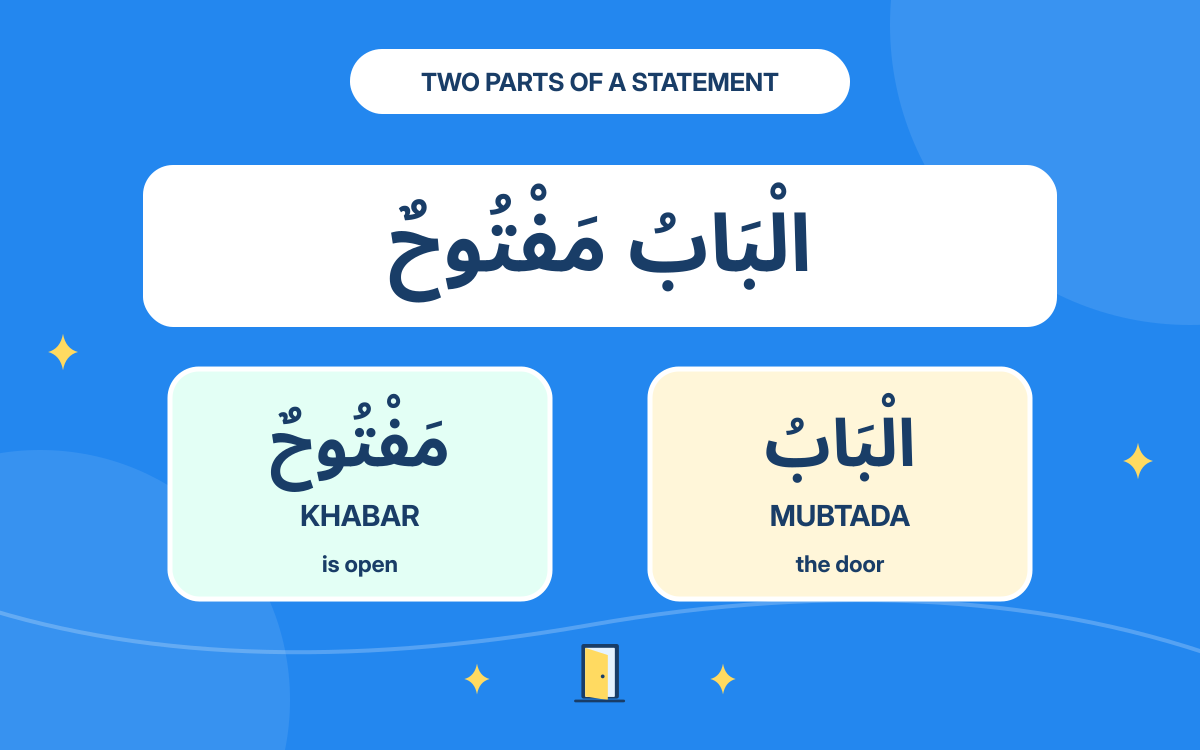
الْبَابُ مَفْتُوحٌ
albabu maftuhun
The door is open.
Maftuhun is a simple predicate, called خَبَرٌ مُفْرَدٌ. Mufrad here means neither a clause nor a prepositional or adverbial phrase; it does not mean “singular in number.” In الْبَابَانِ مَفْتُوحَانِ, “The two doors are open,” the dual maftuhani is also this predicate type.
02Keep a location phrase together
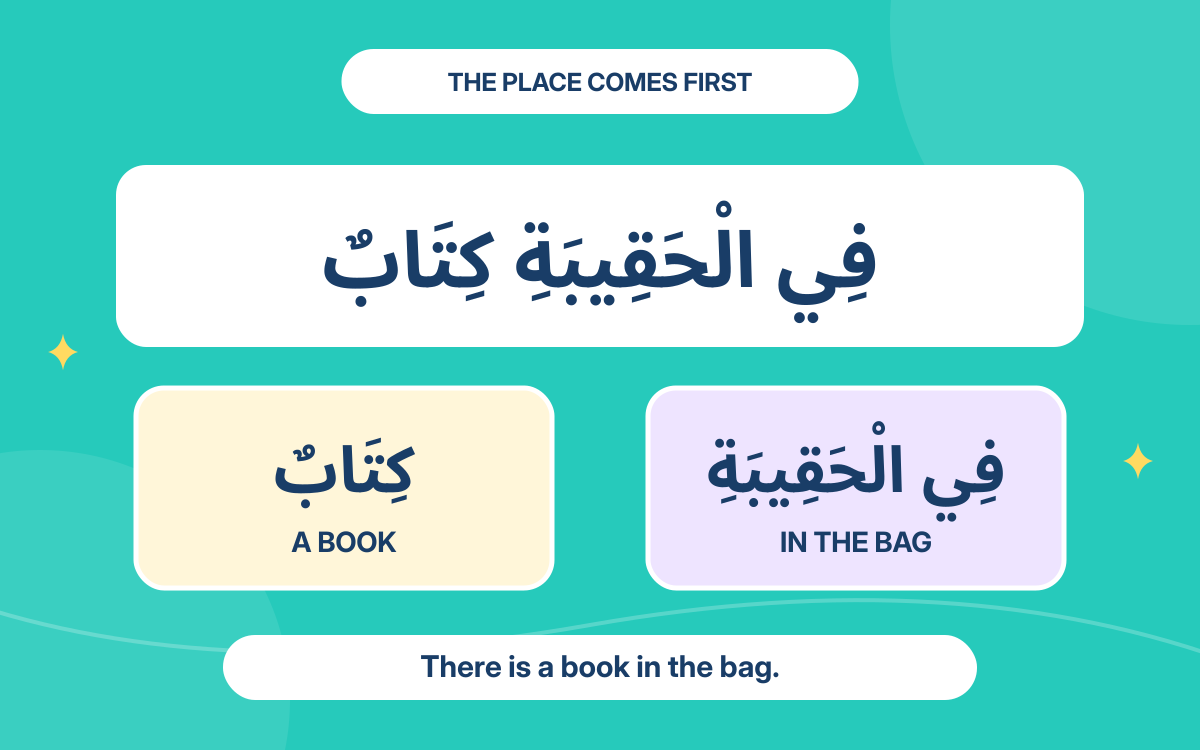
الْكِتَابُ عَلَى الْمَكْتَبِ
alkitabu ala lmaktabi
The book is on the desk.
The information about the book is the whole phrase “on the desk.” This pattern is called شِبْهُ جُمْلَةٍ (shibh jumla). It can use a preposition with its noun or an adverbial expression of place or time.
Keep ala with almaktabi when identifying the predicate. “The desk” alone does not express the same relationship. Almaktabi remains genitive after the preposition; being inside the predicate does not give it a nominative ending.
03Recognise a verbal clause as the information
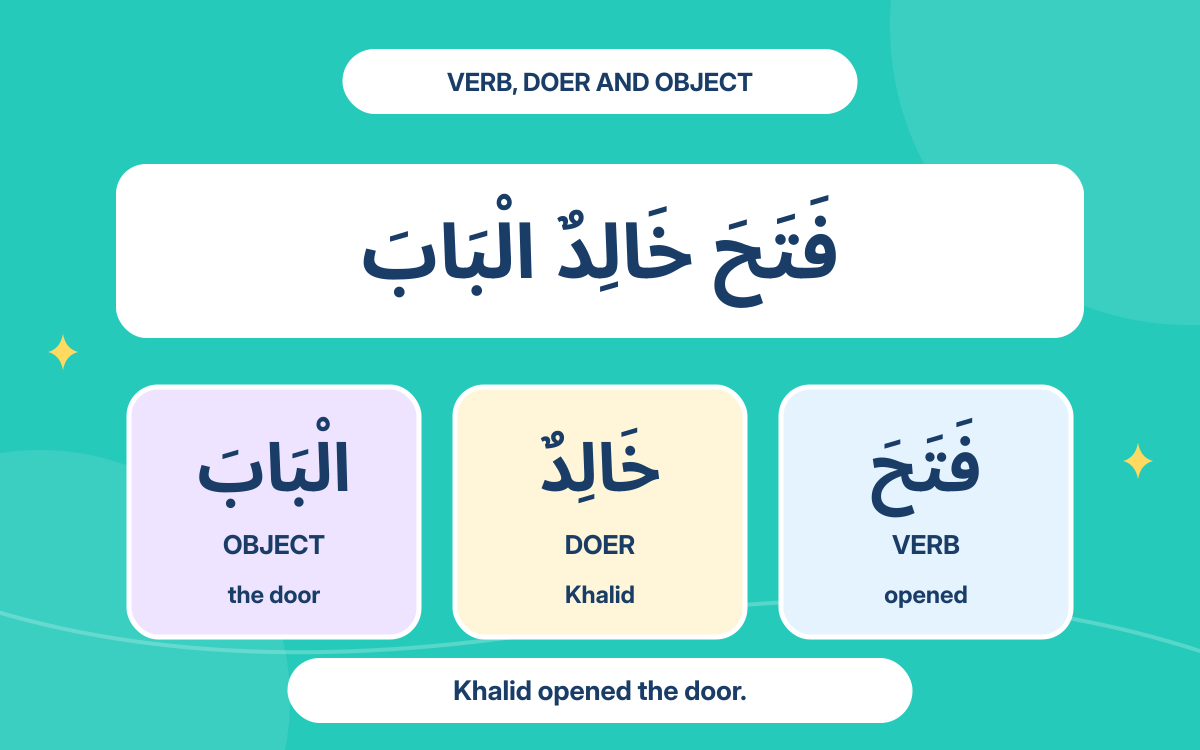
الطَّالِبُ يَكْتُبُ الدَّرْسَ
attalibu yaktubu ddarsa
The student writes the lesson.
The outer topic is attalibu. The complete predicate is يَكْتُبُ الدَّرْسَ, “writes the lesson,” a verbal clause. Yaktubu has an understood subject, “he,” referring back to the student. You do not need to insert a separate huwa.
The lesson is the object of writing, so addarsa is accusative. The larger sentence is nominal, beginning with its topic, even though its predicate contains a verb and an object.
04Find a smaller nominal sentence inside
الْكِتَابُ غِلَافُهُ جَدِيدٌ
alkitabu ghilafuhu jadidun
The book’s cover is new.
The outer topic is “the book.” Its predicate is the whole smaller statement غِلَافُهُ جَدِيدٌ, literally “its cover is new.” Inside it, ghilafuhu is the subject and jadidun is the predicate.
The suffix hu in ghilafuhu refers back to the book. It connects the information to the outer topic. Compare this visible pronoun with the understood “he” inside yaktubu. In these clause patterns, the link tells us whose action or feature we are discussing.
05Identify the whole unit before its inner parts
Start with the outer topic. Ask what complete information the sentence gives about it. Then decide whether that information is a simple predicate, a prepositional or adverbial phrase, or a clause with its own subject and predicate or verb.
A simple predicate is nominative in these basic sentences. A phrase or clause fills the predicate position as a whole, while its inner words follow their own grammar. That is why “desk” stays genitive and “lesson” stays accusative in our examples.
Do not stop at the last word or the first word after the topic. Identify the whole predicate before analysing what is inside it.
What to remember
- Mufrad names a predicate structure here; its word can be singular, dual or plural.
- A whole phrase or clause can provide the information about an outer topic.
- Look for the link back to the topic and keep each inner word’s own grammatical role.
Your reference shelf
Open a guide whenever you need it.
Four useful shapes of the khabarCompare the full predicate and the grammar inside it
| Type | Predicate from our example | What to notice |
|---|---|---|
| Simple: mufrad | مَفْتُوحٌ | A nominative describing word. |
| Phrase: shibh jumla | عَلَى الْمَكْتَبِ | The inner noun follows the preposition. |
| Verbal clause | يَكْتُبُ الدَّرْسَ | The verb has an understood subject and an object. |
| Nominal clause | غِلَافُهُ جَدِيدٌ | Its own subject and predicate form a smaller statement. |
Traditional summaries often list three main groups: mufrad, shibh jumla and jumla. The last group divides into verbal and nominal clauses, producing the four rows above.
Shibh jumla also covers adverbial expressions. For example, in الْقَلَمُ أَمَامَ الْكِتَابِ, “The pen is in front of the book,” the location expression أَمَامَ الْكِتَابِ supplies the information. More detailed grammatical analysis can connect such phrases to an understood predicate such as “located.”
In our clause examples, an explicit or understood pronoun links the smaller statement to the topic. The hu in “its cover” and the understood “he” in “writes” are two different ways to make that connection. Other linking structures exist, but these two patterns provide a useful starting point.
Our examples keep full formal endings for study. The plain reading labels do not mark vowel length or every Arabic sound; use the Arabic spelling alongside them.
Sources & further learning
References for the language explanations and learning guidance.