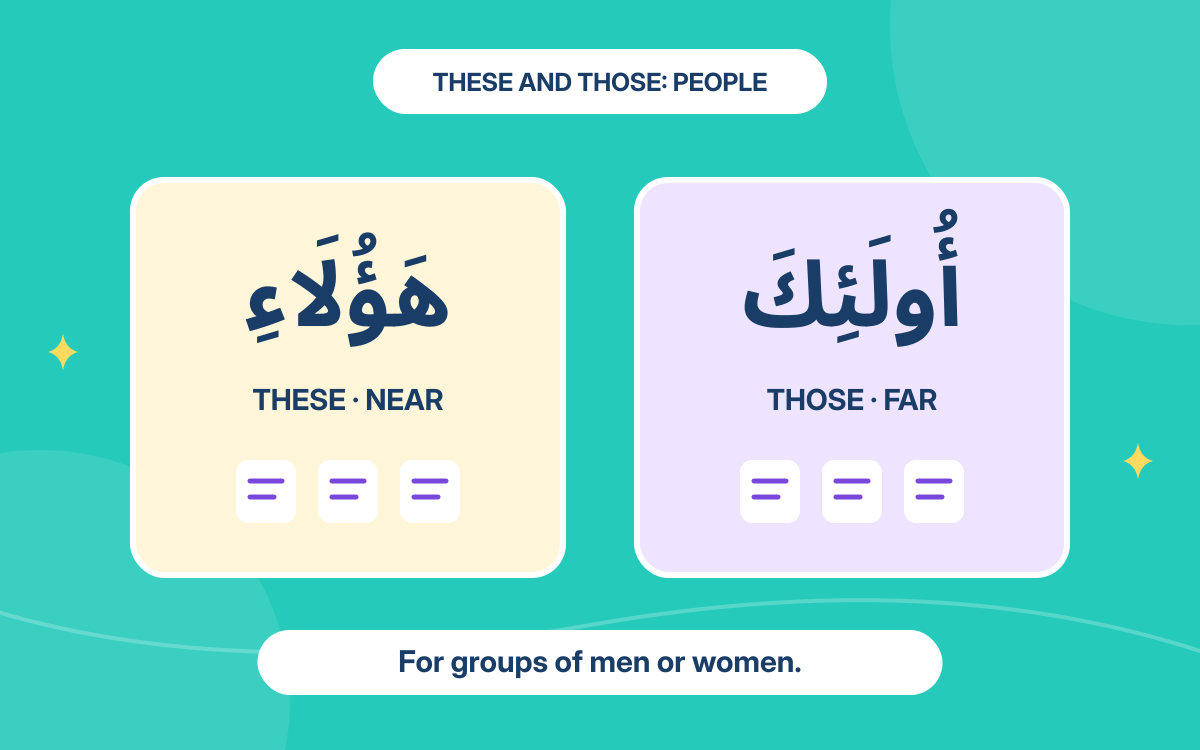
Arabic has useful pointing words for groups of people: haulai means these, and ulaika means those. Both work with masculine and feminine human plurals. Once you know the group, distance decides which one to choose. Then the noun’s definiteness helps you distinguish a phrase from a complete statement.
01Use haulai for people nearby
هَؤُلَاءِ مُدَرِّسُونَ
haulai mudarrisuna
These are male teachers.
هَؤُلَاءِ مُدَرِّسَاتٌ
haulai mudarrisatun
These are female teachers.
The pointing word stays the same for both groups. The noun shows whether we mean male or female teachers. Both are plural identification sentences; Arabic needs no separate present word for are.
02Change distance with ulaika
أُولَئِكَ مُدَرِّسُونَ
ulaika mudarrisuna
Those are male teachers.
أُولَئِكَ مُدَرِّسَاتٌ
ulaika mudarrisatun
Those are female teachers.
Imagine the same teachers across the courtyard. Their gender and number have not changed; you are pointing farther away. Ulaika covers both groups, just as haulai does nearby.
There is no fixed distance in metres. A speaker chooses the near or far form to fit the situation. Keep the group unchanged while practising the two sentences aloud.
03Notice the definite noun
هَؤُلَاءِ الْمُدَرِّسُونَ
haulai lmudarrisuna
These male teachers
هَؤُلَاءِ الْمُدَرِّسُونَ مُجْتَهِدُونَ
haulai lmudarrisuna mujtahiduna
These male teachers are hardworking.
In this basic pattern, haulai followed by a noun with ال identifies the group: these teachers. Add a predicate, mujtahiduna, to say something about them and complete the statement.
Compare the first section, where the noun had no ال: haulai mudarrisuna means “These are male teachers.” This contrast helps you decide whether you are naming a group or giving information about it.
04Read the spelling carefully
هَؤُلَاءِ
haulai
These
أُولَئِكَ
ulaika
Those
The written و in ulaika is silent: do not insert a w sound or make its initial u long because of that letter. The a after l is long even though ordinary spelling does not show a full alif there.
Haulai contains two hamza sounds, represented by ؤ and ء. Say a clear break at each hamza. Its first a and the a after l are long. Our plain Latin reading aids leave these details unmarked; keep the Arabic beside them.
05Check whether the group is human
هَذِهِ كُتُبٌ
hadhihi kutubun
These are books.
تِلْكَ كُتُبٌ
tilka kutubun
Those are books.
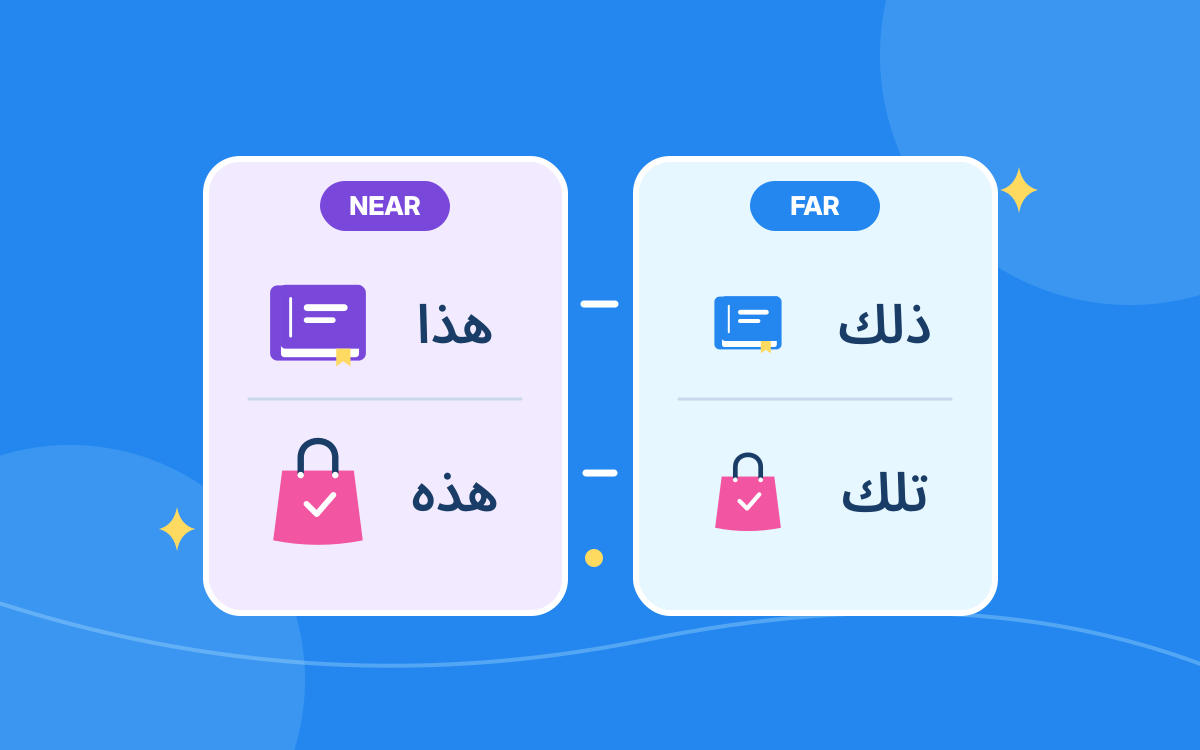
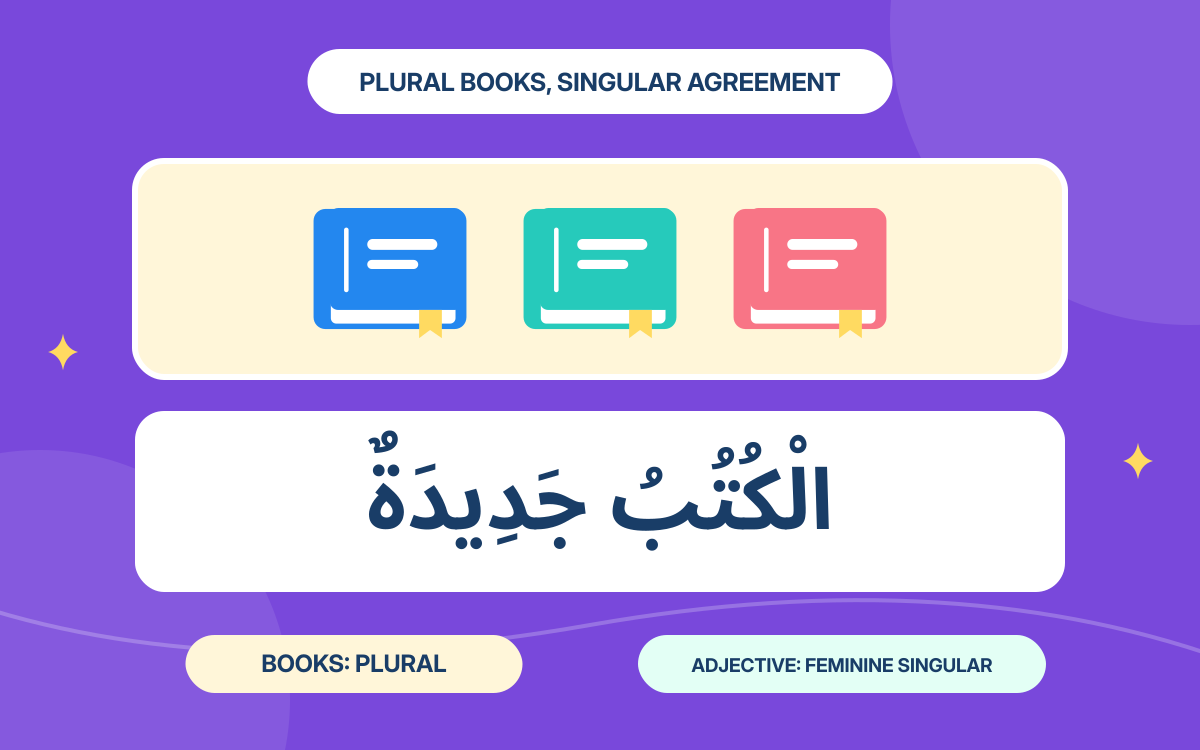
For ordinary nonhuman plurals such as books, Standard Arabic normally uses feminine singular hadhihi and tilka. Keep haulai and ulaika for the human groups in this lesson. The noun remains plural in either pattern.
Before pointing, ask three questions: Is this a plural group? Does it refer to people? Is it near or far? Then decide whether you want “these teachers” as a phrase or “These are teachers” as a statement. Two people use dual forms, which belong to a separate pattern.
What to remember
- Haulai means these and ulaika means those for the human groups taught here.
- Both forms cover masculine and feminine plurals; a following definite noun can identify the group.
- Ordinary nonhuman plurals use hadhihi and tilka, and the written waw in ulaika is silent.
Your reference shelf
Open a guide whenever you need it.
Near and far groups at a glanceReview the two human forms and the ordinary object pattern
| Group | Nearby | Farther away |
|---|---|---|
| Male teachers | هَؤُلَاءِ مُدَرِّسُونَ | أُولَئِكَ مُدَرِّسُونَ |
| Female teachers | هَؤُلَاءِ مُدَرِّسَاتٌ | أُولَئِكَ مُدَرِّسَاتٌ |
| Books | هَذِهِ كُتُبٌ | تِلْكَ كُتُبٌ |
The fully marked forms retain the final i of هَؤُلَاءِ and the final a of أُولَئِكَ. These pointing words are indeclinable: their written endings do not change with case. A final kasrah is therefore not proof that a demonstrative is genitive.
In connected reading, هَؤُلَاءِ الْمُدَرِّسُونَ is shown as haulai lmudarrisuna because the initial vowel of ال drops after the preceding vowel. This guide keeps full formal endings; final short vowels are normally omitted when stopping.
Human and nonhuman is a practical beginner distinction. Classical or figurative language can use demonstratives more broadly, so do not turn the ordinary pattern into a claim that other uses never occur.
Sources & further learning
References for the language explanations and learning guidance.