Bad means some or a portion. It can identify part of a group, such as some students, or part of a quantity, such as some water. Put the noun after bad in an idafa, or use an attached pronoun when the group is already known. Bad does not specify an exact number.
01Name the group after bad
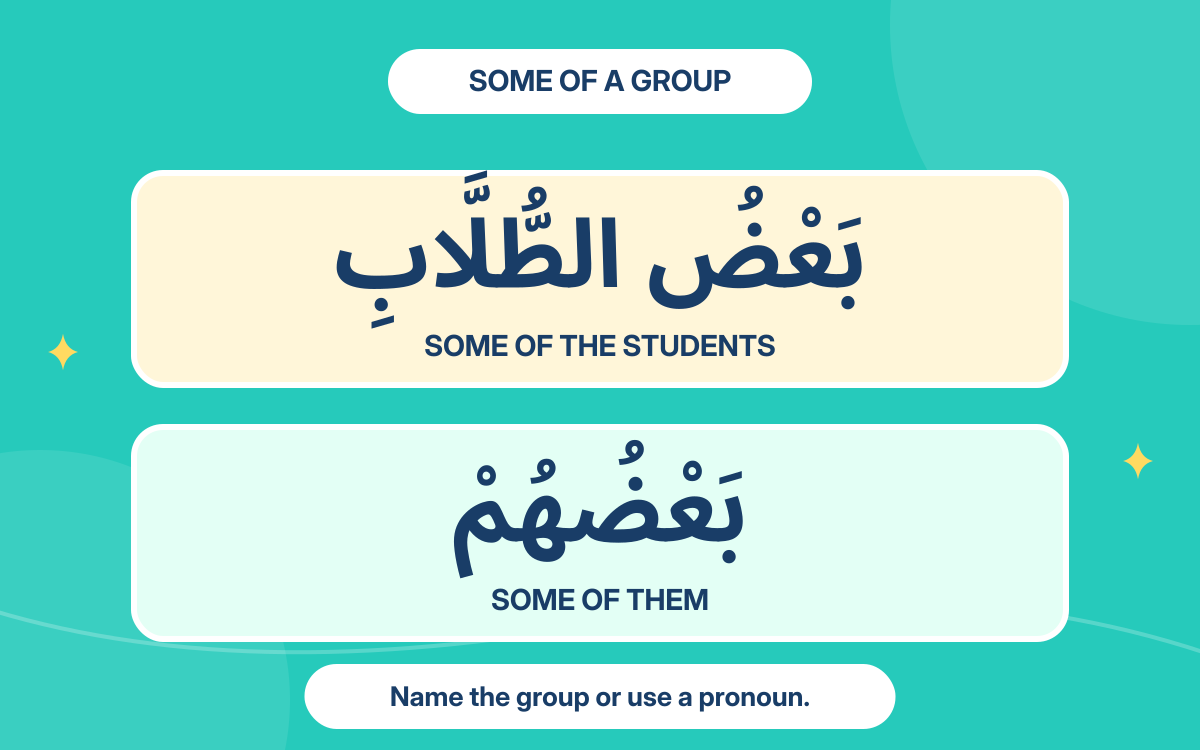
To say some of the students, put bad before the definite noun. This forms an idafa, with bad as the first noun and the named group as the second.
بَعْضُ الطُّلَّابِ فِي الْفَصْلِ
badu ttullabi fi lfasli
Some of the students are in the classroom.
The students are الطُّلَّابِ, genitive because they follow bad in the idafa. Bad has no tanween here. The expression refers to part of the group without telling us how many students are in that part.
02Replace the group with a pronoun
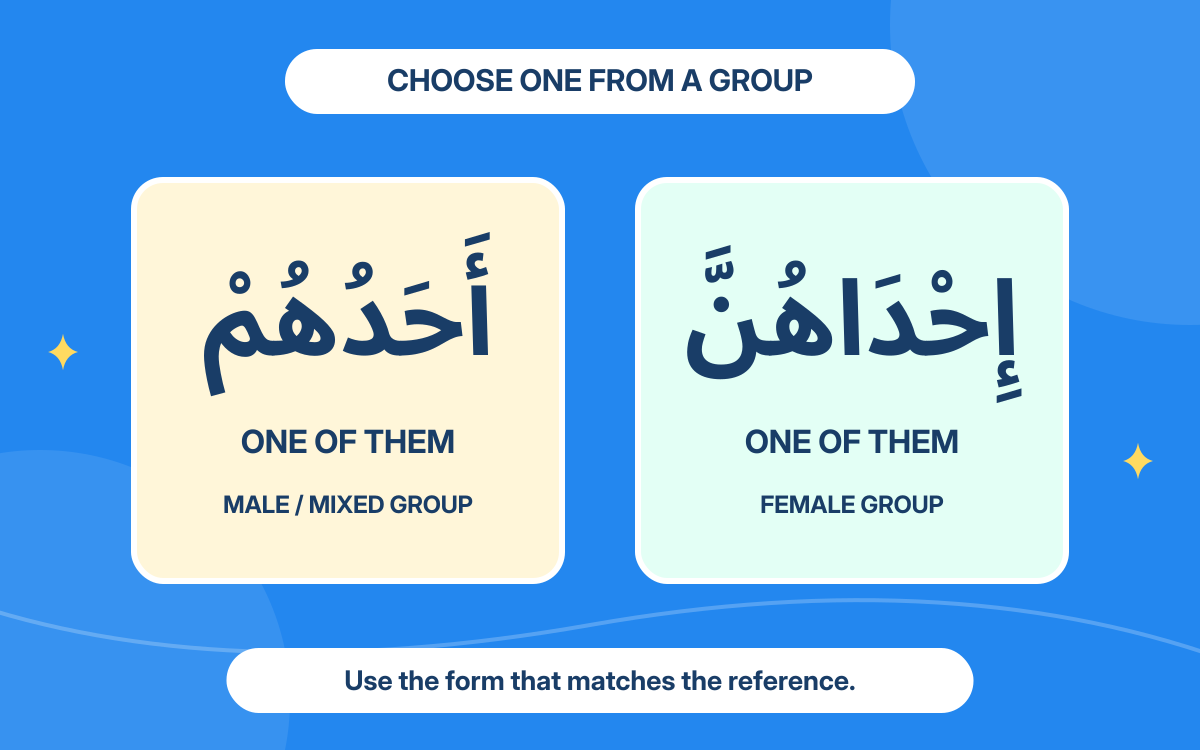
Once you have identified the people, use a suffix instead of repeating the noun. Hum refers to a male or mixed group; hunna refers to a female group.
بَعْضُهُمْ هُنَا
baduhum huna
Some of them are here. (A male or mixed group.)
بَعْضُهُنَّ هُنَا
baduhunna huna
Some of them are here. (A female group.)
Each expression is one written word: bad plus its suffix. Choose the suffix from the group being discussed, not from the gender of the speaker. The suffix has the genitive role in this construction.
03A portion need not be a count of people
Bad can also refer to part of something you measure rather than count. In these examples, the following noun is definite even though natural English does not need the.
بَعْضُ الْمَاءِ
badu lmai
Some water
بَعْضُ الْوَقْتِ
badu lwaqti
Some of the time
Water and time are singular quantities here. Bad works with both these singular nouns and the plural students. It does not acquire a feminine form to match the next noun. Its own case ending can still change, as the next section shows.
04Follow the role of bad itself
Bad is a noun with changing case endings. Use badu for the subject, bada for a direct object, and badi after a preposition. The noun after it remains genitive.
بَعْضُ الْكُتُبِ هُنَا
badu lkutubi huna
Some of the books are here.
قَرَأْتُ بَعْضَ الْكُتُبِ
qaratu bada lkutubi
I read some of the books.
فِي بَعْضِ الْكُتُبِ
fi badi lkutubi
In some of the books
The part stays the same; its grammatical role changes. Look separately at the ending of bad and at the genitive ending of books. Neither idafa nor the meaning some makes bad permanently nominative.
05Choose a portion or the complete group
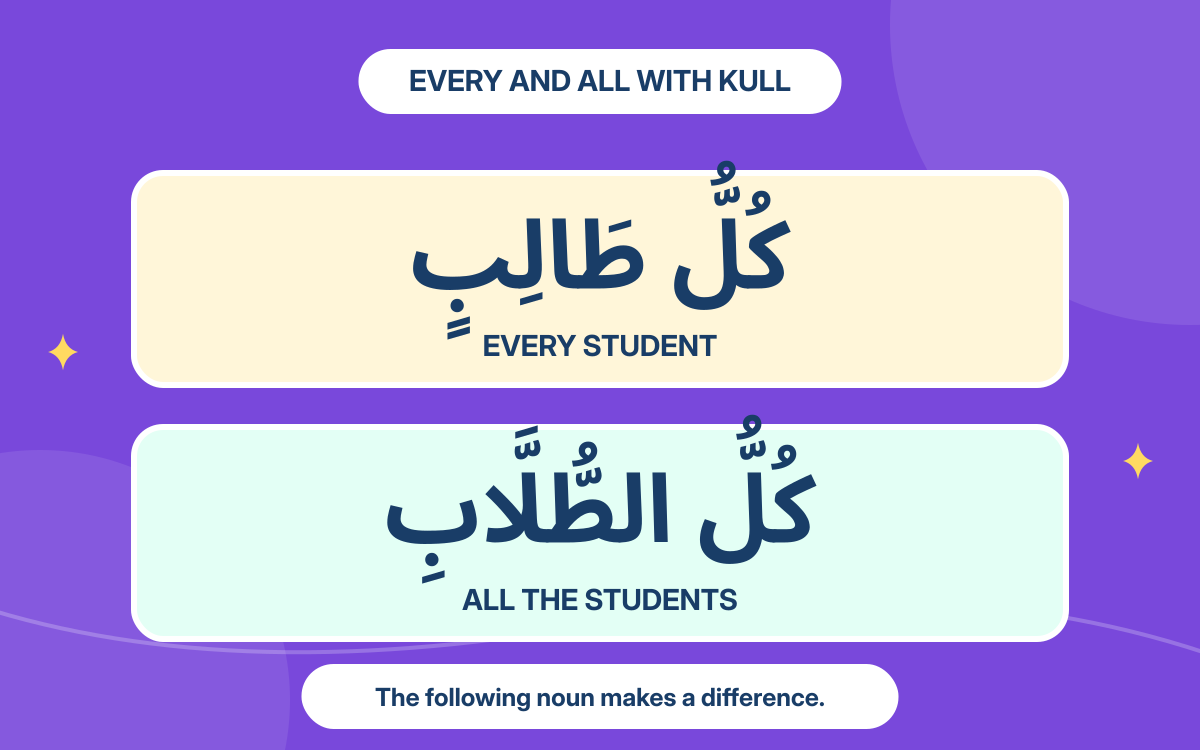
Bad selects a portion. Kull includes the whole group. Compare two statements about the same people.
بَعْضُهُمْ مُدَرِّسُونَ
baduhum mudarrisuna
Some of them are male teachers.
كُلُّهُمْ مُدَرِّسُونَ
kulluhum mudarrisuna
All of them are male teachers.
The plural predicate describes the people in these examples. Do not assume the suffix hum means the entire group: the difference between some and all comes from bad or kull. For now, practise these straightforward human-group examples and location statements. The Latin aid bad leaves the Arabic sounds of ع and ض unmarked, so keep the Arabic visible while reading.
What to remember
- Bad expresses some or a portion without giving an exact number.
- A following named group or quantity is genitive in idafa; baduhum and baduhunna mean some of them.
- Bad takes its own case ending: badu, bada or badi; it differs from kull, which includes the whole group.
Your reference shelf
Open a guide whenever you need it.
Some of a group, some of a quantityReview the suffixes and the two separate case roles
| Expression | Reading aid | Meaning |
|---|---|---|
| بَعْضُ الطُّلَّابِ | badu ttullabi | Some of the students |
| بَعْضُهُمْ | baduhum | Some of them: male or mixed human group |
| بَعْضُهُنَّ | baduhunna | Some of them: female human group |
| بَعْضُ الْمَاءِ | badu lmai | Some water |
| بَعْضُ الْوَقْتِ | badu lwaqti | Some of the time |
Compare بَعْضُ الْكُتُبِ, بَعْضَ الْكُتُبِ and بَعْضِ الْكُتُبِ. The case ending belongs to bad’s role; the second noun remains genitive. The word does not need a different gender form, but that does not make it indeclinable.
This guide practises bad followed by a definite noun or pronoun. Other expressions for a few, some or any have their own patterns. Do not turn bad into an exact number or insert a separate word for of between it and the following noun.
Sources & further learning
References for the language explanations and learning guidance.