A few Arabic words can name a place or communicate a whole idea. Compare “from a house” with “This is a house.” The difference is what the words tell us together. A complete Arabic sentence does not always need a visible verb.
01Start with a piece of an idea
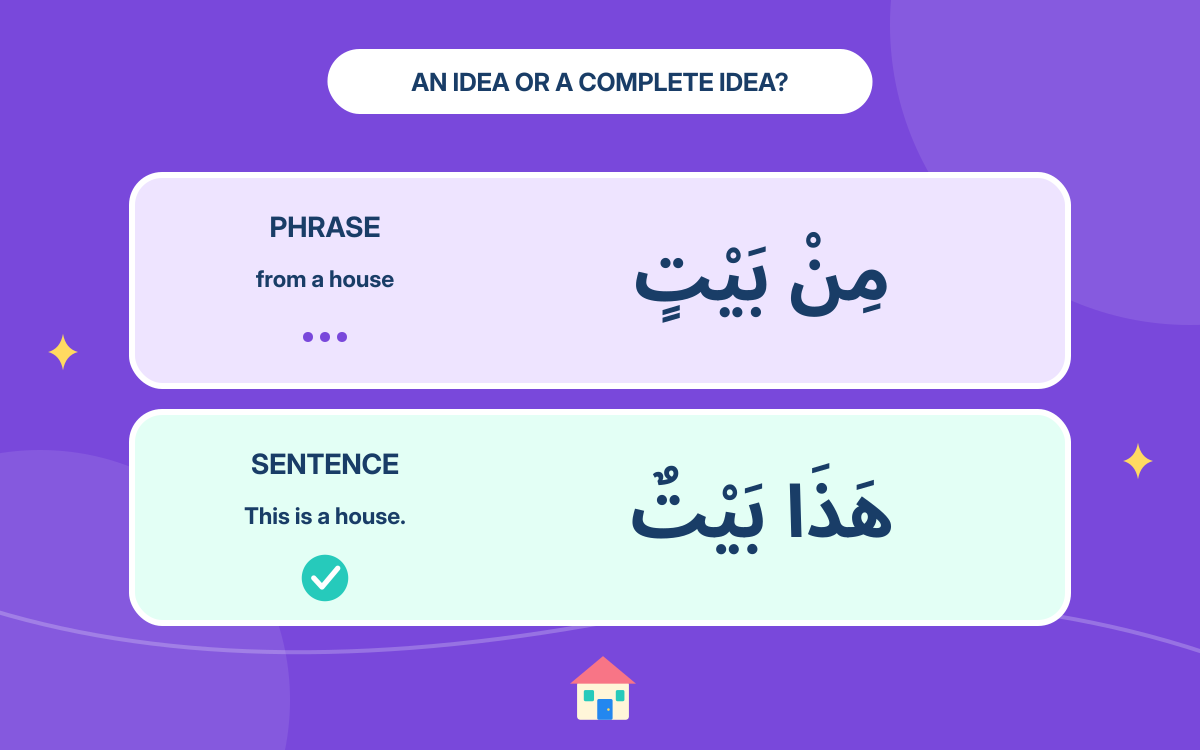
مِنْ بَيْتٍ
min baytin
From a house
Min means “from”; baytin means “a house” after min. Together they give a starting place. By themselves, these words do not say who came from the house or what happened. We call this a phrase. It is useful information, but it needs a larger structure to make a statement here.
02Say something about something
هَذَا بَيْتٌ
hadha baytun
This is a house.
Hadha points to something: “this.” Baytun identifies it as a house. Together they make a complete statement, a جُمْلَة (jumla). You know what is being pointed out and what the speaker says about it.
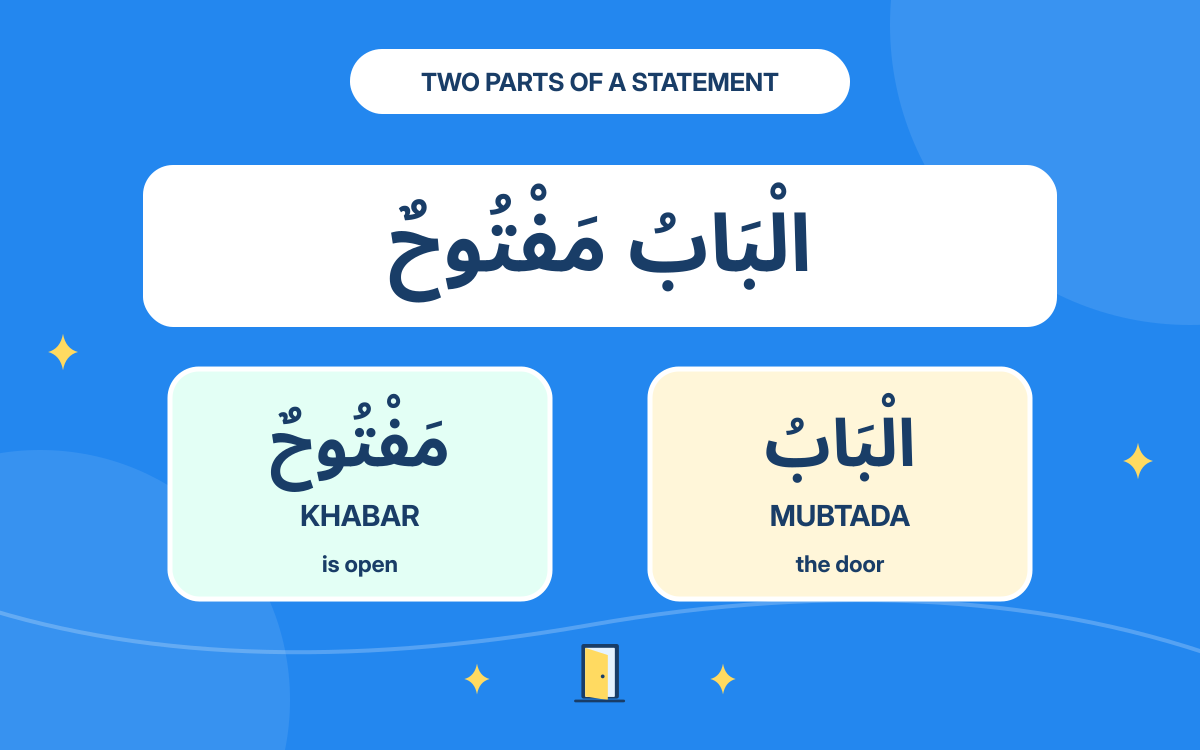
English adds “is” in the translation. Arabic does not need a separate word for “is” in this simple present statement. Do not reject it as a sentence just because you cannot find a verb.
03Give a phrase a job in a sentence
فِي الْبَيْتِ
fi lbayti
In the house
الْكِتَابُ فِي الْبَيْتِ
alkitabu fi lbayti
The book is in the house.
Fi lbayti supplies a place. Add alkitabu, “the book,” and that place becomes information about the book. The larger sentence answers “Where is the book?” The phrase has not disappeared; it now works inside a complete statement.
Look at the relationship between the parts. A phrase can be one useful building block without being a complete statement on its own.
04An action can also complete the idea
خَرَجَ خَالِدٌ
kharaja khalidun
Khalid went out.
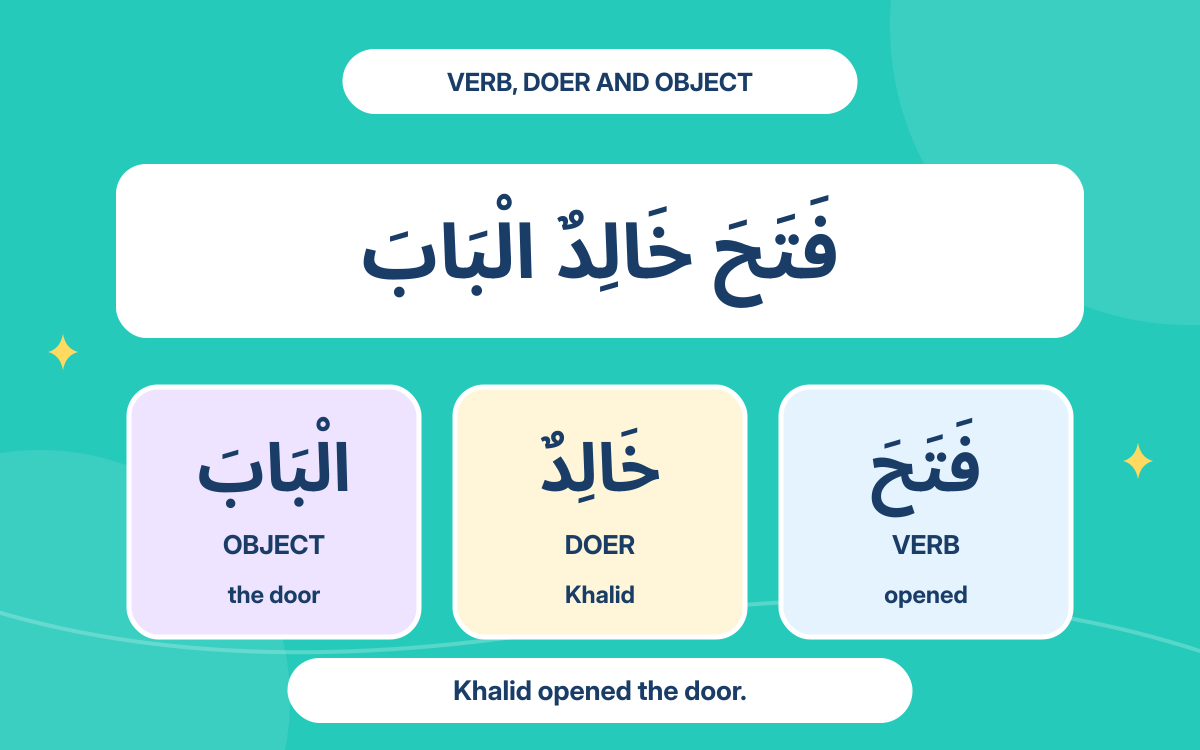
Kharaja tells us what happened: “went out.” Khalidun identifies who went out. This is a complete sentence beginning with a verb. It does not need an object such as “a book” to complete its meaning.
The earlier house sentence identified something; this one reports an action. Both communicate a complete idea. Learn to ask what the whole expression does before deciding whether it is a phrase or a sentence.
05Check meaning, not the word count
Try two questions: “What or whom are we talking about?” and “What are we saying about it or them?” In our standalone statements, both answers are available. “From a house” leaves the larger message unfinished.
Context matters in conversation. If someone asks where the book is, “In the house” is a perfectly useful short answer. It is still a phrase in form; the question supplies the missing information. A short reply is not automatically bad Arabic.
These examples retain full formal endings for study. At a pause, final un and in are normally dropped: baytun or baytin becomes bayt. The simplified reading labels do not show every Arabic sound or vowel length.
What to remember
- A phrase can supply a place or other detail without making a complete statement.
- Arabic can identify or describe something without a separate present-tense word for “is.”
- Judge the whole message in context; a phrase can be a natural short reply.
Your reference shelf
Open a guide whenever you need it.
Phrase or sentence: a small comparisonReview the examples and why context matters
| Arabic | Meaning | What it does |
|---|---|---|
| مِنْ بَيْتٍ | From a house | Phrase giving a starting place |
| هَذَا بَيْتٌ | This is a house. | Complete identification |
| فِي الْبَيْتِ | In the house | Phrase giving a location |
| الْكِتَابُ فِي الْبَيْتِ | The book is in the house. | Complete location statement |
| خَرَجَ خَالِدٌ | Khalid went out. | Complete action statement |
Is every sentence a statement?
No. Questions and commands are also sentences. This first comparison uses statements so you can practise one clear distinction. A useful conversational reply can leave information understood from the preceding question.
Why does the same house have different endings?
Baytun is nominative in “This is a house.” Min governs the genitive baytin. The case changes with the grammatical job; the word still means house. The separate case guide explains this pattern.
Does a nominal sentence always have no verb?
No. The simple nominal examples here have no visible verb, but a nominal sentence can contain a verb within its predicate. A sentence’s structure matters more than the presence or absence of any one word.
Sources & further learning
References for the language explanations and learning guidance.