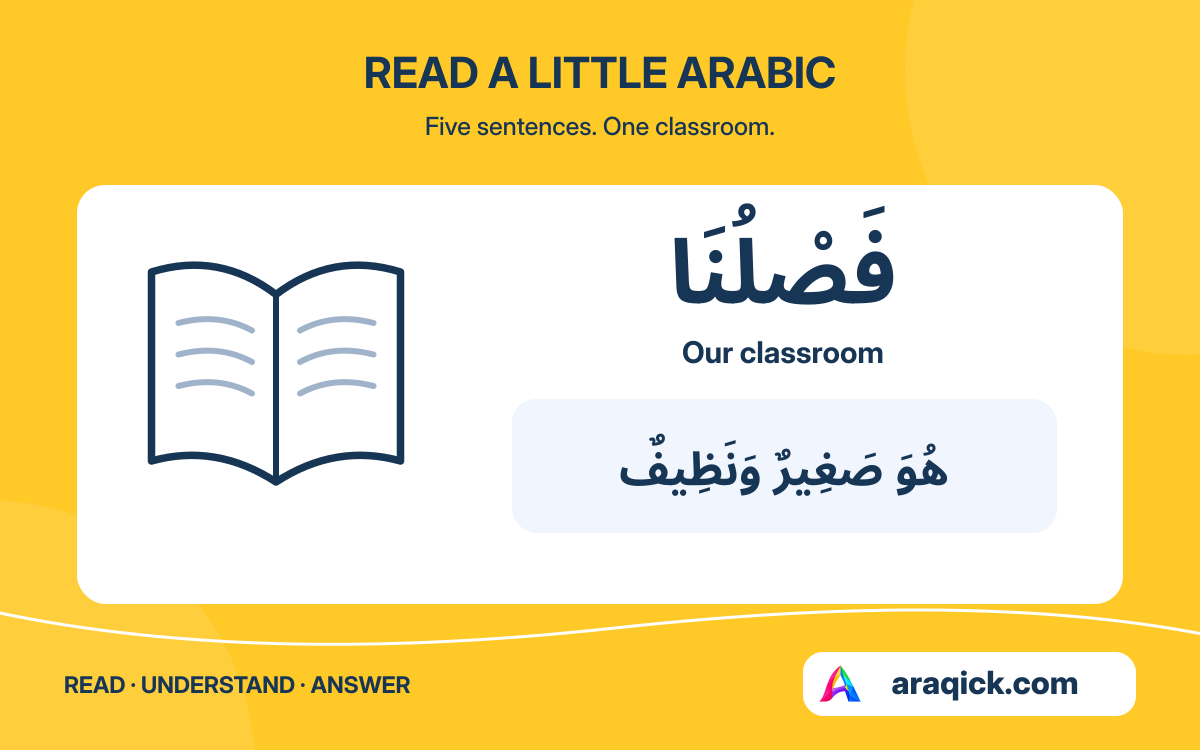
Read five connected sentences about a classroom. The passage tells you what the room is like, what is inside it and where a notebook is. First look for the general meaning; then use the vocabulary and English translation to check the details.
01Read the whole passage once
هَذَا فَصْلُنَا.
هُوَ صَغِيرٌ وَنَظِيفٌ.
فِي الْفَصْلِ سَبُّورَةٌ كَبِيرَةٌ.
الدَّفْتَرُ عَلَى الْمَكْتَبِ.
الْبَابُ مَفْتُوحٌ.
This is an original practice passage. Read from beginning to end before translating every word. Can you recognise a classroom, a notebook and a door? Those familiar words help you find the setting.
The vowels and endings are shown for study. If a word slows you down, keep reading and return to it after the first pass.
02Collect four vocabulary clues
| Arabic | Reading aid | Meaning |
|---|---|---|
| فَصْلُنَا | fasluna | Our classroom |
| صَغِيرٌ | saghirun | Small |
| نَظِيفٌ | nadhifun | Clean |
| مَفْتُوحٌ | maftuhun | Open |
The ending na in fasluna means our. Saghirun and nadhifun describe the classroom. Maftuhun describes the door’s state.
A word does not have to stand alone to be recognisable. Look for familiar parts inside a phrase, then check what the whole sentence tells you.
03Check the English meaning
This is our classroom. It is small and clean. There is a large board in the classroom. The notebook is on the desk. The door is open.
Compare one sentence at a time. The classroom is small, while the board is large. These descriptions belong to different nouns; they do not contradict each other.
فِي الْفَصْلِ سَبُّورَةٌ كَبِيرَةٌ
fi alfasli sabburatun kabiratun
There is a large board in the classroom.
Arabic puts the location phrase first here. English naturally begins there is. Translate the meaning of the sentence rather than forcing the Arabic order into English.
04Follow the links between sentences
هَذَا فَصْلُنَا. هُوَ صَغِيرٌ وَنَظِيفٌ.
hadha fasluna. huwa saghirun wa nadhifun
This is our classroom. It is small and clean.
Huwa refers back to fasl, classroom. Arabic uses a masculine pronoun because fasl is grammatically masculine. It still means it in this English translation.
The word wa joins two descriptions: small and clean. In the next sentence, kabiratun describes the feminine noun sabburatun, board. Keep each description attached to its own noun.
05Read again, then retell one detail
Cover the English and answer three questions: Is the classroom large or small? Where is the notebook? Is the door open or closed? Point to the Arabic evidence before checking your answers.
Then change just one detail. Replace الدَّفْتَرُ (the notebook) with الْكِتَابُ (the book), keeping عَلَى الْمَكْتَبِ (on the desk). You have made a new sentence using a pattern you understand.
The passage does not tell us how many students are present or the colour of the board. Good reading includes recognising what a text leaves unsaid. Review school vocabulary if the objects are unfamiliar.
What to remember
- Read for the setting first, then check individual details.
- Huwa refers back to the classroom; descriptions must be matched to their nouns.
- Use only information actually given when answering comprehension questions.
Your reference shelf
Open a guide whenever you need it.
Read the passage line by lineArabic, plain reading aid and English meaning
هَذَا فَصْلُنَا.
hadha fasluna
This is our classroom.
هُوَ صَغِيرٌ وَنَظِيفٌ.
huwa saghirun wa nadhifun
It is small and clean.
فِي الْفَصْلِ سَبُّورَةٌ كَبِيرَةٌ.
fi alfasli sabburatun kabiratun
There is a large board in the classroom.
الدَّفْتَرُ عَلَى الْمَكْتَبِ.
addaftaru ala almaktabi
The notebook is on the desk.
الْبَابُ مَفْتُوحٌ.
albabu maftuhun
The door is open.
The reading aids keep full study endings and separate words clearly. In fluent connected speech the opening sound of al can drop, and final endings are normally shortened at pauses.
Sources & further learning
References for the language explanations and learning guidance.