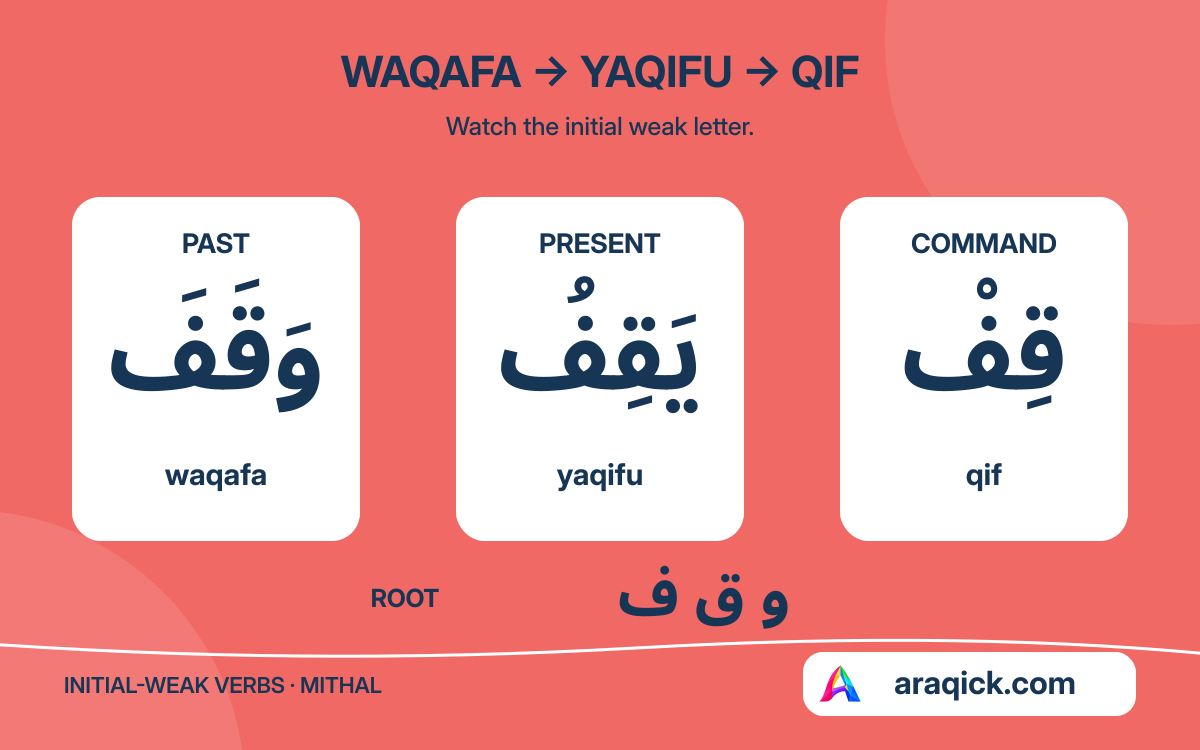
Waqafa means he stood, or stopped in a suitable context. Its root starts with waw: و ق ف. That initial weak letter is visible in the past but disappears from the present yaqifu and command qif. This gives you a useful first model of a mithal, or initial-weak, verb.
01Find the initial weak radical
وَقَفَ أَمَامَ الْبَابِ
waqafa amama albabi
He stood in front of the door.
Waw is the first root letter, not a conjunction added before the verb. Qaf and fa are the other two radicals. The label mithal, مِثَالٌ, identifies the position of that weak root letter.
The root stays و ق ف even when a conjugated form no longer displays waw. This is a spelling and stem change, not a new root.
02Keep waw in these past forms
وَقَفْتُ هُنَا — وَقَفْنَا هُنَا
waqaftu huna — waqafna huna
I stood here — We stood here
Attach the familiar past subject endings to waqaf: tu for I and na for we. The initial waw remains in both. For she stood, use وَقَفَتْ (waqafat).
Identify the person ending separately from the first root letter. The waw at the beginning of waqaftu does not mean they.
03Use the shorter present stem
يَقِفُ هُنَا — أَقِفُ هُنَا
yaqifu huna — aqifu huna
He stands here — I stand here
The present stem in this model is qif. Add the person prefix and the ordinary indicative ending: yaqifu, aqifu, naqifu. Do not keep the root waw between the prefix and qaf.
نَقِفُ أَمَامَ الْبَابِ
naqifu amama albabi
We stand in front of the door.
The qaf has kasrah in the present stem. Learn waqafa and yaqifu together; the root alone does not supply the learned vowels.
04Give the short command qif
قِفْ هُنَا
qif huna
Stand here. — to one man
Start from the second-person jussive taqif and remove its t prefix. The remaining qif already starts with a consonant carrying a vowel, so it needs no helping hamzat al wasl.
For one woman, use قِفِي (qifi). For a male or mixed group, use قِفُوا (qifu). The reference shelf includes the pair and female group forms.
05Apply the mood to the shorter stem
لَمْ يَقِفْ هُنَا — لَنْ يَقِفَ هُنَا
lam yaqif huna — lan yaqifa huna
He did not stand here — He will not stand here
Waw is already absent from both imperfect forms. Lam requires final sukun here; lan requires final fathah. Keep the root change separate from the mood change.
This is the waqafa pattern, not a rule that every initial waw or ya always disappears. Verify each verb’s past–present pair. Compare weak root types and middle-vowel pairs. Plain readings simplify sounds and vowel length.
What to remember
- Waqafa has initial weak root waw; yaqifu drops it from the present stem.
- Past waqaftu and waqafna retain waw, while the command qif needs no helping alif.
- Mood endings change after the stem has been selected; check other mithal verbs individually.
Your reference shelf
Open a guide whenever you need it.
Waqafa: past and indicative presentFourteen traditional person positions
| Person | Past | Indicative present |
|---|---|---|
| He | وَقَفَ | يَقِفُ |
| They two: masculine | وَقَفَا | يَقِفَانِ |
| They: male or mixed group | وَقَفُوا | يَقِفُونَ |
| She | وَقَفَتْ | تَقِفُ |
| They two: feminine | وَقَفَتَا | تَقِفَانِ |
| They: female group | وَقَفْنَ | يَقِفْنَ |
| You: one man | وَقَفْتَ | تَقِفُ |
| You two: masculine or mixed | وَقَفْتُمَا | تَقِفَانِ |
| You: male or mixed group | وَقَفْتُمْ | تَقِفُونَ |
| You: one woman | وَقَفْتِ | تَقِفِينَ |
| You two: feminine | وَقَفْتُمَا | تَقِفَانِ |
| You: female group | وَقَفْتُنَّ | تَقِفْنَ |
| I | وَقَفْتُ | أَقِفُ |
| We | وَقَفْنَا | نَقِفُ |
The two you-two rows have identical forms; the chart shows the traditional fourteen positions. The past beginning wa belongs to the root, while the final group waw in waqafu identifies they.
Commands for different listenersKeep the listener ending on the shorter stem
| Listener | Command | Reading aid |
|---|---|---|
| One man | قِفْ | qif |
| Two people: either gender | قِفَا | qifa |
| Male or mixed group | قِفُوا | qifu |
| One woman | قِفِي | qifi |
| Female group | قِفْنَ | qifna |
Final alif after the group waw is silent. The alif in qifa is the pronounced dual ending. These forms belong to waqafa–yaqifu and should not be applied mechanically to every initial-weak verb.
Sources & further learning
References for the language explanations and learning guidance.