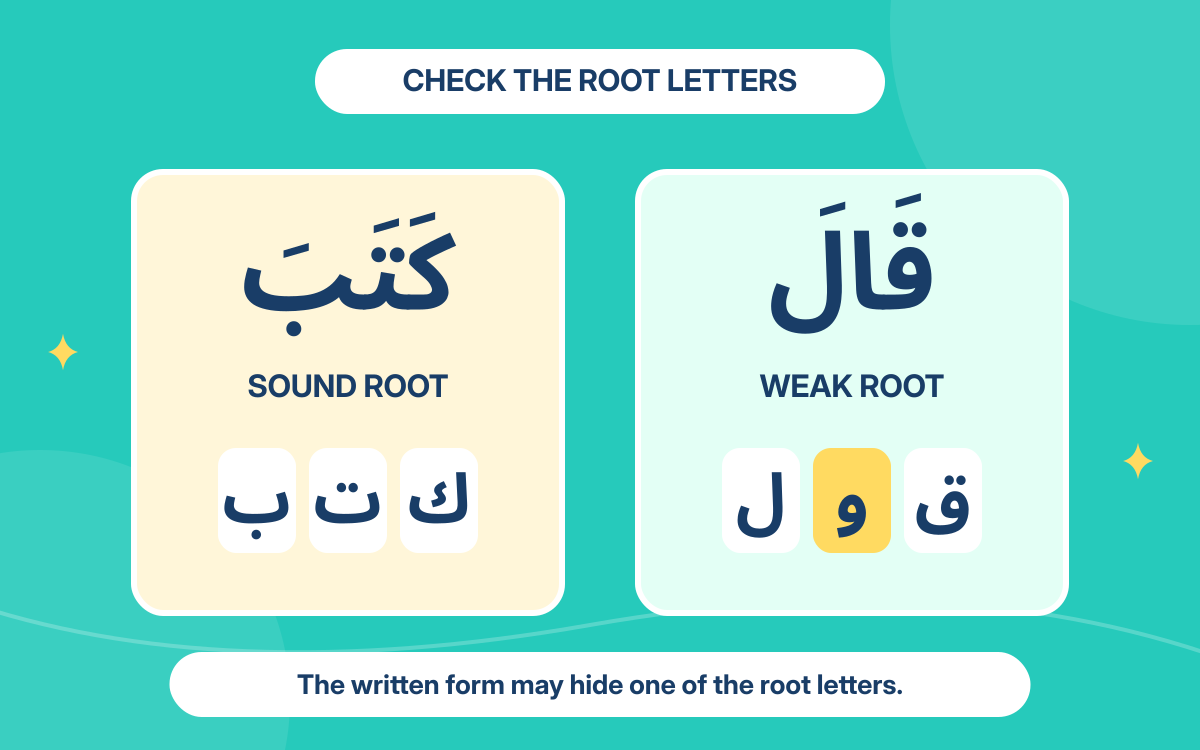
A verb’s written shape can hide the letters in its root. Qala, “he said,” contains an alif on the page but belongs to the root ق و ل. Arabic classifies verbs by their original letters. Learn that classification before trying to predict how an unfamiliar weak verb changes its forms.
01Check the original letters first
A sahih verb, فِعْلٌ صَحِيحٌ, has no weak letter among its original root letters. A mutall verb, فِعْلٌ مُعْتَلٌّ, has at least one. Original waw or ya may appear as alif or alif maqsura in a written verb form.
كَتَبَ
kataba
He wrote; root: ك ت ب
These three root letters contain no weak letter, so kataba is sahih. Classify the verified root, not every character on the page. A person ending or an added pattern letter does not automatically make a verb weak.
02Keep sahih broader than salim
Salim, سَالِم, is a narrower type of sahih: its root has no weak letter, hamza or doubled consonant. Kataba is salim. Hamzated and doubled roots can still be sahih.
أَخَذَ
akhadha
He took; root: ء خ ذ
مَدَّ
madda
He stretched; root: م د د
Akhadha is hamzated, مَهْمُوز: hamza is an original consonant. Madda is doubled, مُضَعَّف: its last two root letters are both dal, represented by shaddah. Neither root contains an original weak letter. Therefore, both are sahih, but neither is salim.
03Recognise a weak first root letter
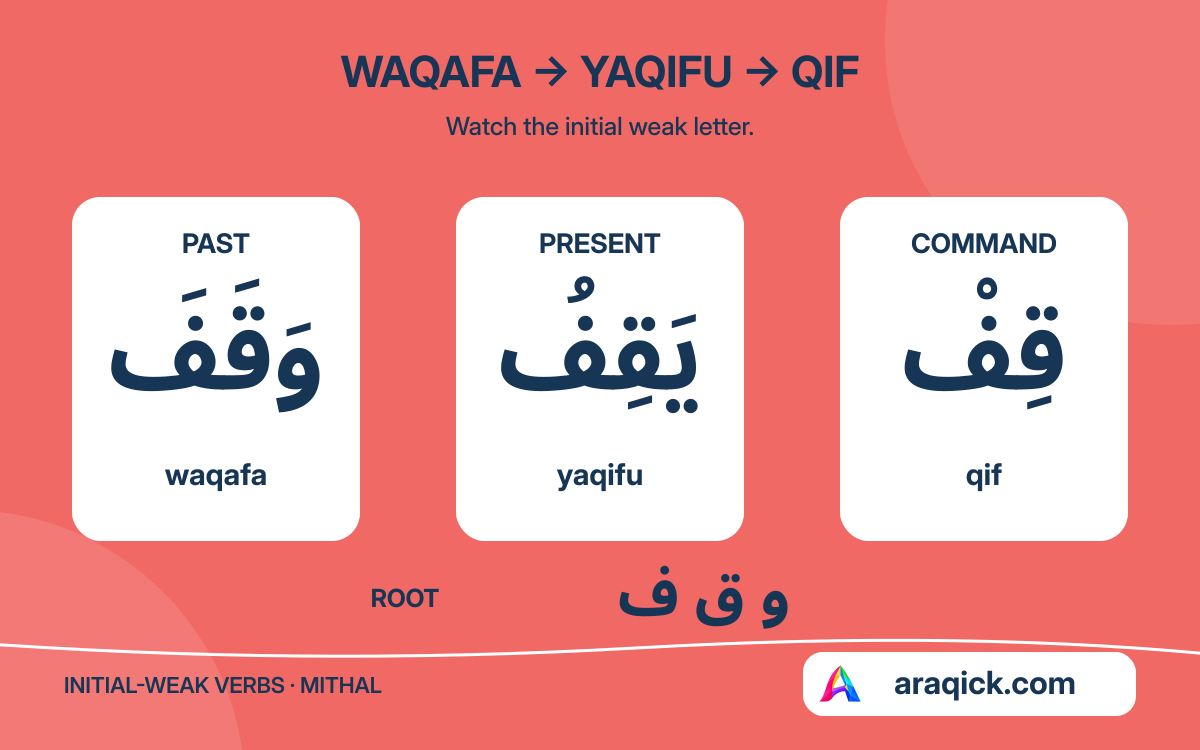
A verb with an original weak first letter is called mithal, مِثَال. Start with a root in which the letter is visible.
وَعَدَ
waada
He promised; root: و ع د
The first radical is waw. That makes waada weak and identifies the position as initial. Do not count the initial waw in every written expression as a root letter: sometimes waw is the separate conjunction “and.” Here it belongs to the dictionary verb itself.
04Recognise a weak middle root letter
A verb with a weak middle radical is called ajwaf, أَجْوَف, often translated as “hollow.” The citation form may show alif rather than the original waw or ya.
قَالَ
qala
He said; root: ق و ل
Qala belongs to ق و ل, with waw in the middle. Its alif represents the long a in this form. Use a reliable dictionary to identify the original letter; the written alif alone cannot tell you whether a hidden radical was waw or ya.
05Recognise a weak final root letter
A verb with a weak final radical is called naqis, نَاقِص. Compare one waw root with one ya root:
دَعَا
daa
He called / invited; root: د ع و
رَمَى
rama
He threw; root: ر م ي
Both are weak in their final radical despite different long-a spellings. These labels identify root structure; they do not teach every conjugation change. Learn a verb’s actual forms alongside its root. The plain reading aids simplify Arabic sounds and do not mark every sound or vowel length.
What to remember
- Sahih and mutall classify original root letters, not just a verb’s visible spelling.
- Sahih includes salim, hamzated and doubled verbs; salim is the narrower category.
- Mithal, ajwaf and naqis locate a weak radical at the beginning, middle or end of the root.
Your reference shelf
Open a guide whenever you need it.
A compact root mapReview the examples by type and position
| Verb | Root | Type |
|---|---|---|
| كَتَبَ | ك ت ب | Sahih: salim |
| أَخَذَ | ء خ ذ | Sahih: hamzated |
| مَدَّ | م د د | Sahih: doubled |
| وَعَدَ | و ع د | Weak: initial |
| قَالَ | ق و ل | Weak: middle |
| دَعَا | د ع و | Weak: final |
| رَمَى | ر م ي | Weak: final |
Hamza is not a weak waw or ya merely because it is written on an alif seat. Likewise, added long-vowel letters do not always belong to a root. Some roots have more than one weak radical; this beginner map focuses on a single weak position. Check the dictionary root before applying a label, and study conjugation separately.
Sources & further learning
References for the language explanations and learning guidance.