When someone says something to someone else, Arabic keeps the speaker and the recipient distinct. Qala gives the saying action; a phrase such as li tells you who hears it. Start with he said to me, then change the recipient, name the speaker and say I said to you.
01Keep he said separate from to me
قَالَ means he said when no other speaker is named. Add لِي, li, to me, to identify the recipient. The person inside li is listening; that pronoun does not turn the verb into I said.
قَالَ لِي
qala li
He said to me.
These short patterns identify who spoke and to whom; context supplies what was said. Li is a preposition with an attached pronoun, written as one word. It remains separate from the verb.
02Change the person addressed
Keep qala when the speaker stays he. Change the prepositional phrase to lahu, to him, or laka, to you when addressing one male. The recipient’s pronoun belongs to that phrase, rather than serving as the verb’s subject.
قَالَ لَهُ
qala lahu
He said to him.
قَالَ لَكَ
qala laka
He said to you. (One male listener.)
Laki, لَكِ, addresses one female listener. Notice li for me, but la in lahu, laka and laki. Changing these forms changes the recipient without changing who performed the saying action.
03Name the speaker in a verb-first sentence
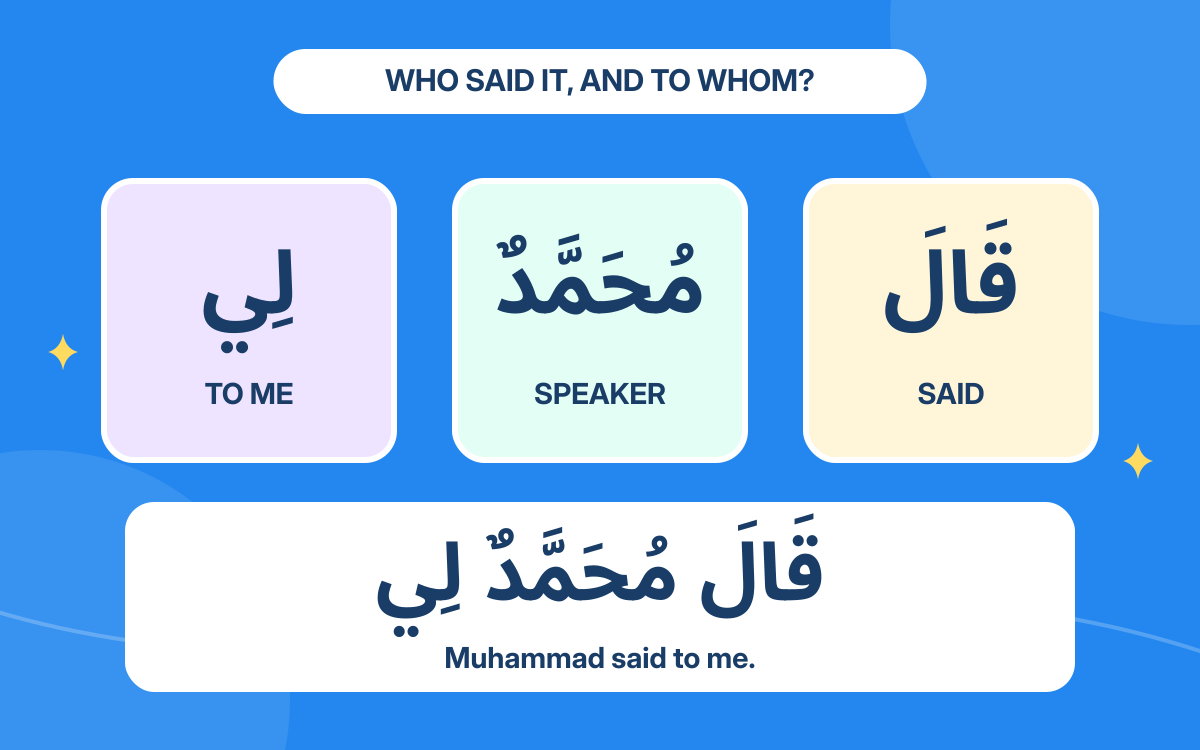
A named doer can follow the verb. Muhammadun is nominative because Muhammad is the speaker, while li still names the recipient. The recipient phrase can appear before or after that named doer.
قَالَ مُحَمَّدٌ لِي
qala muhammadun li
Muhammad said to me.
قَالَ لِي مُحَمَّدٌ
qala li muhammadun
Muhammad said to me.
Both orders are valid. Li does not have to sit immediately after qala. When practising word order, follow the requested sequence while keeping the same speaker and recipient roles.
04Mark a female speaker with qalat
For she said, use qalat, قَالَتْ. The t marks the feminine speaker. The recipient can still be me, him or you: it does not determine the verb’s gender.
قَالَتْ لِي
qalat li
She said to me.
Compare qala li and qalat li. The listener is me in both; the person speaking changes. In قَالَتْ لِي فَاطِمَةُ, Fatima said to me, Fatima is the named doer. Her name takes u here without tanween, following its known diptote pattern.
05Use qultu when I am the speaker
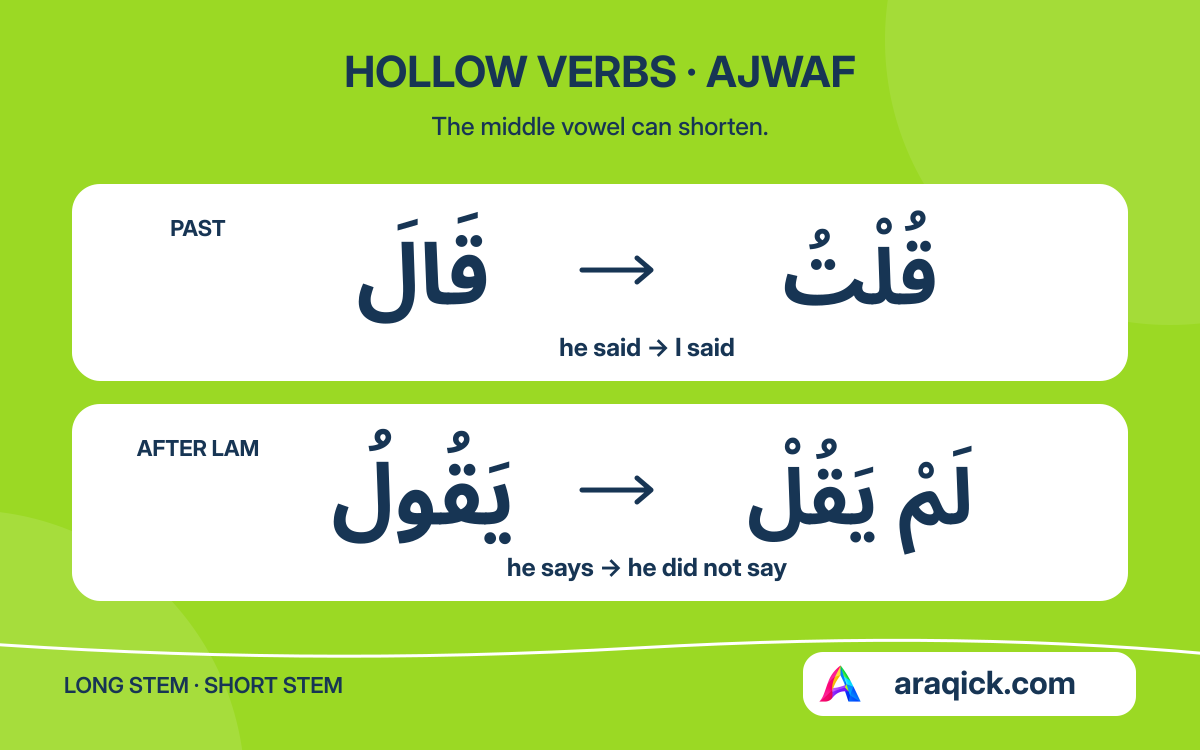
To say I said, learn the complete form qultu, قُلْتُ. Qala is a weak verb: its internal vowel changes when this past subject ending attaches. Do not simply add tu to the unchanged form qala.
قُلْتُ لَكَ
qultu laka
I said to you. (One male listener.)
The ending tu identifies I as the speaker, whatever my gender. Laka identifies the male listener. For a female listener, use قُلْتُ لَكِ, qultu laki. Check the speaker through the verb first, then the recipient through the prepositional phrase.
What to remember
- Qala identifies a male speaker; li, lahu, laka and laki identify the person addressed.
- A named speaker is nominative. The recipient phrase may come before or after that doer in these sentences.
- Qalat means she said; qultu means I said. Choose the verb for the speaker and the preposition phrase for the recipient.
Your reference shelf
Open a guide whenever you need it.
The speaker and recipient stay separateReview the saying forms, valid word orders and the weak root
| Arabic | Plain reading aid | Speaker → recipient |
|---|---|---|
| قَالَ لِي | qala li | He → me |
| قَالَ لَهُ | qala lahu | He → him |
| قَالَ لَكَ | qala laka | He → you: one male |
| قَالَ لَكِ | qala laki | He → you: one female |
| قَالَتْ لِي | qalat li | She → me |
| قُلْتُ لَكَ | qultu laka | I → you: one male |
Compare قَالَ حَامِدٌ لِي and قَالَ لِي حَامِدٌ. Both mean Hamid said to me. Hamidun is the nominative doer; li is a prepositional phrase whose attached pronoun has a genitive grammatical role. The pronoun attaches to the preposition, not to the verb as a direct-object suffix.
The root of قَالَ is ق و ل. Its written alif reflects a change involving the weak middle root letter waw. The first-person past form is qultu; the related forms قُلْتَ and قُلْتِ mean you said to one male and one female respectively. Their final vowels identify the speaker, even when a recipient phrase follows.
These patterns leave the content of the statement to context. Adding a quotation or reporting a longer statement needs its own sentence structure; changing the recipient phrase does not by itself supply that content.
Sources & further learning
References for the language explanations and learning guidance.
- Madinah Arabic: past subject forms, feminine t and qala changing to qultu
- Madinah Arabic: pronouns attached to prepositions, including li and lahu
- V. Abdur Rahim, Madinah Arabic Book 1: original Lesson22 dialogue with qala and qalat laha
- Al Jazeera Learning Arabic: the weak-letter change underlying qala