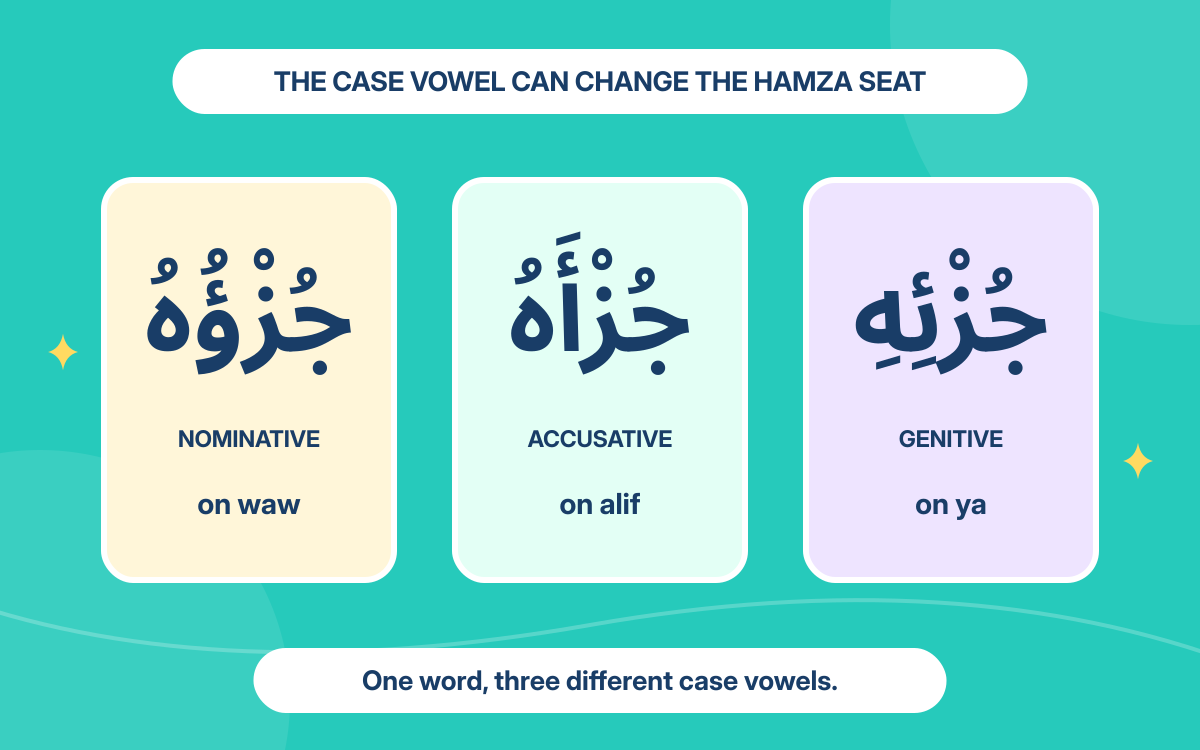
A word’s final hamza may look different when a pronoun attaches to it. The suffix puts another letter after the hamza, and the noun’s case helps determine its new spelling. Learn one regular pattern, then one important exception after a long alif. The meaning of his stays the same.
01An attached pronoun moves the word boundary
The noun جُزْءٌ means a part. Attach the possessive suffix hu, his, and the hamza is no longer the last letter of the written word. In the common spelling convention used here, it follows medial hamza rules.
جُزْؤُهُ هُنَا
juzuhu huna
His part is here.
The noun is nominative as the topic of this sentence. Its hamza carries u and sits on waw. That seat does not add a w sound: the consonant remains hamza.
02Compare the hamza’s vowel with the preceding letter
For the regular medial pattern, compare the two vowels: i is stronger than u, which is stronger than a; sukun is weakest. The stronger vowel selects a ya seat, waw or alif. In juz, the z has sukun, so the hamza’s case vowel decides.
قَرَأْتُ جُزْأَهُ
qaratu juzahu
I read his part.
فِي جُزْئِهِ
fi juzihi
In his part
The direct object has a; the noun after fi has i. Before the suffix, these case vowels remain audible. The suffix hu becomes hi after i.
03A preceding long alif needs its own check
The plural أَبْنَاءٌ, sons, has a long alif immediately before its hamza. Its nominative form with his is abnauhu, but the accusative form keeps hamza on the line. Do not turn the regular strength rule into a promise that every a requires an alif seat.
أَبْنَاؤُهُ هُنَا
abnauhu huna
His sons are here.
رَأَيْتُ أَبْنَاءَهُ
raaytu abnaahu
I saw his sons.
The first noun is the topic; the second is the object of I saw. The suffix alone does not require a waw seat.
04Choose the genitive form after with
Maa, with, is an adverbial noun whose following noun is genitive as its idafa complement. Choose that case before deciding the spelling. With sons, the hamza then carries i and takes a ya seat, even though the preceding alif is long.
مَعَ أَبْنَائِهِ
maa abnaihi
With his sons
Here maa means with. Compare the three forms abnauhu, abnaahu and abnaihi: the possessor is still he, while the sons’ role determines u, a or i. The spelling and hu or hi reflect those vowels. Our plain Latin aids do not mark vowel length or the hamza’s glottal stop.
05A separate possessor does not become a suffix
A named possessor is a separate word in an idafa. It does not move the preceding noun’s hamza into the middle of its written word. The final hamza in abnau therefore stays on the line after the long alif.
أَبْنَاءُ مُحَمَّدٍ هُنَا
abnau muhammadin huna
Muhammad’s sons are here.
Abnau is nominative; Muhammadin is genitive as the second noun. Compare this with abnauhu, his sons. Check attachment, case and the preceding letter together instead of memorising one seat for every possessive expression.
What to remember
- An attached suffix can make a final hamza medial; its seat can then depend on the noun’s case vowel.
- In this spelling pattern, his part changes to juzuhu, juzahu or juzihi for nominative, accusative or genitive.
- After a long alif, the a-vowel hamza stays on the line; a separate possessor leaves hamza word-final.
Your reference shelf
Open a guide whenever you need it.
Two noun families and three casesCompare the taught spellings and keep the long-alif exception handy
| Case | His part | His sons |
|---|---|---|
| Nominative | جُزْؤُهُ · juzuhu | أَبْنَاؤُهُ · abnauhu |
| Accusative | جُزْأَهُ · juzahu | أَبْنَاءَهُ · abnaahu |
| Genitive | جُزْئِهِ · juzihi | أَبْنَائِهِ · abnaihi |
The same long-alif pattern gives أَسْمَاؤُهُمْ, their names in the nominative; أَسْمَاءَهُمْ in the accusative; and أَسْمَائِهِمْ in the genitive. Case belongs to the noun; the pronoun identifies its possessor.
Some spelling traditions retain a word’s original final hamza seat after a suffix. Al Jazeera’s teacher answer, for example, permits أَضْوَاءُهَا alongside the common medial spelling أَضْوَاؤُهَا in a nominative context. Practise the medial spelling convention shown above. An alternative spelling convention should not be confused with a different grammatical case.
The strength comparison is a regular pattern, with additional rules after long vowels and in other special environments. The examples here cover a still consonant before hamza and the long-alif family, rather than every medial-hamza spelling.
Sources & further learning
References for the language explanations and learning guidance.
- King Saud University: Arabic spelling basics, medial hamza and suffix attachment
- Ahmad Awad Abdullah, Sharjah Arabic Language Academy: rules and traditions of hamza spelling
- Hussein Sadiq: case-based spellings of sons with a possessive suffix
- Al Jazeera Learning Arabic: medial hamza and an accepted word-final spelling convention