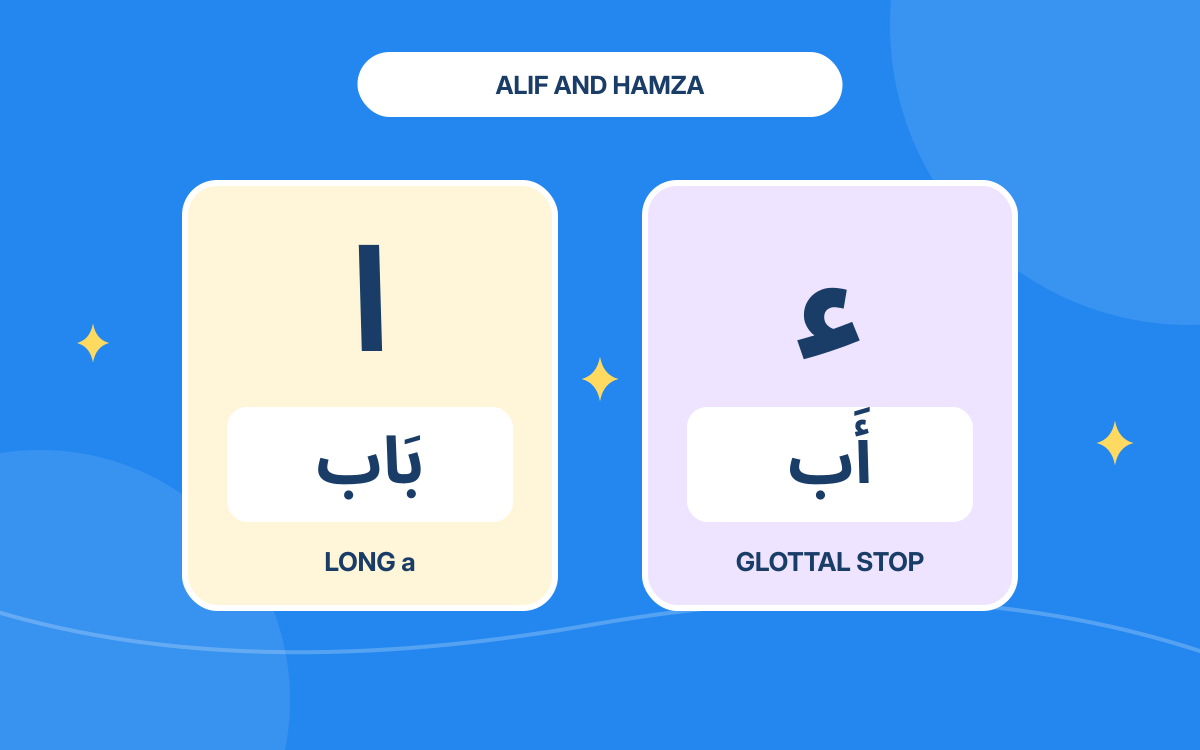
Alif and hamza often appear together, but they do different jobs. In بَاب, alif helps write the long a in bab, door. Hamza ء represents a brief catch in the voice. Learning to notice both makes familiar words easier to read and spell.
01Hear the long vowel in bab
bab
door
kitab
book
The a in bab and kitab is long. Hold it as one vowel; our simple reading labels do not mark vowel length. In both words, the alif follows a consonant with fathah and lengthens its a sound. The small vowel sign and the tall letter work together.
02Notice the catch in the voice
مَاء
ma
water
Hamza is a consonant: briefly close and release the airflow in your throat. The middle catch in English “uh oh” can help you locate it, though accents differ.
Water contains both sounds: a long a and then a final hamza. Our plain label ma does not mark this catch. Read it beside the Arabic: hold the a, then make the final hamza. The Arabic spelling carries the detail that a simple label leaves out.
03Read the vowel beside initial hamza
ab
father
umm
mother
ibra
needle
- With initial a or u, hamza sits above alif: أَ، أُ.
- With initial i, hamza sits below alif: إِ.
The vowel sign supplies a, u or i; the hamza supplies the catch before it. The supporting alif does not add a long a here. These reading aids leave the predictable initial catch unmarked; pronounce it when starting each example.
04Meet the combined sign آ
آدَم
adam
Adam
The madda sign over alif combines an initial hamza with a long a. Begin with the catch, then hold the vowel. Compare أَب ab, with a short a, and آدَم adam, with a long a.
Do not replace every أ with آ. They encode different sound sequences. A short vowel after hamza stays short unless the word itself requires a long vowel.
05Follow the sound, then the spelling
Use this three step check when you read a new word:
- Locate a written hamza, including one carried by another letter.
- Read its vowel, if shown, without inventing a long a.
- Look separately for an alif that lengthens a preceding a.
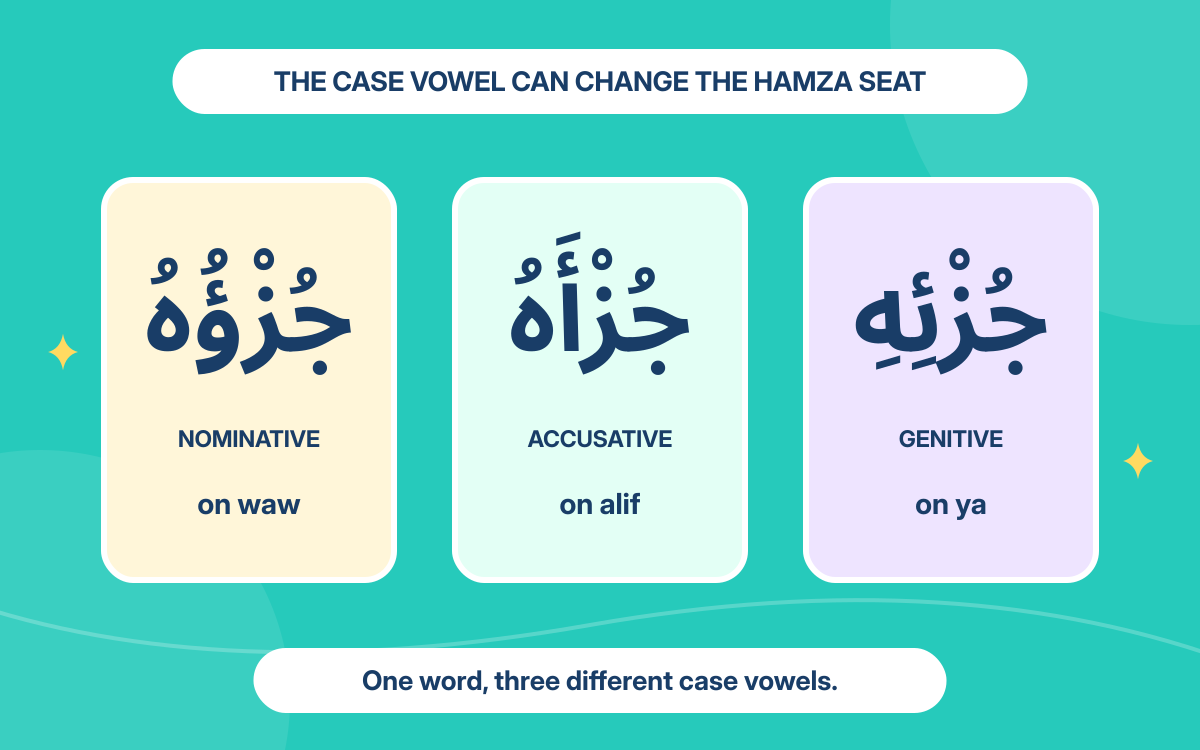
Hamza can also sit on waw or a ya shaped seat: ؤ، ئ. The seat alone does not make the hamza sound w or y. Its spelling follows rules involving position and vowels; recognising it is enough for this first lesson.
Our single word readings omit grammatical endings and use a for paused ة. The full spelling, vowel length and hamza still matter. Learn each word with its Arabic form beside the reading aid.
Vowel length belongs to the word even when a text leaves the small vowel marks unwritten.
What to remember
- In بَاب and كِتَاب, alif writes a long a after fathah.
- Hamza is a consonant; its seat and its vowel do separate jobs.
- Initial أَ, أُ, إِ and آ have different readings: notice the vowel and its length.
Your reference shelf
Open a guide whenever you need it.
Alif and hamza: a compact reading referenceCompare familiar forms and review the reading conventions
| Arabic | Reading aid | Notice |
|---|---|---|
| بَاب | bab | A long a; no hamza. |
| أَب | ab | Initial hamza followed by short a. |
| أُمّ | umm | Initial hamza, short u, doubled m. |
| إِبْرَة | ibra | Initial hamza followed by short i; paused ending. |
| مَاء | ma | A long a, then a final hamza. |
| آدَم | adam | Initial hamza followed by long a. |
The examples use paused forms rather than pronounced case endings. The plain reading aids leave vowel length and the hamza catch unmarked. Follow the Arabic and the notes: ma has a long a and then final hamza, while ab begins with hamza followed by a short a.
A bare initial alif can belong to hamzat al wasl, whose pronunciation changes when linked to a preceding word. It is not automatically a long a. Continue with the dedicated wasl and qat lesson for that separate pattern.
Sources & further learning
References for the language explanations and learning guidance.