Introduce yourself in Arabic with your name, where you are from and one sentence about your learning. These small building blocks also help you understand the questions someone may ask you. Try each part before combining your own introduction.
01Say your name
اسْمِي نَادِيَة
ismi Nadiya
My name is Nadia.
- Ism means “name”; ismi means “my name.”
- Replace Nadia with your own name. You do not need a separate word for “is.”
These are Modern Standard Arabic (MSA) examples; local introductions may sound different. Plain transliteration simplifies Arabic sounds and grammatical endings.
02Add where you are from
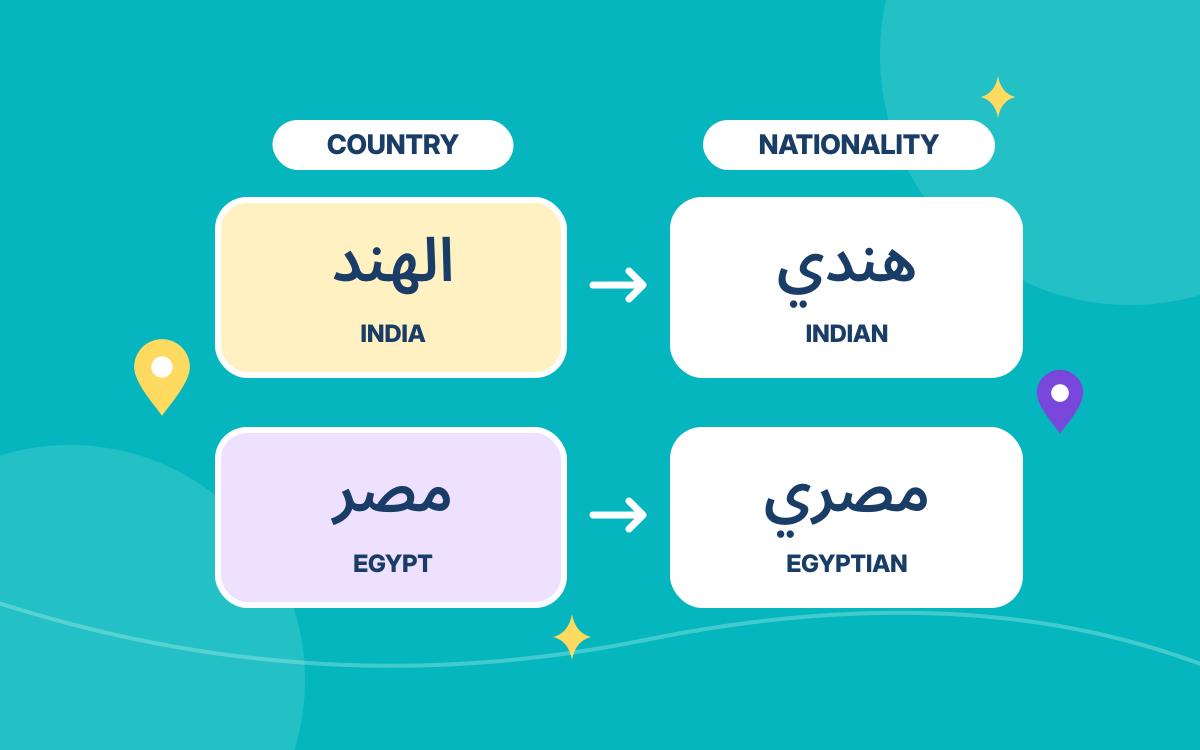
أَنَا مِنَ الْهِنْد
ana min alhind
I am from India.
- The pattern is ana min + country for male and female speakers.
- Egypt: أَنَا مِنْ مِصْر — ana min Misr.
- Keep the article in country names that use one, such as alhind.
Origin and residence are different. أَسْكُن فِي كَنَدَا — askun fi Kanada — means “I live in Canada.” Use min for “from” and fi for “in.”
03Say what you are learning
أَنَا أَتَعَلَّم الْعَرَبِيَّة
ana ataallam alarabiyya
I am learning Arabic.
- أَتَكَلَّم الْإِنْجِلِيزِيَّة — atakallam alinjiliziyya — I speak English.
- أَتَكَلَّم الْعَرَبِيَّة قَلِيلًا — atakallam alarabiyya qalilan — I speak a little Arabic.
These first person verbs are the same for male and female speakers. The verb already identifies “I,” so ana is optional here. Choose one true statement; you can add more detail when you feel comfortable.
04Invite the other person to speak
After sharing a detail, try “And you?”
وَأَنْتَ؟
wa anta
And you? To a man.
وَأَنْتِ؟
wa anti
And you? To a woman.
- Ask a name: مَا اسْمُكَ؟ — ma ismuka — to a man; مَا اسْمُكِ؟ — ma ismuki to a woman.
- Ask an origin: مِنْ أَيْنَ أَنْتَ؟ — min ayna anta — to a man; مِنْ أَيْنَ أَنْتِ؟ — min ayna anti to a woman.
These endings follow the listener. They do not depend on the gender of the person asking the question.
05Put your introduction together
مَرْحَبًا. اسْمِي نَادِيَة.
marhaban ismi Nadiya
Hello. My name is Nadia.
أَنَا مِنَ الْهِنْد.
ana min alhind
I am from India.
أَنَا أَتَعَلَّم الْعَرَبِيَّة.
ana ataallam alarabiyya
I am learning Arabic.
Want to add your role? “I am a student” is أَنَا طَالِب — ana talib — for a male speaker, or أَنَا طَالِبَة — ana taliba — for a female speaker.
Replace the sample details with your own. Say the three lines, then answer the name and country questions in a different order.
What to remember
- Use ismi + your name and ana min + your country.
- Questions with anta or anti follow the listener; talib or taliba describes the speaker.
- Finish with wa anta or wa anti to invite the other person to speak.
Your reference shelf
Open a guide whenever you need it.
Start with your nameOpen more expressions for this part of your introduction
| Arabic | Say it | Meaning / use |
|---|---|---|
| اسْمِي نَادِيَة | ismi Nadiya | My name is Nadia. |
| أَنَا عُمَر | ana Umar | I am Omar. |
| مَا اسْمُكَ؟ | ma ismuka | What is your name? To a man. |
| مَا اسْمُكِ؟ | ma ismuki | What is your name? To a woman. |
Say where you are fromOpen more expressions for this part of your introduction
| Arabic | Say it | Meaning / use |
|---|---|---|
| أَنَا مِنَ الْهِنْد | ana min alhind | I am from India. |
| أَنَا مِنْ مِصْر | ana min Misr | I am from Egypt. |
| أَنَا مِنْ كَنَدَا | ana min Kanada | I am from Canada. |
| أَنَا مِنْ فَرَنْسَا | ana min Faransa | I am from France. |
| مِنْ أَيْنَ أَنْتَ؟ | min ayna anta | Where are you from? To a man. |
| مِنْ أَيْنَ أَنْتِ؟ | min ayna anti | Where are you from? To a woman. |
Add a language or learning goalOpen more expressions for this part of your introduction
| Arabic | Say it | Meaning / use |
|---|---|---|
| أَتَكَلَّم الْإِنْجِلِيزِيَّة | atakallam alinjiliziyya | I speak English. |
| أَتَكَلَّم الْعَرَبِيَّة قَلِيلًا | atakallam alarabiyya qalilan | I speak a little Arabic. |
| أَنَا أَتَعَلَّم الْعَرَبِيَّة | ana ataallam alarabiyya | I am learning Arabic. |
| أُحِبّ اللُّغَات | uhibb allughat | I like languages. |
Add one line about study or workOpen more expressions for this part of your introduction
| Arabic | Say it | Meaning / use |
|---|---|---|
| أَنَا طَالِب | ana talib | I am a student. Male speaker. |
| أَنَا طَالِبَة | ana taliba | I am a student. Female speaker. |
| أَنَا مُعَلِّم | ana muallim | I am a teacher. Male speaker. |
| أَنَا مُعَلِّمَة | ana muallima | I am a teacher. Female speaker. |
Sources & further learning
References for the language explanations and learning guidance.