Arabic can reinforce a statement with a small attached la. On its own, this emphatic lam leaves the topic’s case unchanged. With inna, the familiar beginner pattern places it on the predicate. Compare the two positions without losing track of the endings.
01Add la to the initial topic
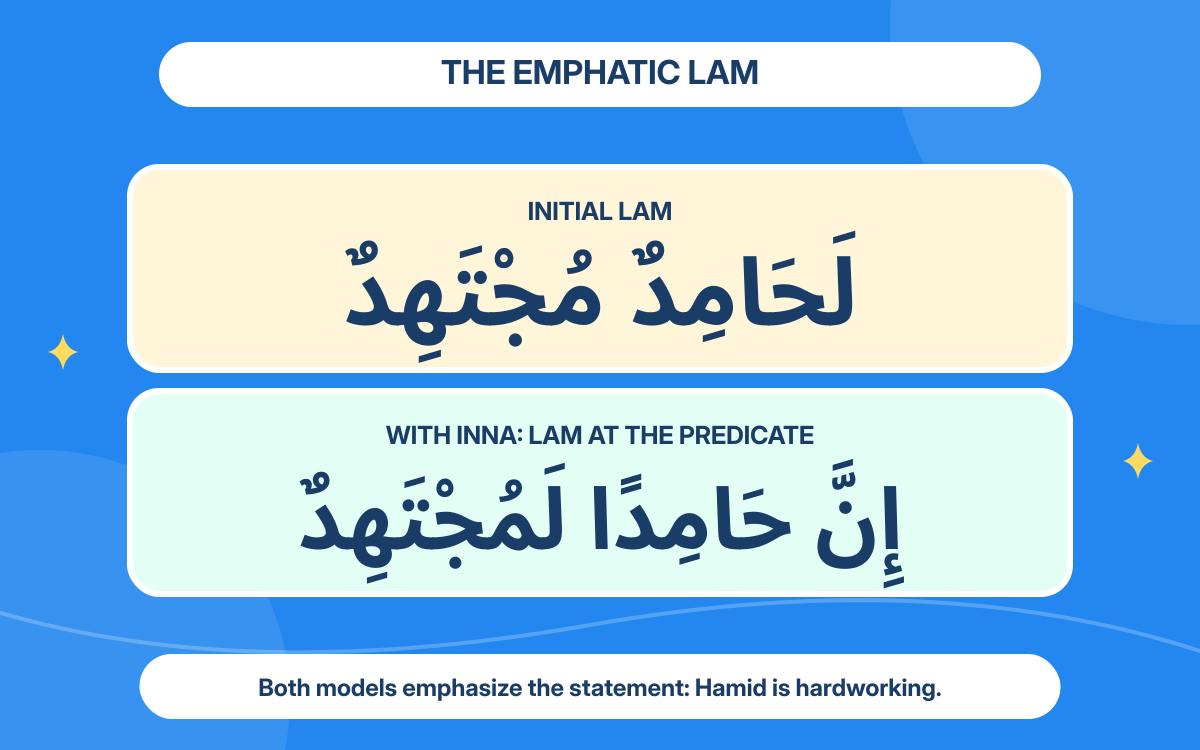
The emphatic لَ (la) can attach to the topic of a nominal sentence. It is called initial lam, لَامُ الِابْتِدَاءِ. It reinforces the statement without governing a new case.
حَامِدٌ مُجْتَهِدٌ.
hamidun mujtahidun
Hamid is hardworking.
لَحَامِدٌ مُجْتَهِدٌ.
lahamidun mujtahidun
Indeed, Hamid is hardworking.
Hamidun remains the nominative topic, and mujtahidun remains the nominative predicate. La has fathah and joins the following word in writing.
02Put lam on the predicate with inna
In our ordinary subject-then-predicate pattern, adding إِنَّ (inna) places emphatic lam on the predicate. This is called displaced lam, اللَّامُ الْمُزَحْلَقَةُ.
إِنَّ حَامِدًا لَمُجْتَهِدٌ.
inna hamidan lamujtahidun
Indeed, Hamid is hardworking.
Inna makes hamidan accusative. Lamujtahidun is still a nominative predicate: the emphatic lam does not make it genitive or accusative. Keep inna first, its noun next and the lam-bearing predicate last in this model.
03Hear emphasis without inventing a new tense
Inna alone and emphatic lam alone both reinforce a statement. Their combination adds further emphasis. It does not automatically make the statement past, future or negative.
إِنَّ حَامِدًا مُجْتَهِدٌ.
inna hamidan mujtahidun
Indeed, Hamid is hardworking.
إِنَّ حَامِدًا لَمُجْتَهِدٌ.
inna hamidan lamujtahidun
Hamid really is hardworking.
English may use “indeed,” “really” or vocal stress. The precise natural wording depends on context; there is no fixed numerical measure of emphasis. Inna does not require lam in every sentence.
04Recognise lam before a location predicate
The predicate can be a whole prepositional phrase. Emphatic lam attaches before the preposition in this pattern.
إِنَّ الْكِتَابَ لَفِي الْحَقِيبَةِ.
inna lkitaba lafi lhaqibati
The book really is in the bag.
Alkitaba is the accusative noun of inna. The location phrase fills its predicate position. Lam adds emphasis to that phrase; fi still governs alhaqibati, which is genitive. Lam has not turned the bag into a nominative noun.
05Keep emphatic la separate from prepositional li
The attached لِ (li) before an ordinary noun is a different lam. It can mean “for” and governs genitive case. Compare the vowels and the grammatical jobs.
الْكِتَابُ لِحَامِدٍ.
alkitabu lihamidin
The book is for Hamid.
لَحَامِدٌ مُجْتَهِدٌ.
lahamidun mujtahidun
Indeed, Hamid is hardworking.
Lihamidin has a genitive noun after the preposition. Lahamidun has a nominative topic after emphatic lam. Use the structures taught here; displaced lam has other regulated positions, so it cannot simply attach anywhere after inna. Our plain readings simplify sounds and vowel length.
What to remember
- Initial emphatic la attaches to the topic and leaves its nominative case unchanged.
- In the taught inna pattern, its noun is accusative and emphatic lam attaches to the nominative predicate.
- Emphatic la differs from prepositional li; in a location predicate, the inner preposition still governs its noun.
Your reference shelf
Open a guide whenever you need it.
Compare four lam patternsInitial emphasis, displaced emphasis, location and for
| Pattern | Arabic | Reading |
|---|---|---|
| Initial emphatic lam | لَحَامِدٌ مُجْتَهِدٌ | lahamidun mujtahidun |
| Displaced lam with inna | إِنَّ حَامِدًا لَمُجْتَهِدٌ | inna hamidan lamujtahidun |
| Lam before a location predicate | إِنَّ الْكِتَابَ لَفِي الْحَقِيبَةِ | inna lkitaba lafi lhaqibati |
| Prepositional li | الْكِتَابُ لِحَامِدٍ | alkitabu lihamidin |
These examples use an affirmative simple predicate or a prepositional predicate. Advanced constructions allow displaced lam in further specified positions, including certain delayed nouns of inna; there are also restrictions on the types of predicates it can enter. Learn those patterns separately. A visible lam is not enough to identify its function: read its vowel, attachment and sentence structure.
Sources & further learning
References for the language explanations and learning guidance.