Eleven and twelve follow a different construction from three to ten. Both parts match the counted noun’s gender, and the noun itself is singular. Twelve also has a case change that eleven does not.
01Match both parts for eleven
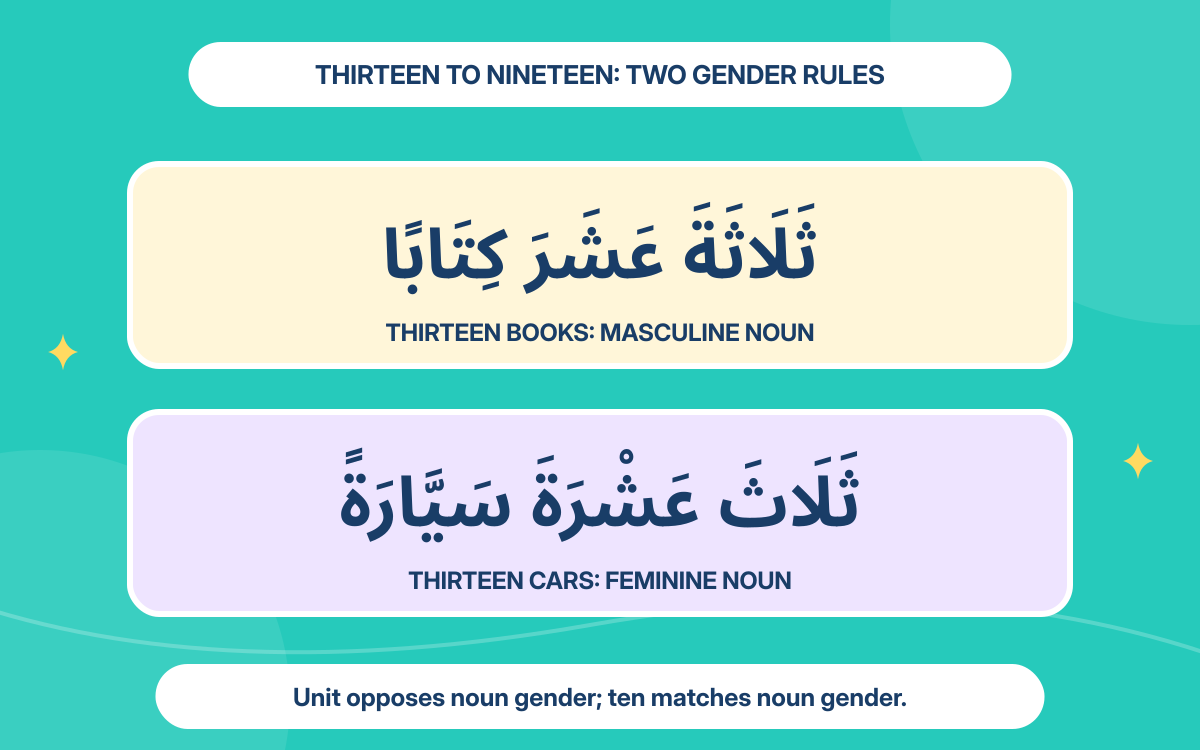
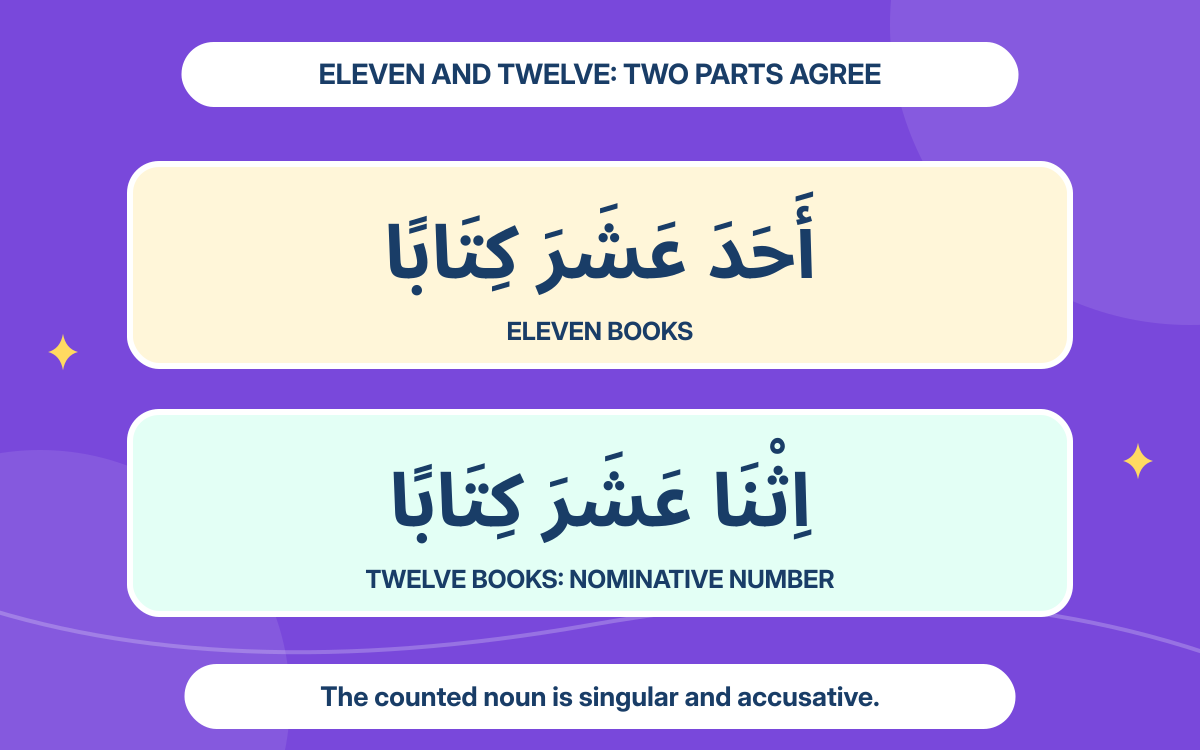
One book is كِتَابٌ, a masculine noun. For eleven books, both number parts use their masculine forms. Put the number before the noun; do not insert wa, “and.”
أَحَدَ عَشَرَ كِتَابًا
ahada ashara kitaban
Eleven books
Kitaban is singular, indefinite and accusative. This counted noun is called tamyiz: it explains what the number counts. English says “books,” but Arabic uses one singular book word here.
02Use the feminine pair and keep eleven fixed
One car is سَيَّارَةٌ, a feminine noun. Both parts of eleven change to agree with it.
إِحْدَى عَشْرَةَ سَيَّارَةً
ihda ashrata sayyaratan
Eleven cars
Eleven keeps its form in nominative, accusative and genitive positions. Both parts are built on fathah; the final fathah of ihda is estimated on its alif maqsura.
بِأَحَدَ عَشَرَ كِتَابًا
biahada ashara kitaban
With eleven books
Bi gives the number a genitive position, but ahada ashara stays fixed. Kitaban also stays singular accusative as the counted noun.
03Choose the nominative form of twelve
Twelve also agrees with the singular noun in both parts. In a nominative position, its first part is ithna for masculine nouns or ithnata for feminine nouns.
اِثْنَا عَشَرَ كِتَابًا
ithna ashara kitaban
Twelve books — nominative number
اِثْنَتَا عَشْرَةَ سَيَّارَةً
ithnata ashrata sayyaratan
Twelve cars — nominative number
These first parts have no final nun. Learn them as the twelve construction, rather than adding the standalone forms ithnani or ithnatani.
04Change only twelve’s first part for case
In accusative or genitive positions, use ithnay or ithnatay. The first part follows dual case changes; the second part stays built on fathah.
قَرَأْتُ ٱثْنَيْ عَشَرَ كِتَابًا
qaratu thnay ashara kitaban
I read twelve books.
بِٱثْنَتَيْ عَشْرَةَ سَيَّارَةً
bithnatay ashrata sayyaratan
With twelve cars
The object after “I read” is accusative; the number after bi is genitive. Both require the ay form. The counted noun remains singular accusative in either sentence position.
05Keep the number and noun endings separate
Indi, “I have,” can be followed by a nominative number. Use ithna here, while the noun stays kitaban.
عِنْدِي ٱثْنَا عَشَرَ كِتَابًا
indi thna ashara kitaban
I have twelve books.
The twelve forms begin with hamzat wasl: say the initial i when starting with ithna; omit it in the connected readings after indi or qaratu. The wasla sign in ٱثْنَا marks that joining. Ihda begins with hamzat qat, so its initial i remains pronounced when joined.
Practise the full endings shown here. Natural pauses may shorten noun endings. Our plain readings simplify vowel length; follow the Arabic for long vowels.
What to remember
- Both parts of eleven and twelve agree with the gender of the singular counted noun.
- Eleven is fixed; twelve changes ithna or ithnata to ithnay or ithnatay in accusative and genitive positions.
- The noun after either number stays singular accusative tamyiz, whatever the number’s case position.
Your reference shelf
Open a guide whenever you need it.
Compare all eleven and twelve formsGender pairs, twelve case changes and the singular counted noun
| Number and case | With masculine book | With feminine car |
|---|---|---|
| 11 — all case positions | أَحَدَ عَشَرَ كِتَابًا ahada ashara kitaban | إِحْدَى عَشْرَةَ سَيَّارَةً ihda ashrata sayyaratan |
| 12 — nominative | اِثْنَا عَشَرَ كِتَابًا ithna ashara kitaban | اِثْنَتَا عَشْرَةَ سَيَّارَةً ithnata ashrata sayyaratan |
| 12 — accusative or genitive | اِثْنَيْ عَشَرَ كِتَابًا ithnay ashara kitaban | اِثْنَتَيْ عَشْرَةَ سَيَّارَةً ithnatay ashrata sayyaratan |
The table gives each number at the start of a reading. In connected speech, the initial i of twelve’s hamzat wasl drops, as in indi thna or bithnatay. Eleven’s ahada and ihda start with hamzat qat and keep their initial vowel.
Say the formal practice endings to hear the construction clearly: ashara ends in a; ashrata pronounces the t of ة before the following noun. The a of ithna, ithnata and ihda is long. The vowel in kitaban is also long inside the word; these plain aids do not show every vowel length.
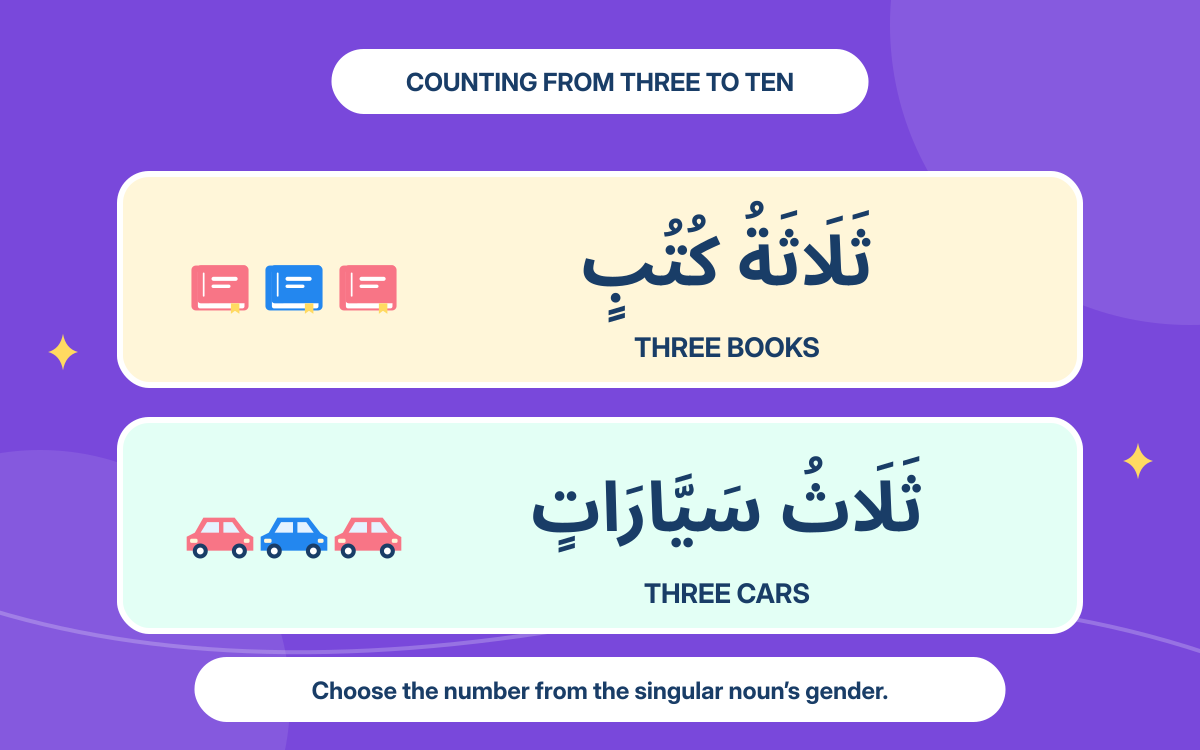
Eleven occupies a case position without changing its built ending. Twelve’s first part is declined like a dual, while its second part is fixed. Neither construction makes the counted noun plural or genitive. Three to ten and exact hundreds have different noun patterns.
Sources & further learning
References for the language explanations and learning guidance.