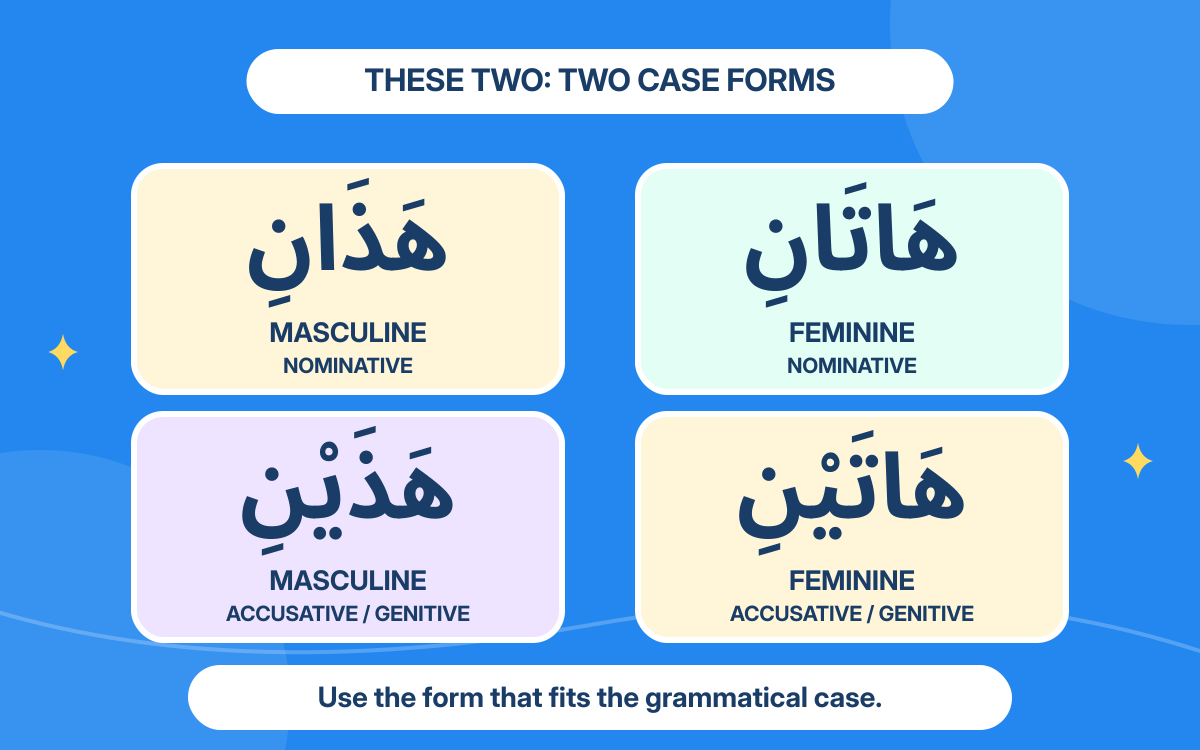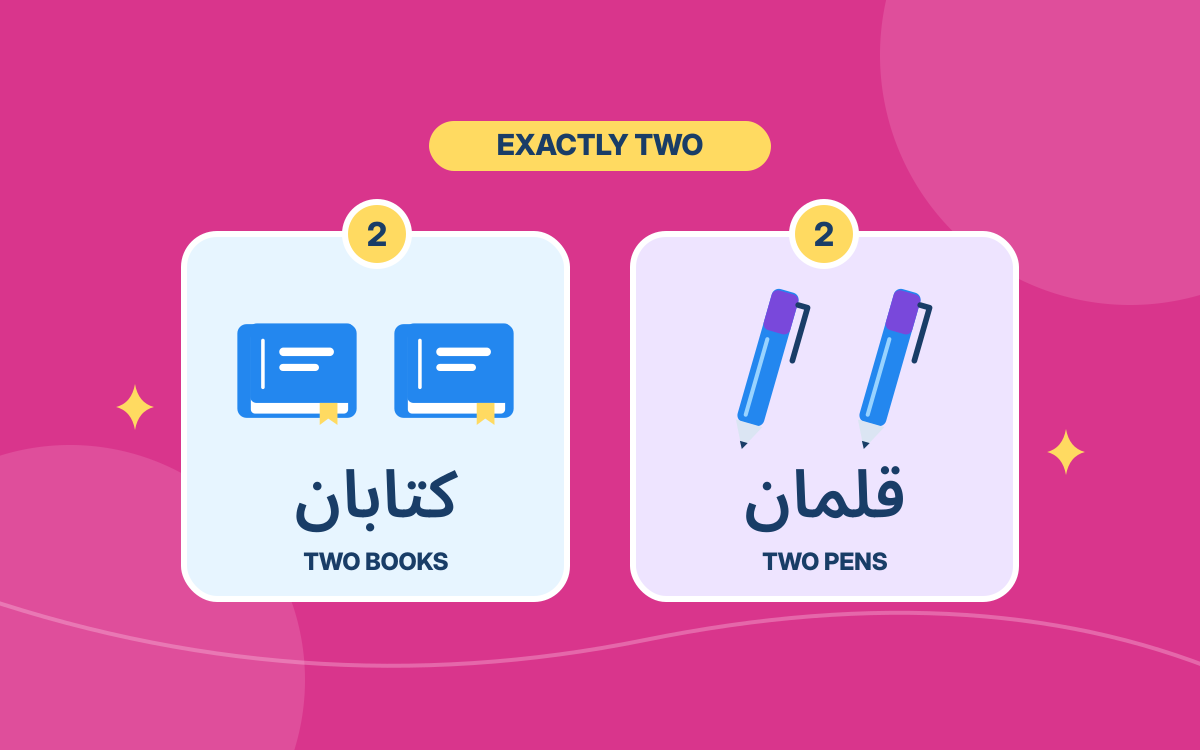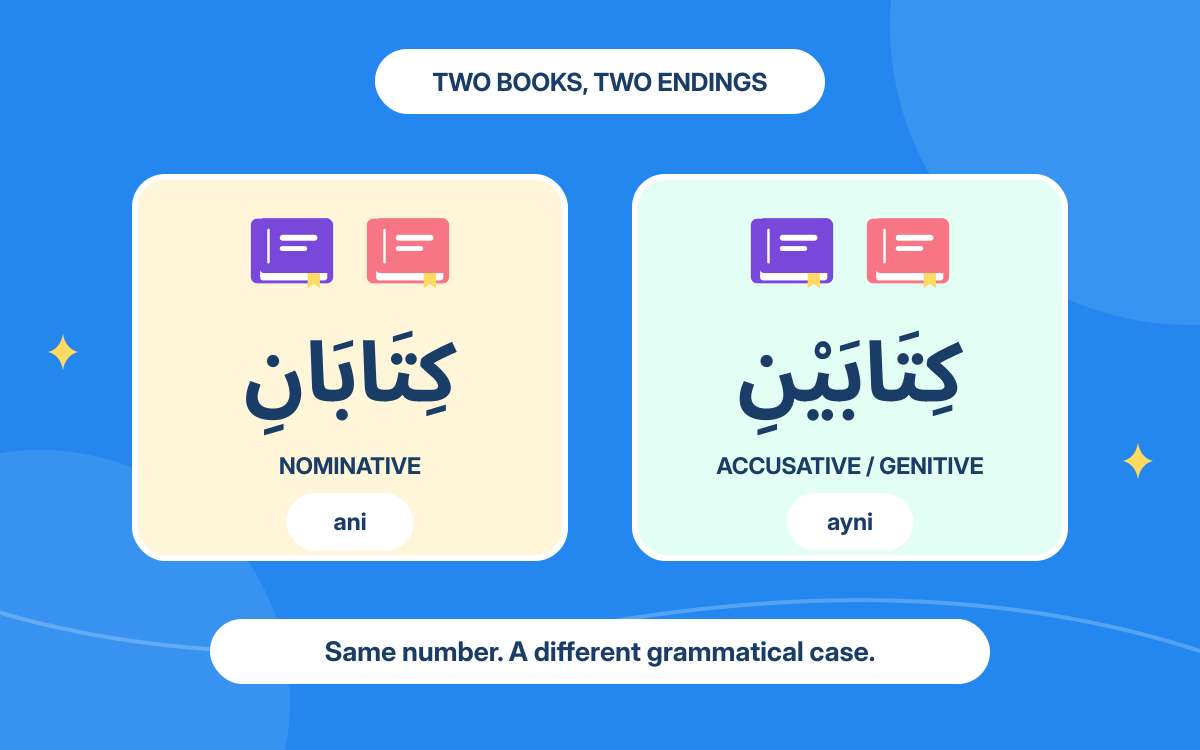
Two books stay two books whether you open them or put something in them. Arabic changes their dual ending to show their grammatical role. Kitabani and kitabayni both mean “two books.” The choice depends on case, so look at the sentence before choosing an ending.
01Keep the meaning “two”
كِتَابَانِ
kitabani
Two books: nominative
كِتَابَيْنِ
kitabayni
Two books: accusative or genitive
The dual has two main endings here: ani and ayni. The a in ani is long; ay in ayni is a vowel glide. Neither ending means “many.” These readings include the final short i used in full formal pronunciation.
02Use ani for the nominative
الْكِتَابَانِ جَدِيدَانِ
alkitabani jadidani
The two books are new.
The books are the subject of this nominal sentence, so alkitabani is nominative. Its case sign is the alif before the final nun. Jadidani is a dual predicate and is nominative too.
Do not look only at the last vowel. Although both words end in a short i when fully pronounced, they are not genitive. The dual marks case through its longer ending. Adding ال makes the books definite without removing the nun.
03Use ayni for a direct object
فَتَحْتُ كِتَابَيْنِ
fatahtu kitabayni
I opened two books.
Fatahtu means “I opened.” The two books receive the action, making kitabayni a direct object in the accusative case. Its case sign is ya, not a final fathah.
You do not keep ani just because you learned that form first. Ask what the books are doing in this sentence: they are the things being opened, not the subject giving information or doing an action.
04Use ayni after a preposition
الْكِتَابَانِ فِي الْحَقِيبَتَيْنِ
alkitabani fi lhaqibatayni
The two books are in the two bags.
Fi governs a genitive noun. The dual therefore uses ayni, just as the direct object did. Context tells you which case it is: after fi, it is genitive.
For a regular noun ending in ة, change that letter to ت before adding the dual ending. Haqiba, “bag,” gives حَقِيبَتَانِ (haqibatani) or حَقِيبَتَيْنِ (haqibatayni). This spelling change also happens with other regular feminine nouns of this kind.
05Identify the job before the ending
Use this sequence: recognise the dual, find its role, then choose the form. In these patterns, nominative gives ani; accusative and genitive both give ayni. The number stays two throughout.
The nun in these endings is a written consonant, not tanween. It stays when ال is added. Our examples keep the ordinary dual ending; possessive constructions that remove the nun need a separate rule.
Practise full forms while learning case. In a pause, the final short i is normally dropped, but that pronunciation change does not turn an accusative dual into a nominative one.
Father and brother have special stems: أَب (ab) gives أَبَوَانِ (abawani) or أَبَوَيْنِ (abawayni); أَخ (akh) gives أَخَوَانِ (akhawani) or أَخَوَيْنِ (akhawayni). A waw is restored before the ending. It belongs to the stem; alif or ya still marks dual case.
زُرْتُ أَخَوَيْنِ
zurtu akhawayni
I visited two brothers.
The brothers receive the visit, so use ayni. In مِنْ أَخَوَيْنِ (min akhawayni), “from two brothers,” the same form is genitive after min. Find the role even when the stem is special.
What to remember
- The dual uses ani in the nominative and ayni in the accusative and genitive in these ordinary forms.
- Case follows the grammatical role; the meaning remains two.
- Regular ة becomes ت before the dual ending. Father and brother restore waw, then follow the same dual case endings.
Your reference shelf
Open a guide whenever you need it.
The dual across three casesReview the case signs and the limits of this pattern
| Case | Full form | Example role |
|---|---|---|
| Nominative | كِتَابَانِ | A subject in a basic nominal sentence |
| Accusative | كِتَابَيْنِ | A direct object |
| Genitive | كِتَابَيْنِ | A noun governed by a preposition |
The Arabic labels are مَرْفُوع (marfu), مَنْصُوب (mansub) and مَجْرُور (majrur). The dual is الْمُثَنَّى (almuthanna). Alif marks its nominative; ya marks its accusative and genitive.
| Meaning | Singular | Nominative | Accusative or genitive |
|---|---|---|---|
| Father | أَب ab | أَبَوَانِ abawani | أَبَوَيْنِ abawayni |
| Brother | أَخ akh | أَخَوَانِ akhawani | أَخَوَيْنِ akhawayni |
These father forms can count two fathers from different families. In a family context, الْأَبَوَانِ can mean father and mother together, “the parents.” Context determines that translation.
These duals follow dual case endings, rather than the special singular abu, aba and abi pattern. The nun is removed when a dual noun becomes the first term of an idafa; that separate adjustment is outside these examples.
Sources & further learning
References for the language explanations and learning guidance.
- Madinah Arabic: dual formation and genitive examples
- Madinah Arabic: dual declension
- Madinah Arabic: introducing the dual
- Blida 2 University: restoring the final stem letter in father and brother duals (morphology notes, page 28)
- Umm Al-Qura University: الأبوان for father and mother through taghlib (journal article, section on the dual)