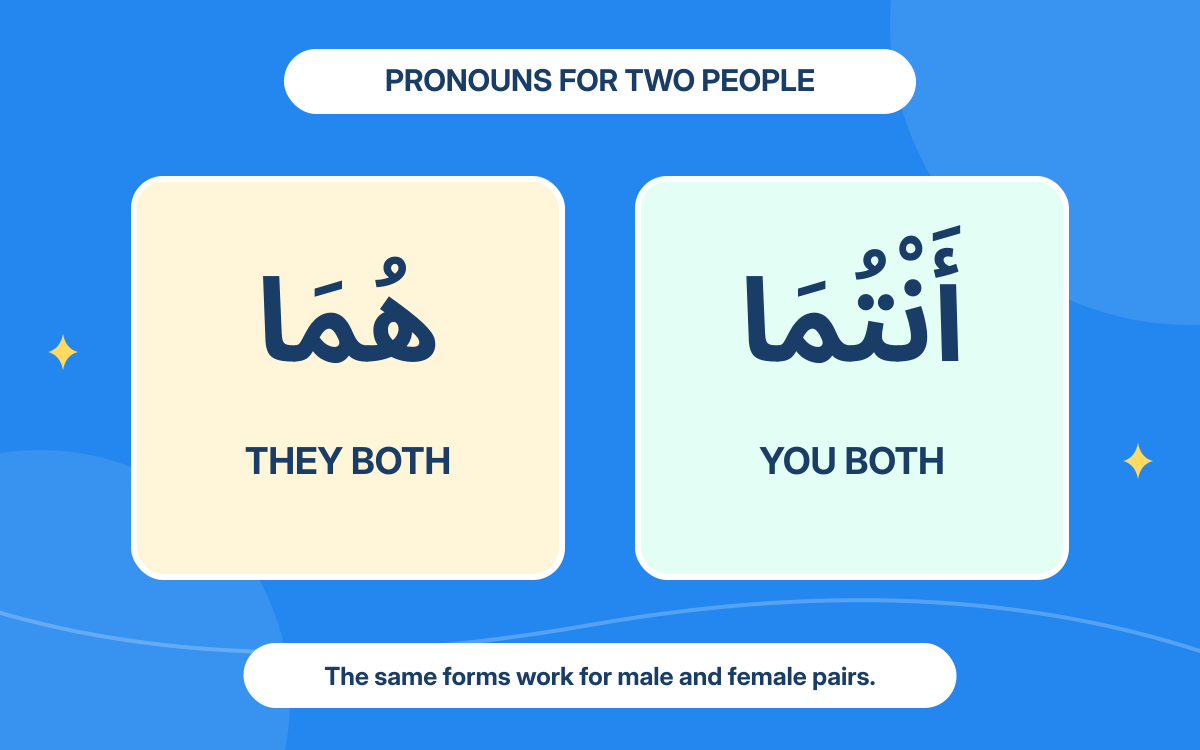
Arabic has subject pronouns for exactly two people. Huma means they two; antuma means you two. Both forms work for two men, two women or a mixed pair. The pronoun identifies the pair’s role, while a descriptive predicate can still show its gender. Start with talking about two people.
01Talk about a pair with huma
Use huma when the two people are being discussed. It replaces both singular huwa, he, and singular hiya, she, when the referent is a pair.
هُمَا هُنَا
huma huna
They two are here.
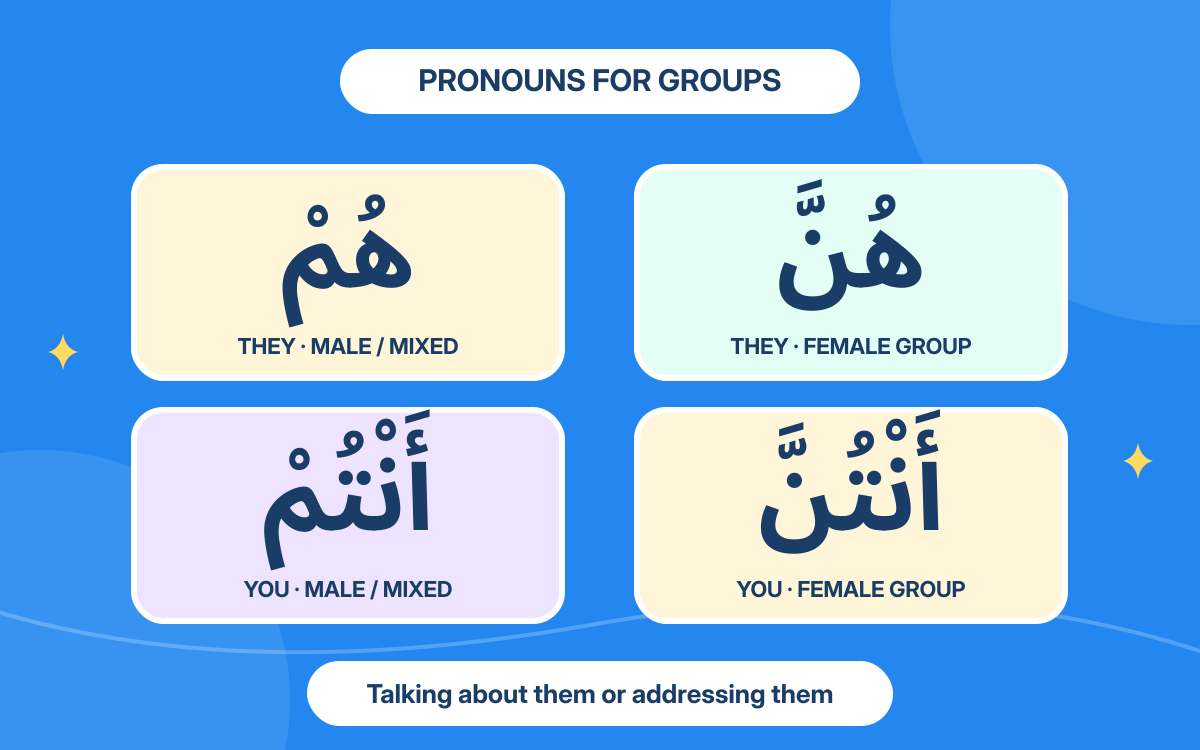
Two sisters use the same huma as two brothers. In this ordinary human pattern, hum and hunna are plural forms for three or more; exactly two people use huma. The final a in huma is long.
02Address a pair with antuma
Use antuma when you are speaking directly to two listeners. Their gender does not change this pronoun, and neither does the gender of the speaker.
أَنْتُمَا هُنَا
antuma huna
You two are here.
A woman speaking to two men uses antuma. A man speaking to two women also uses antuma. When the same two women become the people being discussed with someone else, choose huma. Decide who is being addressed before choosing the form.
03Match the descriptive predicate
A simple present nominal sentence needs no separate word for are. A predicate naming the two people uses a nominative dual form.
هُمَا مُدَرِّسَانِ
huma mudarrisani
They two are male teachers.
هُمَا مُدَرِّسَتَانِ
huma mudarrisatani
They two are female teachers.
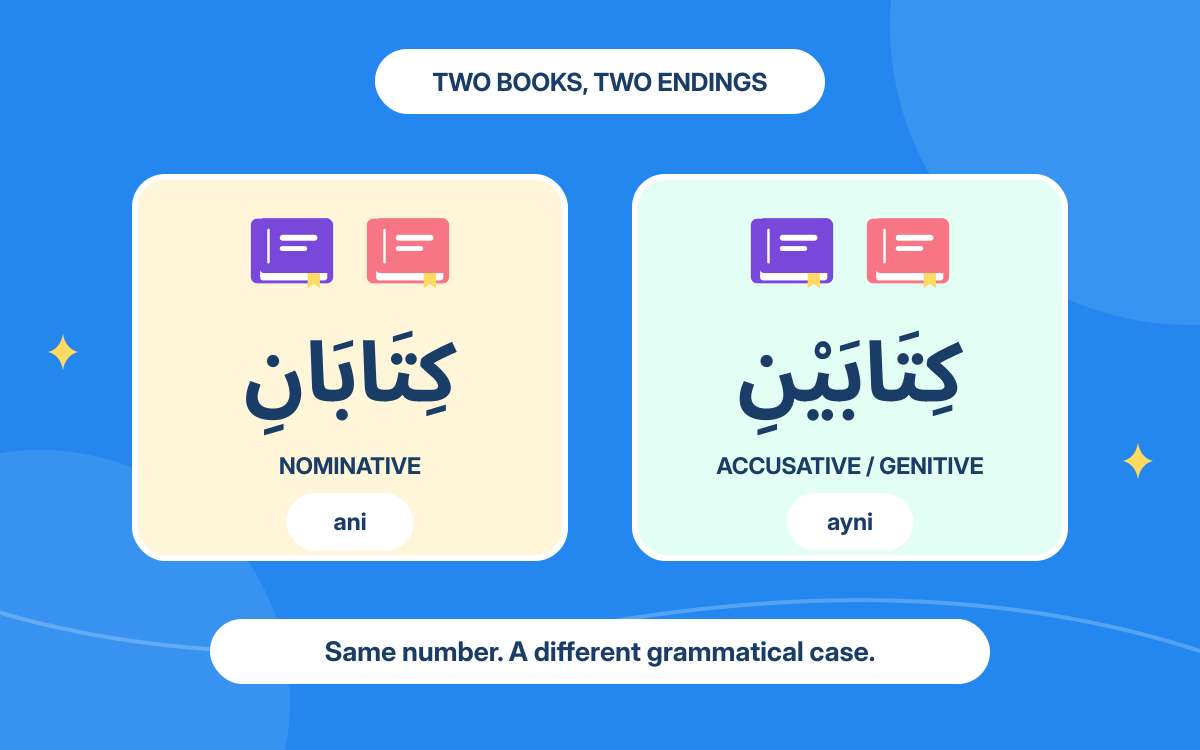
The pronoun stays huma, but the teacher form changes. Use masculine dual agreement for two men or a mixed human pair, and feminine dual agreement for two women. Keep the full ani ending in these study examples.
04Keep a location phrase unchanged
A location phrase does not need a special dual form. Change the pronoun to change whose location you are describing.
هُمَا فِي الْفَصْلِ
huma fi lfasli
They two are in the classroom.
أَنْتُمَا فِي الْفَصْلِ
antuma fi lfasli
You two are in the classroom.
Fi lfasli remains the same for either gender. These subject pronouns are mabni: they keep their fixed forms while occupying a nominative position. Do not add a separate case vowel or tanween to huma or antuma.
05Include yourself with nahnu
Huma discusses a pair; antuma addresses a pair. If the pair includes you as the speaker, use nahnu, we. Arabic has no separate first-person dual subject pronoun.
نَحْنُ هُنَا
nahnu huna
We are here. (Here, the speaker and one other person.)
Nahnu can refer to two people or a larger group. Context supplies the number. First identify the role: we, you two or they two. Then choose a descriptive predicate’s number and gender if the sentence has one.
What to remember
- Huma discusses exactly two people; antuma addresses exactly two listeners.
- Both pronouns serve either gender; a descriptive dual predicate still matches the people’s gender.
- A pair including the speaker uses nahnu, because Arabic has no separate first-person dual subject pronoun.
Your reference shelf
Open a guide whenever you need it.
Three roles for a pairReview the pronoun choice and the two teacher predicates
| Role | Pronoun | Example |
|---|---|---|
| Discussing the pair | هُمَا — huma | هُمَا هُنَا |
| Addressing the pair | أَنْتُمَا — antuma | أَنْتُمَا هُنَا |
| Pair includes the speaker | نَحْنُ — nahnu | نَحْنُ هُنَا |
Compare هُمَا مُدَرِّسَانِ and هُمَا مُدَرِّسَتَانِ. The word huma is unchanged; the nominative dual predicate names male or female teachers. The same distinction works after antuma.
Huma can also refer to two objects. The ordinary feminine singular agreement used for nonhuman plurals does not replace the dual pattern for a pair. This guide practises people so that pronoun role and descriptive gender stay clear.
Sources & further learning
References for the language explanations and learning guidance.